Newsletter Signup Section
Sign up to see the future, today
Can’t-miss innovations from the bleeding edge of science and tech.
Boeing’s Starliner: A Troubling Tale
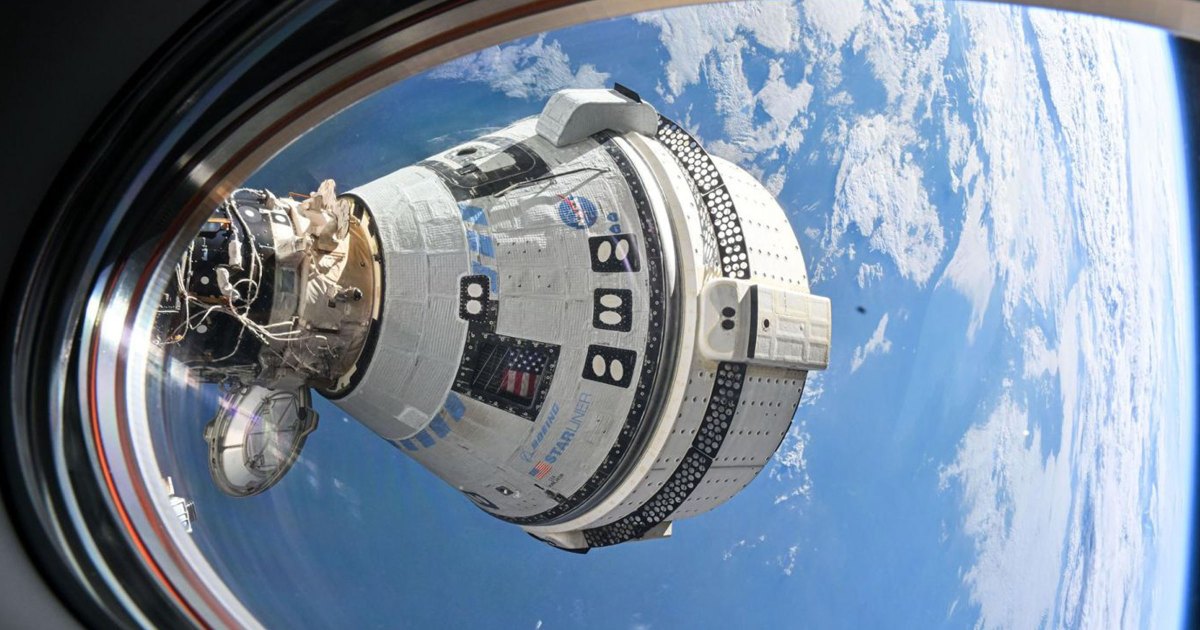
By all accounts, Boeing’s Starliner spacecraft has been nothing short of a disaster. It’s cost NASA a staggering amount of money, and even after over a decade of development, the capsule still has yet to complete a crewed mission to the International Space Station.
The saga includes a failed uncrewed launch attempt that went haywire due to a glitching computer, an aborted mission which stranded two NASA astronauts on board the station for nine months, and a litany of technical headaches.
Now, with SpaceX threatening to retire its Crew Dragon spacecraft, NASA might be forced to make the troubled Starliner operational while re-evaluating its access to space.
NASA Administrator Jared Isaacman stated that SpaceX intends to phase out older platforms like Falcon and Dragon as they focus on their next-generation capability, Starship. The agency is considering purchasing two additional launches on Boeing’s Starliner.
Without SpaceX’s Crew Dragon, which has regularly delivered crews to the ISS for six years, NASA’s options may dwindle. Starliner—a project costing Boeing billions—almost faced cancellation in 2024. However, given SpaceX’s shift towards its unproven Starship, it appears NASA is recognizing the urgency.
Recently, NASA announced it would commit $359 million to assist Boeing in rebuilding the spacecraft’s reaction control system thrusters, a significant source of previous issues.
Moreover, NASA needs to certify the United Launch Alliance’s Vulcan rocket for crewed missions ahead of retiring the Atlas V.
The plan is to launch Starliner no earlier than December of this year. NASA has three pre-existing contracts for crewed missions with Boeing, as noted by Ars Technica.
“We will begin with an uncrewed Starliner-1 mission to the ISS to validate improvements and gather necessary flight data,” Isaacman stated. “From there, we will implement corrective actions and complete testing required for crewed flight.”
“Our current plan is to return astronauts on Starliner-2 by 2028,” he added.
This is a precarious moment for NASA. The ISS is set to be retired by the decade’s end, creating uncertainty regarding access to orbit. The future of space infrastructure remains unclear, with private companies vying for government contracts to develop their own habitats.
If it were up to NASA, Boeing’s Starliner would likely be part of future plans—but given its track record, its future is anything but assured.
More on Starliner: Boeing’s Starliner Is Such a Disaster That We Don’t Even Have Words


