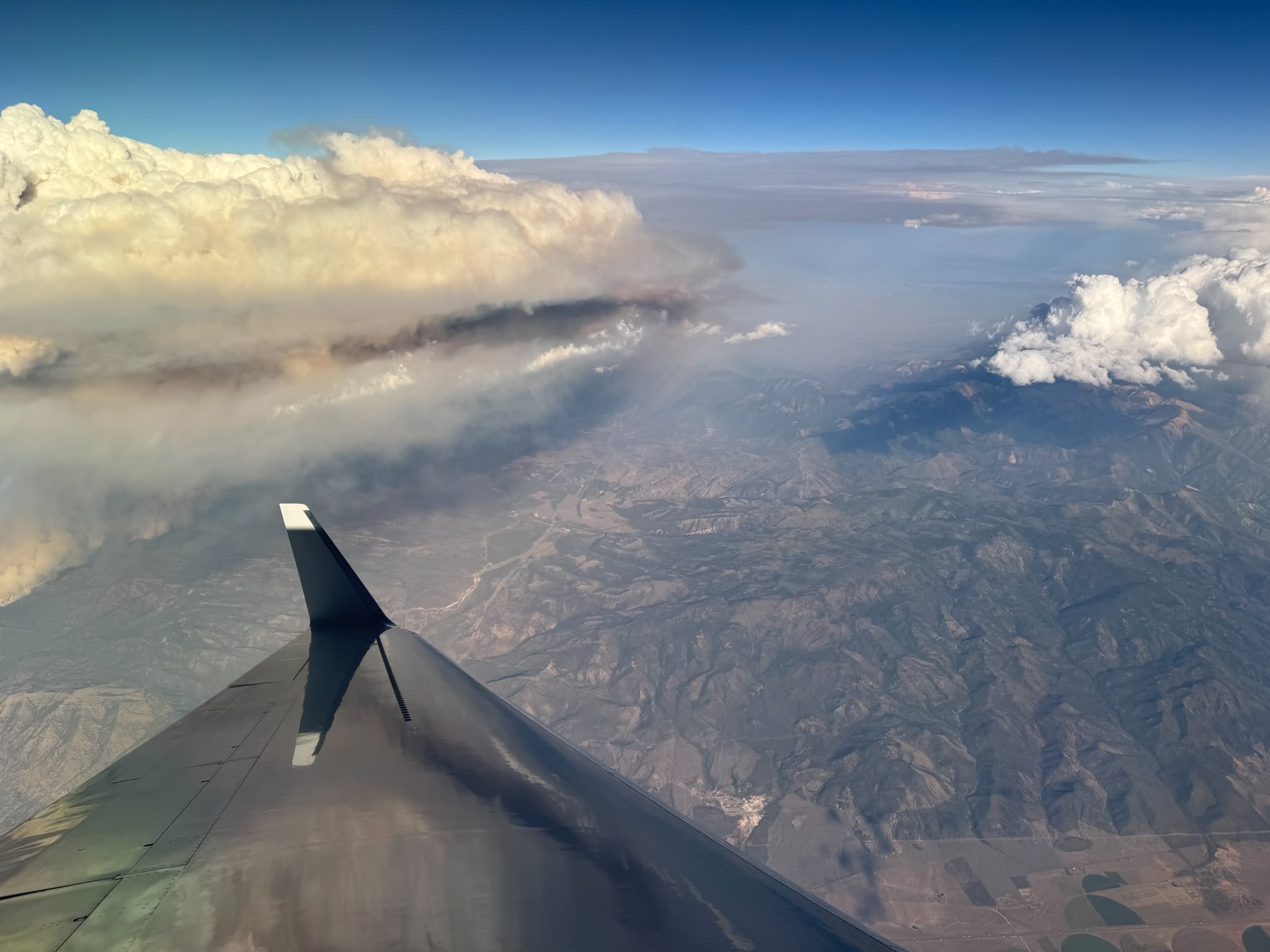
This article discusses the Wildhorse grass fire in eastern Idaho, which unexpectedly produced a pyrocumulonimbus cloud (pyroCb). This phenomenon has captured the interest of scientists, particularly those involved in NASA’s INSPYRE (INjected Smoke and PYRocumulonimbus Experiment) campaign, which aims to study wildfire-induced weather events.
Key Points:
-
Pyrocumulonimbus Clouds:
- Form above intense wildfires, reaching altitudes of 30,000 to 50,000 feet.
- Produce lightning, rain, and strong winds, affecting fire dynamics and weather beyond the fire’s immediate area.
-
Importance of Research:
- Understanding pyroCbs is critical as their smoke can impact climate and weather patterns globally.
- They can generate dangerous winds that complicate firefighting efforts.
-
INSPYRE Research Efforts:
- The INSPYRE team collected data by using aircraft to observe and sample smoke and cloud properties during the summer of 2023.
- The project includes both aerial measurements and ground-based observations to study the dynamics of fire-driven weather.
-
Findings from Wildhorse Fire:
- A chance observation allowed researchers to study a pyroCb shortly after it formed. This provided valuable data on the characteristics of the pyroCb and its impacts.
-
Future Applications:
- Insights from this research could lead to better predictions for when pyroCbs are likely to develop, helping firefighters manage fire conditions and risks.
- Findings will contribute to improving Earth system models to better understand the effects of pyroCbs and their smoke on climate.
-
Ongoing Challenges:
- Identifying and studying pyroCbs in real-time remains a challenge due to their rapid development and the coordination required for aircraft logistics.
Conclusion:
The INSPYRE campaign’s work highlights the complex interactions between wildfires and the atmosphere, emphasizing the importance of understanding pyroCbs for both immediate firefighting efforts and long-term climate impacts. The ongoing analysis will aim to unravel how these clouds modify atmospheric chemistry and influence global weather patterns.


