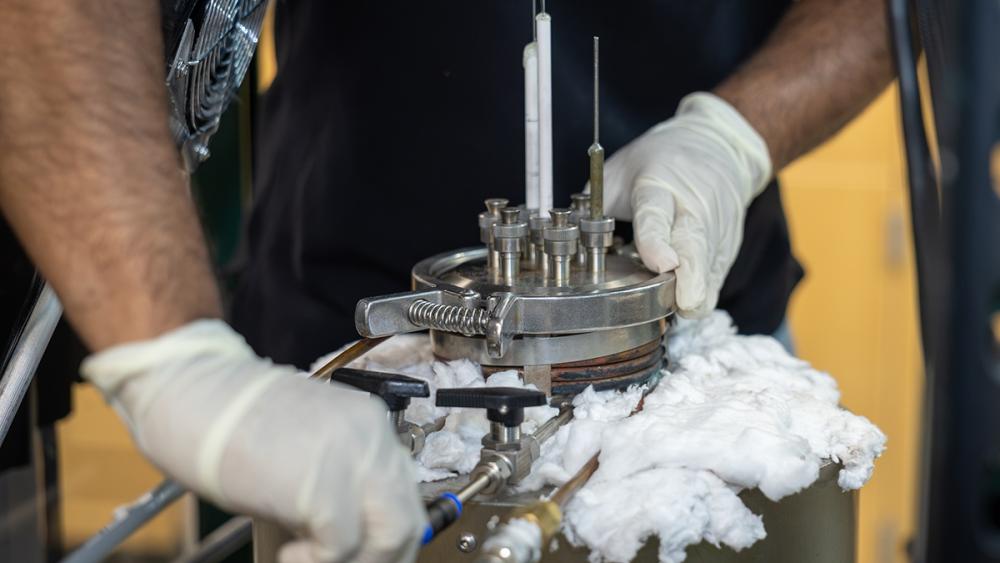
The research focuses on understanding the electrochemical properties and oxidation states of samarium, europium, and tellurium in molten salts to enhance nuclear fuel recycling processes. Samarium and europium are problematic in recycled nuclear fuel due to their potential to disrupt reactor performance. In contrast, tellurium poses corrosion risks in molten salt systems.
Kim and collaborators have previously investigated rare-earth elements in used nuclear fuel, lacking data on samarium due to its lower concentration and distinct electrochemical behaviors. Recent advancements provide a clearer path for studying samarium in upcoming projects.
Researchers will leverage bismuth, a beneficial liquid metal, to capture certain fission products from molten salts, which could ultimately boost the efficiency and sustainability of molten salt reactors and improve nuclear fuel recycling technologies.
The project is funded by the U.S. Department of Energy’s NEUP, with involvement from multiple institutions, including Penn State and the Idaho National Laboratory.


