Here’s a summary of the key points from the article on AI projects in the travel industry, particularly leading up to the Skift Data + AI Summit Europe in 2026:
Key Takeaways:
-
Budgeting for AI Projects: Travel companies are evaluating which AI initiatives to fund based on their utility for employees and enhancement of customer experiences.
-
Challenges Beyond Pilots: Transitioning from pilot projects to live services presents hurdles, including managing incomplete information, existing systems, and varied customer requests.
-
Specific Goals: Companies should define clear operational goals for AI, focusing on measurable outcomes like accuracy in booking questions and time efficiency.
-
Cross-Team Implementation: A successful trial in one department doesn’t guarantee success company-wide due to differing systems and knowledge documentation among teams.
-
Handling Errors: Planning must account for exceptions and include strategies for intervention when AI fails, affecting both service quality and operational costs.
-
Economic Viability: AI projects aimed at revenue growth need solid evidence of their effectiveness, such as impact on bookings and customer retention.
-
Collaborative Discussions: The summit will facilitate discussions among operators, technology providers, and investors to share insights on deploying AI technologies effectively.
Event Highlight:
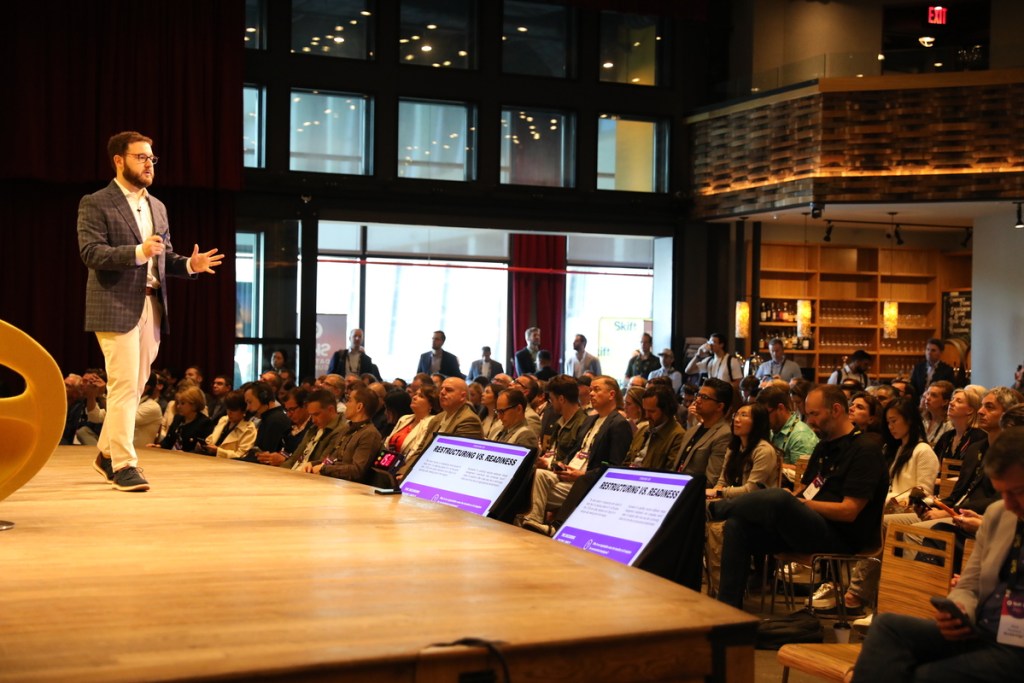
The Skift Data + AI Summit Europe will take place on October 6, 2026, in London. It aims to connect various stakeholders in the travel industry to discuss how to effectively implement AI solutions and evaluate their commercial viability.
For further information and to attend, visit Skift’s event page.