Understanding Young Star Systems and Planet Formation
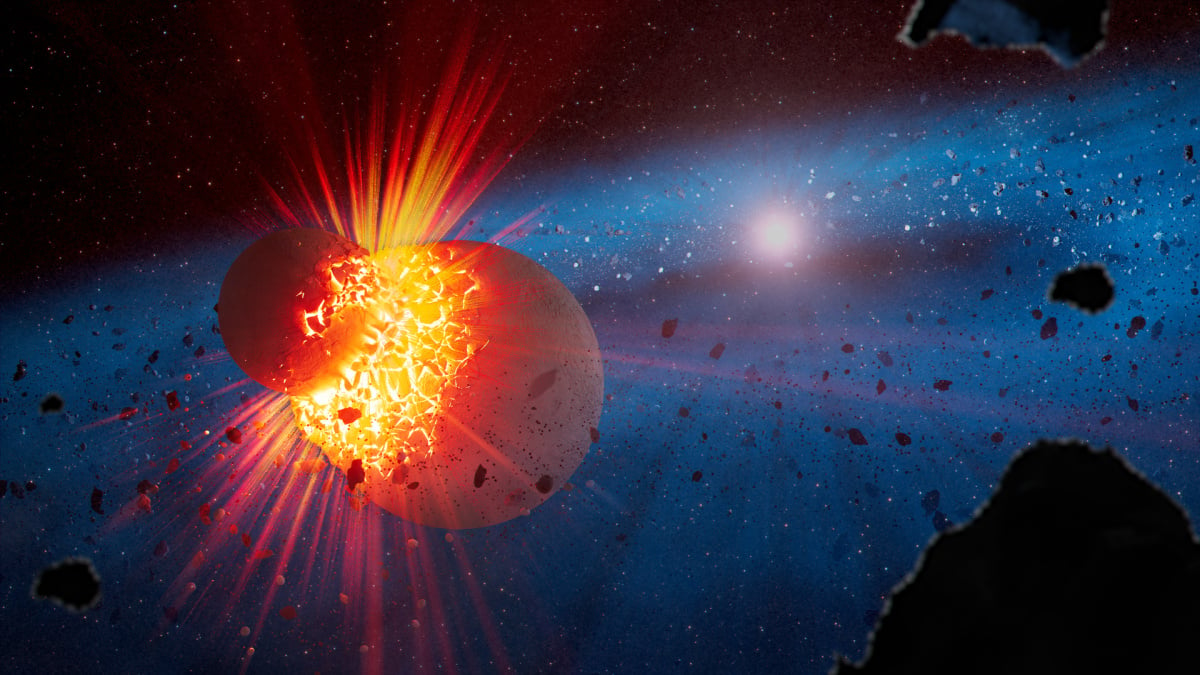
Astronomers are uncovering fascinating details about the formation of rocky planets around young stars. Research has revealed that in certain young star systems, planets collide with such intensity that they vaporize rock, leading to clouds of glassy debris. These “extreme debris disks” consist of the remnants of violent collisions, with scientists finding both vaporized rock and finer materials akin to green sand found on some Hawaiian beaches.
Key Findings:
- Types of Crash Debris: Researchers identified two types of debris: one rich in silica, linked to intense impacts between Mars-sized bodies, and another dominated by forsterite, originating from less violent grazing collisions.
- Significance of Dust: This dust can indicate the age of the star systems and the likelihood of ongoing violent collisions, echoing the early chaotic stage of our own solar system. Notably, an ancient impact involving a Mars-sized body named Theia is believed to have led to the formation of the Moon.
Tools and Research:
Using data from NASA’s Spitzer Space Telescope and the recently deployed James Webb Space Telescope, researchers have been able to more than double the number of young star systems studied, enabling a comprehensive examination of their dust compositions.
Observational Challenges:
Finding these dusty young star systems is particularly difficult, as only about 1% exhibit this dusty phase, which is far less than previous theories had suggested. The presence of flickering dust clouds, which vary in brightness over time, potentially points to hidden planets that disturb the orbits of smaller celestial bodies.
Conclusion:
This research not only provides insights into the processes that shaped our solar system but also paves the way for future studies to understand the evolution of planetary systems across the universe. The quest to answer fundamental questions about dust and planet formation continues, with astronomers hoping to make more discoveries in coming years.


