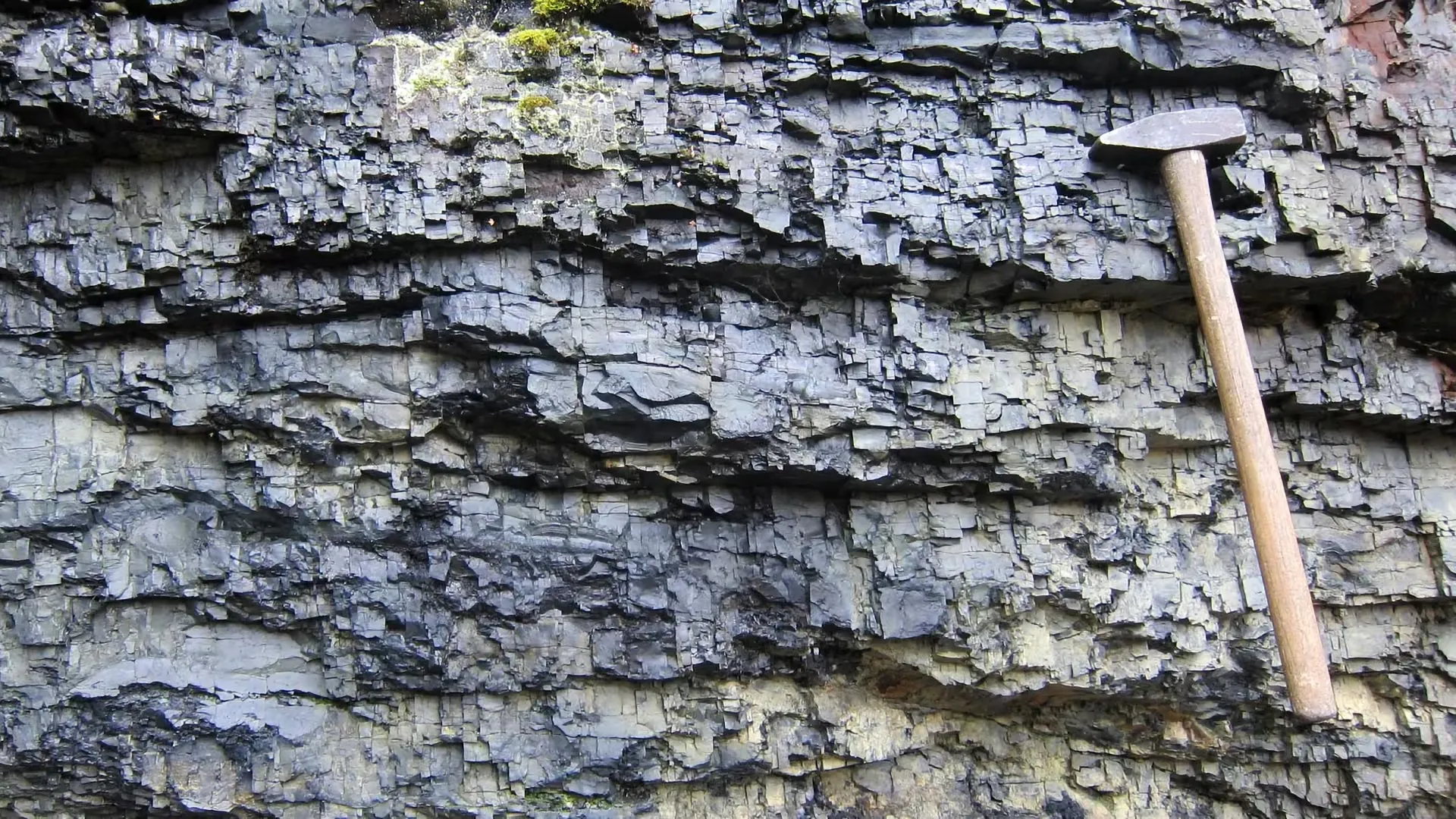
This article discusses a significant debate in Earth science regarding the history of oxygen levels and their impact on the carbon cycle around 2 billion years ago. Researchers, led by Nivedita Thiagarajan from Caltech, are challenging the previously held view that a notable carbon-isotope signal found in ancient rocks from places like Karelia, Russia, signifies a global environmental event related to the rise of atmospheric oxygen.
Key Points:
-
Oxygen Accumulation: Around 2.5 to 2 billion years ago, oxygen began accumulating in the Earth’s atmosphere, leading to transformative changes and the eventual rise of complex life.
-
Carbon Cycle Disruption: A carbon-isotope signal found in sedimentary rocks has traditionally been interpreted as evidence of a significant global disruption in the carbon cycle.
-
Local vs. Global Interpretation: The new study suggests that the unusual carbon-isotope signatures observed in the Zaonega Formation may be due to local geological events instead of a planet-wide environmental change.
-
Research Findings: By analyzing gases trapped in fluid inclusions within ancient rocks, the researchers propose that local magma intrusions may have heated up organic sediments, generating hydrocarbons which influenced the carbon-isotope signatures.
-
Future Research Directions: Researchers plan to investigate similar isotope signals found in Gabon to see if local processes can explain those records, similar to their findings in Russia.
-
Significance: This new perspective raises questions about the nature of the Shunga-Francevillian event and whether it should be considered a global phenomenon.
The study is set to reshape our understanding of ancient Earth’s atmosphere and the influence of local geological conditions on global processes.


