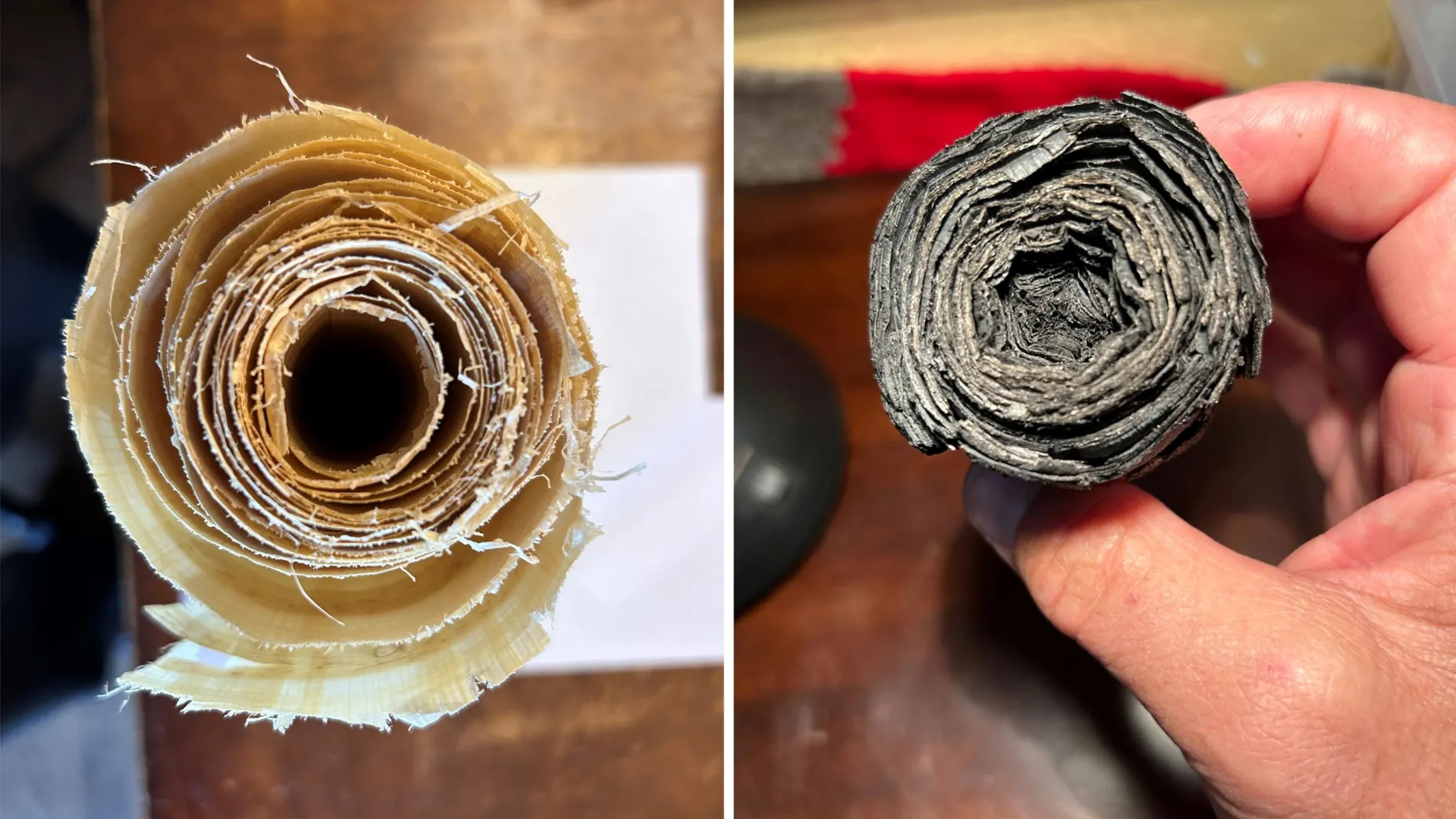
Douglas Seiler’s innovative efforts to reconnect with ancient history have taken a unique turn. Working with a team from Berkeley SETI, he recreated a scientific experiment that mimics a catastrophic event from nearly 2,000 years ago. He attempted to explore the writings on carbonized papyrus scrolls from Herculaneum, which were devastated by the eruption of Mount Vesuvius in 79 C.E.
Key Elements of the Experiment:
-
Ancient Materials: Seiler sourced papyrus, reed pens, and traditional ink to write modern texts, including portions from “Star Wars” and the Bible, emulating the ancient writing style.
-
The Herculaneum Library: The scrolls from Herculaneum, preserved through volcanic ash, are considered the only intact library from antiquity. They potentially hold lost works of significant historical value.
-
Innovative Technology: The primary goal was to recover writing from these fragile ancient texts without unrolling them. Seiler’s idea centered on the elemental composition of ancient inks. If the inks contained lead, they would absorb X-rays significantly more than the carbonized papyrus, making them detectable in CT scans.
-
Successful Detection: In experiments, even tiny amounts of lead allowed for successful scans, revealing legible text that lit up against the darker background of charred papyrus.
-
Inexpensive Screening: A handheld X-ray fluorescence scanner was used to identify scrolls with lead-containing ink, streamlining the selection process for further imaging.
-
Historical Significance: This project has far-reaching implications for papyrology, potentially leading to the recovery of lost works written by influential figures like Philodemus.
-
Collaboration and Innovation: Seiler worked with Berkeley chemistry experts and adapted technology originally designed for other fields, demonstrating how interdisciplinary approaches can yield new insights.
Larger Context:
This experiment holds promise for rekindling our connection to the intellectual heritage of ancient Rome, offering scholars a chance to bridge the gap between the present and past. As Seiler emphasizes, the potential to reveal undiscovered ancient texts is monumental, as nearly all historical writings from antiquity have been lost, leaving the Herculaneum scrolls as a treasure trove for researchers. The combination of modern technology, innovative thinking, and a passion for history is paving the way for remarkable discoveries in the field of ancient studies.


