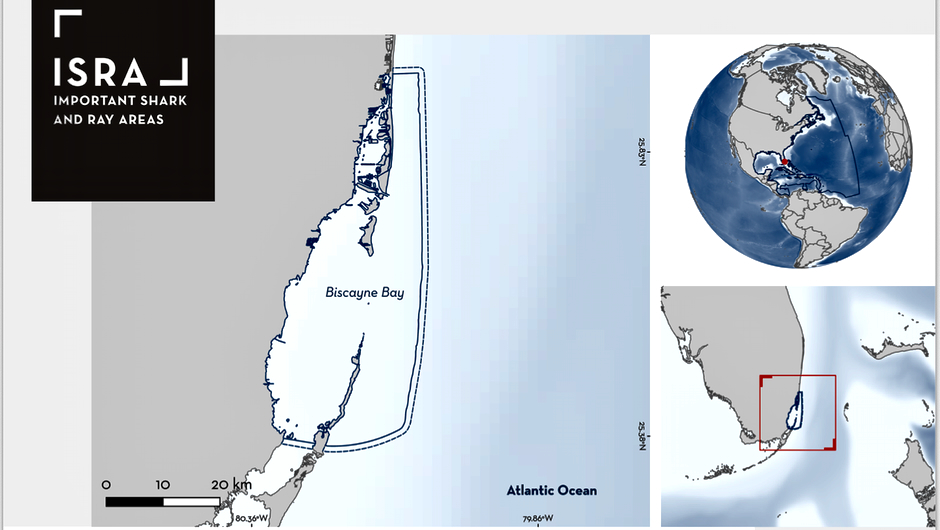
Importance of Biscayne Bay for Shark and Ray Conservation
Virginia Key, FL—Biscayne Bay has been designated an Important Shark and Ray Area (ISRA), recognizing it as a crucial habitat for nine shark and two ray species, including those that are threatened and endangered.
Research and Findings
This designation is the result of a decade-long study led by the University of Miami’s Rosenstiel School of Marine, Atmospheric, and Earth Science. Researchers have shown that Biscayne Bay serves as both a nursery and reproductive habitat for various species, from bonnetheads and nurse sharks to great hammerheads and tiger sharks. Additionally, the bay provides an important feeding ground for three species and features aggregations of lemon sharks currently under study.
Understanding ISRA
The ISRAs are scientifically identified areas vital for the survival of sharks, rays, and chimaeras. They focus on habitats critical for reproduction, feeding, resting, and movement — essential for the survival of newborn sharks during their first year. This initiative, developed by the International Union for Conservation of Nature’s Species Survival Commission Shark Specialist Group, aims to ensure the inclusion of these critical habitats in conservation efforts and marine planning initiatives.
The Role of Biscayne Bay
Catherine Macdonald, an associate professor at the Rosenstiel School and leader of the designation effort, emphasized that while Biscayne Bay often faces discussions around environmental decline, it continues to function as a significant habitat for conservation-sensitive species.
The bay’s shallow waters offer protection for young sharks from larger predators and provide a warm, nutrient-rich environment that supports gestating females and juvenile growth. Researchers highlighted an unusually high concentration of young sharks, making Biscayne Bay a rare productive shark nursery near a metropolitan area.
Community Involvement and Research
Since 2016, Macdonald and her team have engaged hundreds of University of Miami students in collecting data through various methods like drumlines and drone surveys. This effort has involved around 10,000 participants, including schoolchildren and citizen scientists. Every year, 800 to 1,000 students take part in the Shark Research and Conservation Program’s tagging activities.
Significance of Long-term Research
Macdonald states that long-term research is essential for understanding important habitats and documenting changes over time, thus contributing to meaningful conservation efforts. The designation acknowledges the contributions of students and community participants in building a comprehensive understanding of the bay’s shark and ray populations.
Current Environmental Challenges
The designation also comes with concerns as warming waters, coastal development, and declining water quality threaten these species. Research shows that these waters are warming significantly faster than the global average, leading to observed changes in juvenile sharks’ health and physiology.
Implications of ISRA Designation
It’s important to note that an ISRA designation does not create a marine protected area or impose new legal restrictions. Instead, it offers scientific support that can guide fisheries management, environmental assessments, and conservation efforts, ensuring that shark and ray habitats are prioritized in planning processes.
In summary, the ISRA designation for Biscayne Bay highlights the ecological importance of the area for threatened shark and ray species while emphasizing the need for ongoing research and conservation efforts amidst environmental challenges.


