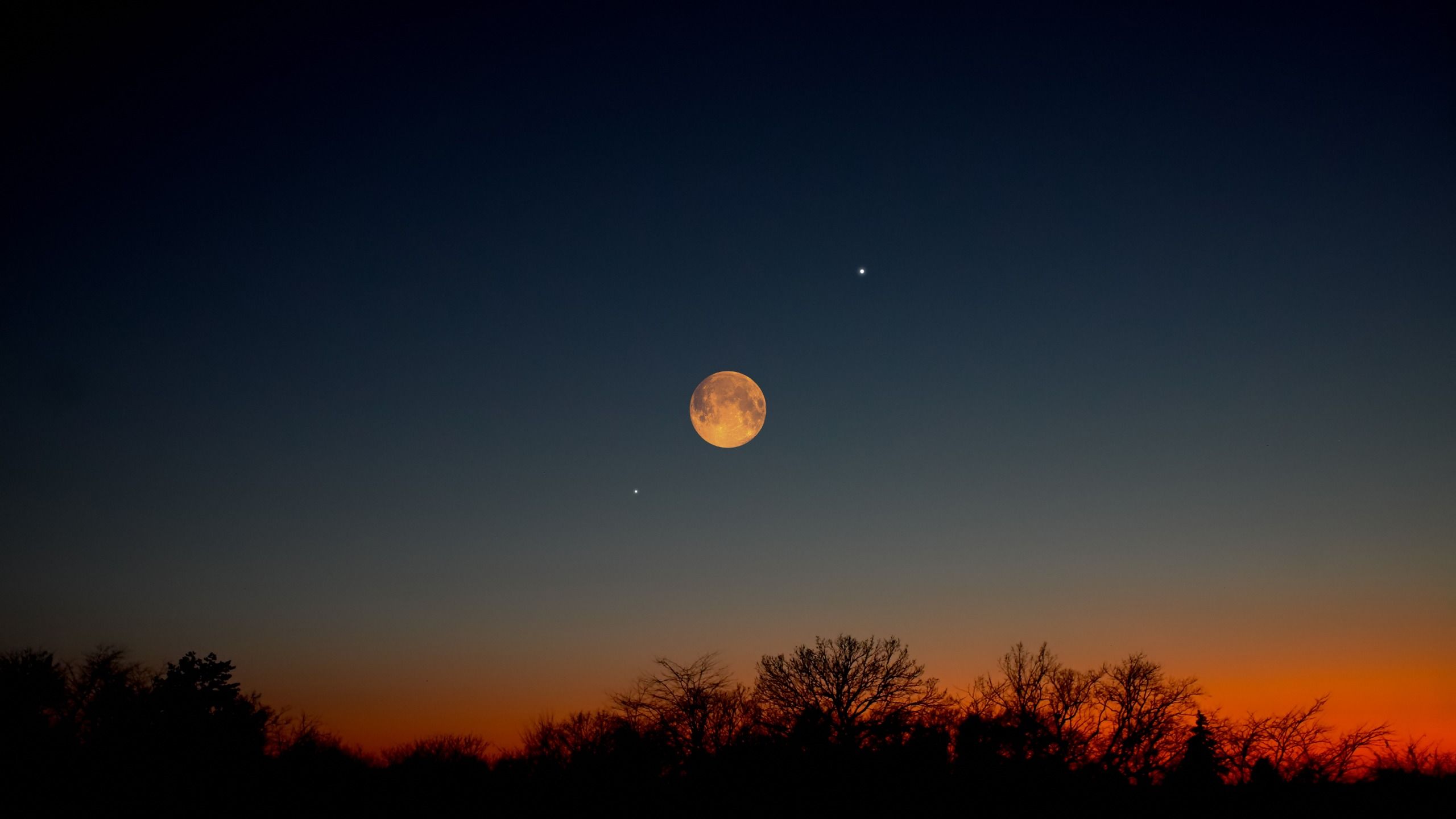
On the evening of Saturday, September 26, skywatchers can use the full Harvest Moon to locate Saturn, one of the most captivating telescopic sights. The Harvest Moon appears bright and can help guide observers to Saturn, which is not as brilliant as Venus or Jupiter.
When and Where to Look:
Shortly after 9 p.m. local daylight time, Saturn will appear as a yellowish-white “star” about one-quarter of the way up from the east-southeast horizon, positioned directly below the moon.
If the weather permits, this evening offers an excellent opportunity for telescope viewing.
Observing the Moon:
Start by examining the moon, which will be particularly brilliant on this evening. Look for the prominent impact crater, Tycho, with its rays extending across the moon’s surface. Its counterpart, Copernicus, is also notable and is found slightly northwest of the moon’s center.
Follow Up with Saturn:
Post moon observation, shift your attention to Saturn, which is located about six degrees below the moon. With a telescope of at least 30-power magnification, the planet’s famous rings should come into view.
Looking ahead, viewing conditions will enhance over the years. By next year, the rings will be even more visible, with peak visibility expected during the winter of 2031-2032.
Distance Perspective:
It’s essential to note that while the moon and Saturn may appear close in the sky, they are actually far apart: the moon is about 233,000 miles from Earth, while Saturn sits roughly 785 million miles away.
For further reading on astronomy, you can check out publications such as Natural History magazine and Sky and Telescope.


