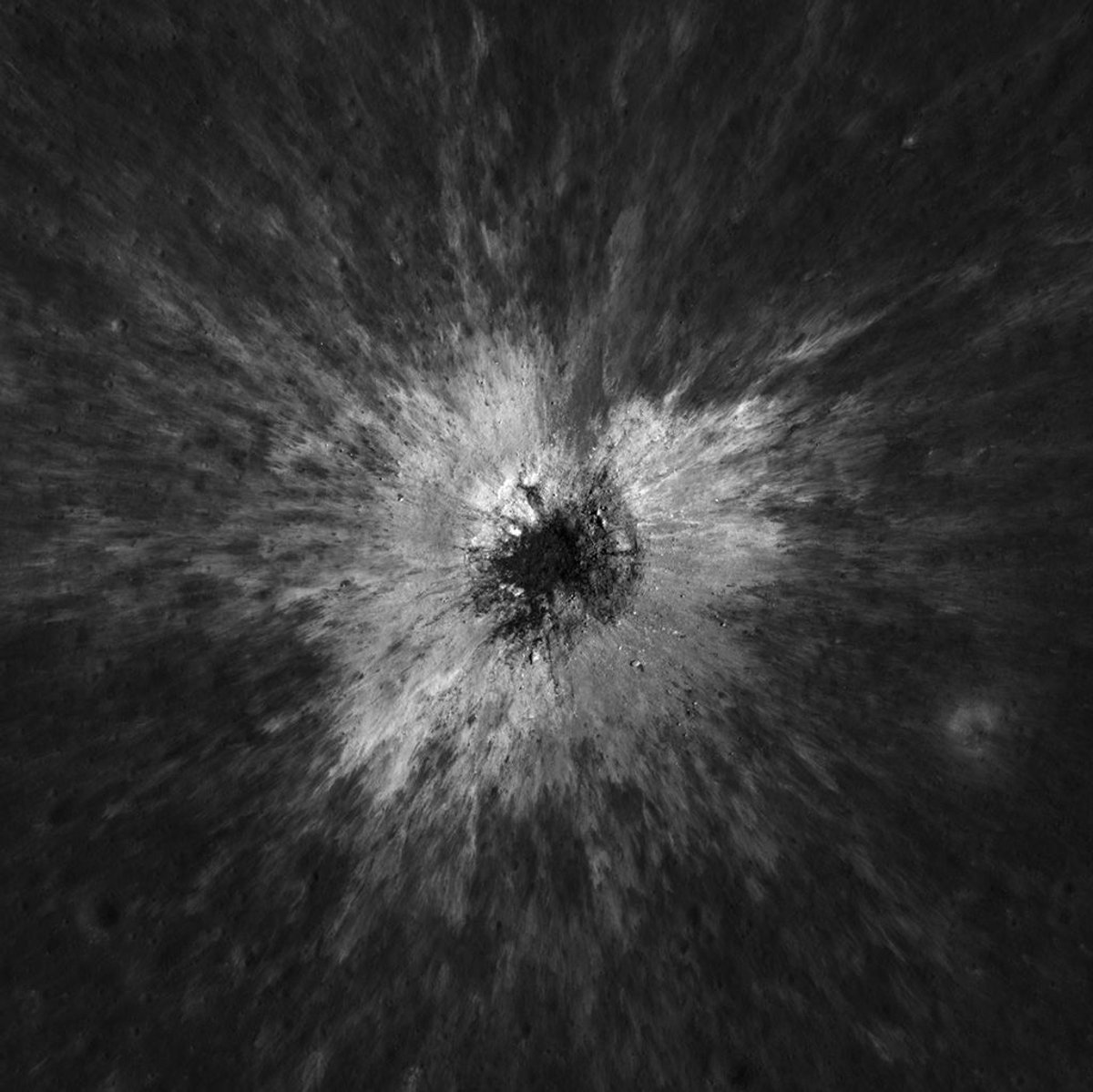
NASA scientists have recently discovered an extraordinary new crater on the Moon, known as the McGetchin Crater, measuring 222 meters (728 feet) across and 43 meters (141 feet) deep. This significant finding is particularly notable because impacts of this magnitude are estimated to occur only once every 132 years.
The crater was identified by Robert Wagner, an image processing specialist, who compared images taken by the Lunar Reconnaissance Orbiter (LRO) over time. His observations revealed that the crater formed sometime between April 11 and May 22, 2024, marking it the largest newly formed crater ever discovered in our solar system.
Due to the Moon’s minimal atmosphere, surface changes are infrequent, making it an ideal location for studying impacts from asteroids, comets, and human-made objects. Scientists also found that the lunar regolith around the crater is less dense and retains less heat, contributing to a distinct temperature difference in the area.
Understanding the formation and evolution of lunar craters could inform future lunar exploration efforts, particularly as humanity prepares for a return to the Moon and the establishment of long-term bases. The data gathered from this newfound crater may assist in developing technologies necessary for astronauts to navigate the Moon’s harsh environment.


