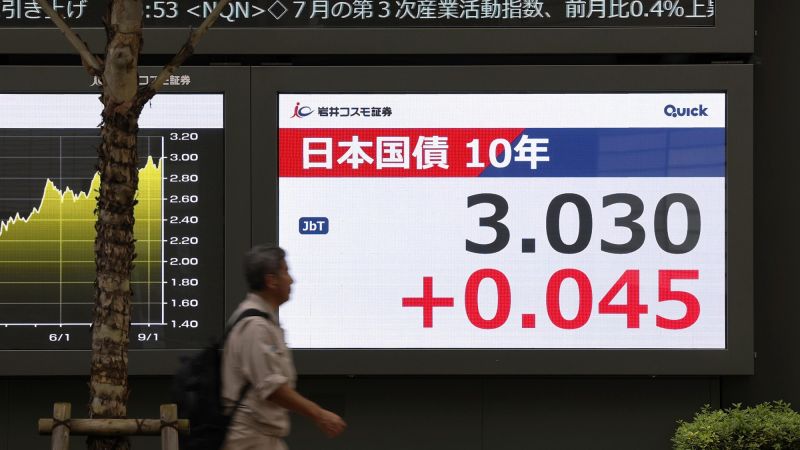
Japan’s financial markets are shifting dramatically, impacting global investors and borrowing costs. Bond yields in Japan have surged to their highest levels in thirty years, driven by inflation, rising interest rates from the Bank of Japan, and concerns over government spending. The yen’s value fluctuates after a historic intervention from the US to stabilize it.
These developments in Japan’s bond and currency markets affect the global economy, particularly the US, as Japan is the largest foreign holder of US Treasuries. US Treasury Secretary Scott Bessent’s intervention aims to prevent Japan from selling its dollar assets, which could further increase US interest rates during this period of rising yields.
As world leaders meet for the UN General Assembly, the intertwined nature of US and Japan’s financial markets is in focus. Recent increases in Japan’s borrowing costs reflect broader global financial tensions linked to inflation and government spending concerns.
The US Treasury’s intervention in currency markets has aimed to prevent the yen from dipping to historically low levels, which could lead Japan to sell Treasuries. Analysts highlight that stability in Japan’s markets is crucial, as any significant fluctuations can impact US investors and markets globally. Markets are wary of Japan’s fiscal strategies and their implications for borrowing costs.
A strengthening yen could also disrupt the carry trade, where investors borrow yen at low rates to invest elsewhere, raising concerns over potential sell-offs in stocks and US Treasuries.
Navigating these changes requires caution, as Japan’s bond and currency dynamics hold significant sway over international markets, underscoring the delicate balance central to global economic stability.


