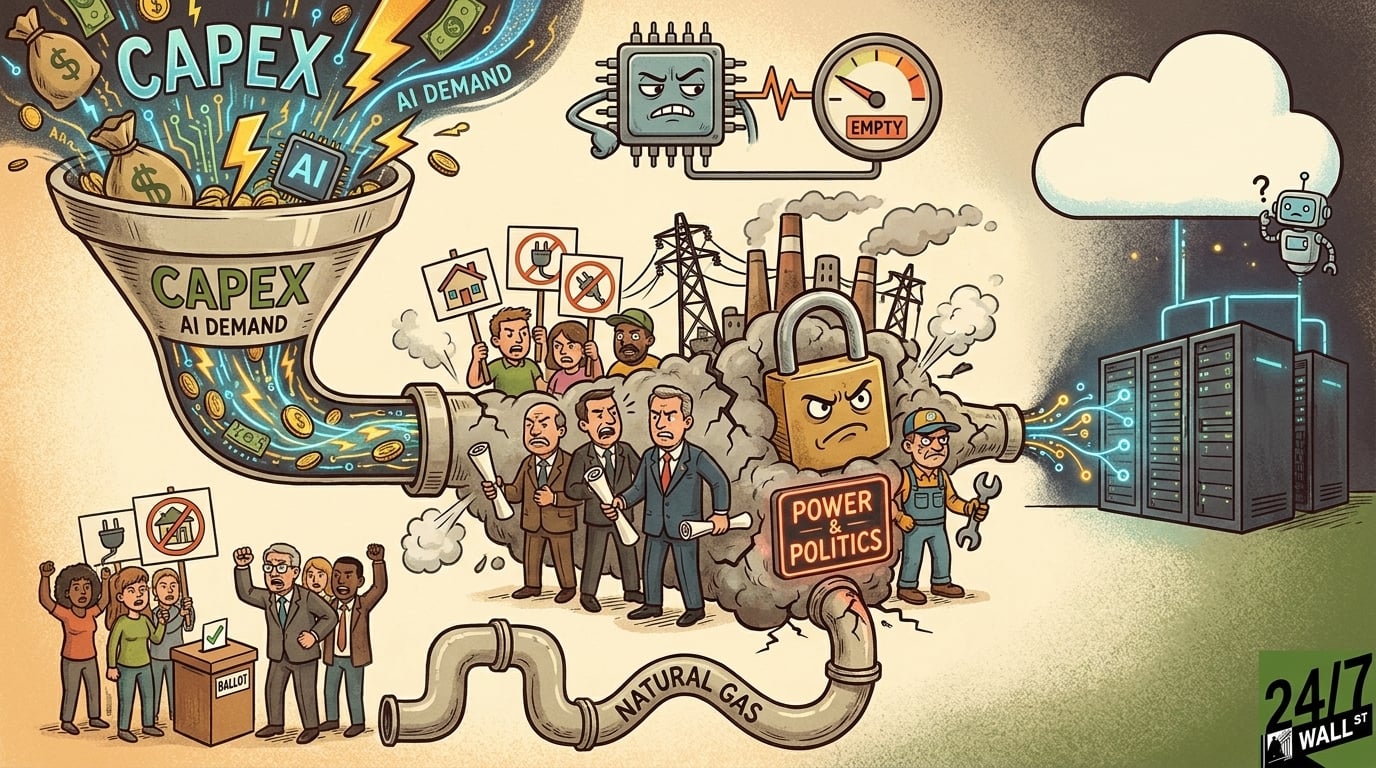
The article outlines significant concerns regarding the rapid expansion of AI infrastructure driven by substantial investment from hyperscalers, which has reached nearly a trillion dollars. However, it highlights three key warnings from different sectors—finance, energy, and hardware—pointing to an imminent crisis.
Key Points:
-
Energy Supply Constraints:
- An AI hardware founder predicts that within three years, compute demand will exceed available energy.
- The energy required for AI inference is becoming a critical issue, given that electricity costs outweigh chip costs in terms of operational expenses.
-
Political and Regulatory Hurdles:
- A U.S. natural gas executive emphasized that political factors are limiting infrastructure development, particularly for energy delivery.
- Public sentiment against data centers is rising, complicating the expansion of infrastructure essential for AI.
-
Capital Expenditure Commitments:
- The hyperscaler investment of $1 trillion is confirmed and unyielding, meaning that necessary resources like power and cooling must be secured regardless of regulatory challenges.
- Consumers are already feeling the financial pressures as energy costs rise, with gasoline prices surpassing $4 per gallon.
Future Watchpoints:
- Monitor interconnection queues for new energy resources.
- Track local siting votes in key counties.
- Observe electricity bills in regions identified as high-demand areas.
In conclusion, the article warns of a convergence of energy limitations, regulatory obstacles, and financial commitments that could hinder the growth of AI infrastructure, posing risks to both investors and consumers in the near future.


