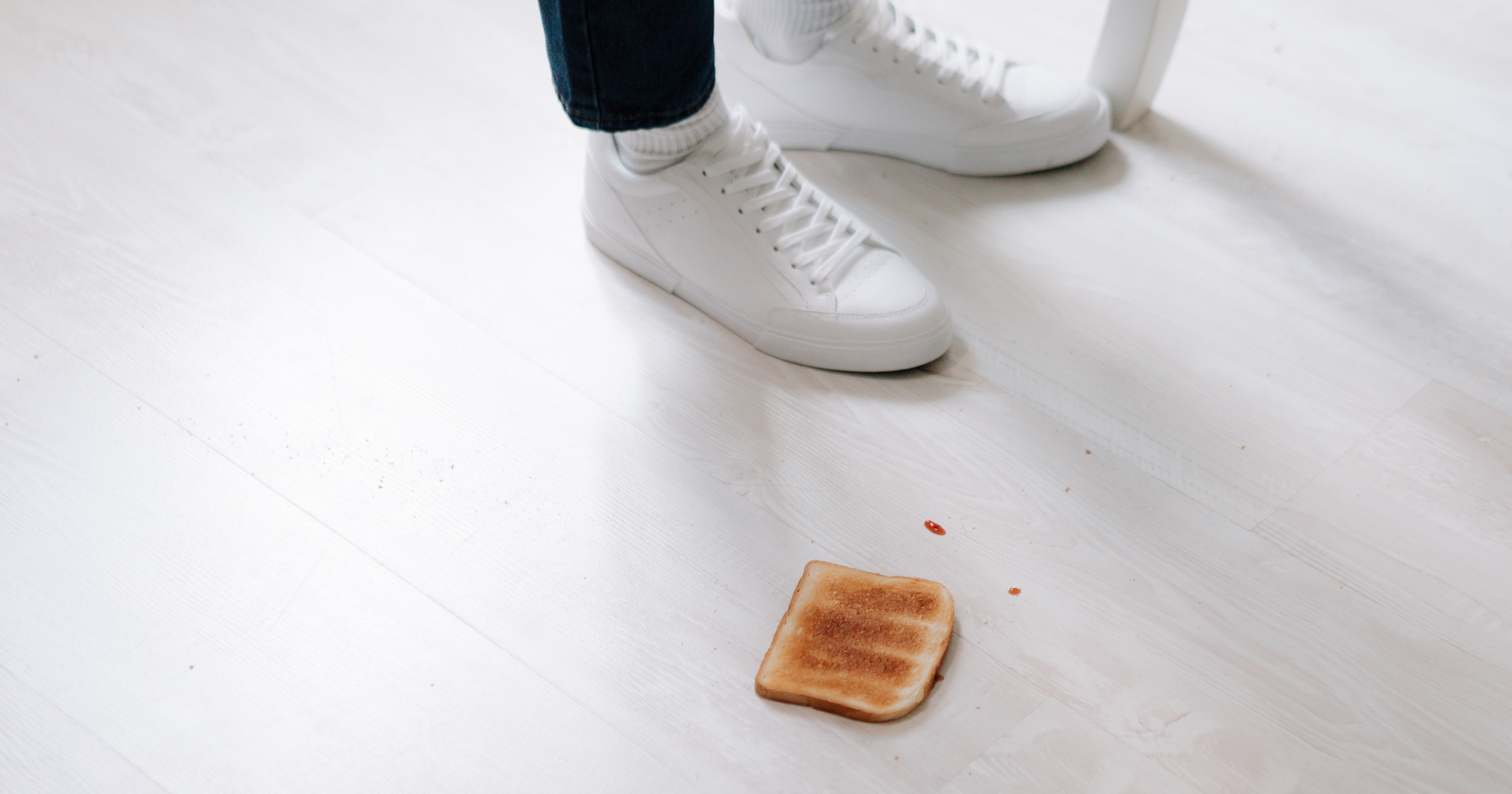
This article presents the findings of a 2016 experiment by researchers Robyn Miranda and Donald Schaffner at Rutgers University, which investigated the transfer of bacteria from contaminated surfaces to food. They found that bacteria, particularly Enterobacter aerogenes, can transfer to food almost instantly, debunking the common “five-second rule.” The experiment involved dropping food onto four different surfaces—stainless steel, glazed ceramic tile, maple laminate, and indoor-outdoor carpet—across various timeframes and with different types of food.
Key Findings:
-
Surface Comparisons: Different surfaces facilitated bacterial transfer in different ways. Watermelon, being highly moist, allowed up to 97% of bacteria to transfer, while gummy lollies allowed the least, around 62%. Carpet surprisingly had the lowest bacterial transfer (about 0.2%), likely due to its fibrous texture that retains bacteria.
-
Moisture’s Role: The study emphasized that moisture is crucial in bacterial transfer as it serves as the medium for bacteria to move between surfaces and food.
-
Previous Research: The article contextualizes this study with earlier work, notably by a high school intern Jillian Clarke, who demonstrated similar findings in 2003. It mentions other research with varying results, reinforcing the complexity of bacterial transfer in real-world scenarios.
Conclusion:
While the study provides insights into how bacteria might transfer in a controlled environment, it also highlights that typical home conditions, such as the natural cleanliness of surfaces, may significantly alter these outcomes. The findings suggest that a dry and clean floor is of low risk, whereas recent spills or wet areas present higher concerns. Thus, guidelines about food safety should account for actual conditions rather than relying solely on a set timeframe for food safety.


