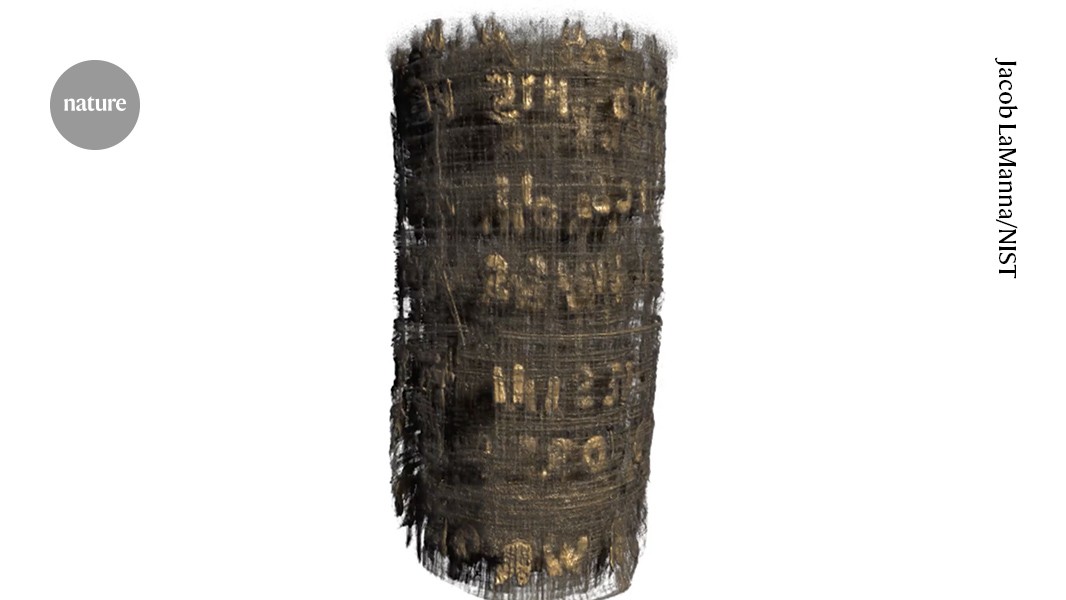
The research discussed highlights advancements in deciphering ancient scrolls carbonized by the eruption of Vesuvius in AD 79. Let’s break down the key points:
Background
- Herculaneum Library: The eruption destroyed the Roman town of Herculaneum, carbonizing over 1,000 papyrus scrolls, preserving the only known complete library from antiquity.
- Challenges in Reading: Initial attempts to unroll the scrolls led to their crumbling, halting further reading efforts.
Technological Advancements
- X-ray CT and Machine Learning: Recent innovations have enabled digital unrolling of some scrolls, allowing researchers to read the text without physically opening them.
New Methodology
- Detecting Lead in Ink: Traditional CT scans struggle as both the ink and papyrus contain carbon. The researchers hypothesized that detecting lead, which is present in some ancient inks, would improve text visibility.
- Experimentation: Douglas Seiler and colleagues recreated carbonized scrolls using authentic materials and various lead concentrations in ink.
Results
- 3D Rendering: The team scanned the burned scrolls in high detail, allowing for successful virtual unrolling and reading, enhancing our understanding of lost texts.
Significance
- This research could accelerate the process of revealing contents from the unrolled Herculaneum papyri and provide insights into ancient literature.
Conclusion
Overall, the study integrates the fields of archaeology, chemistry, and technology, showcasing how innovative approaches can revive historical knowledge lost for centuries.


