By Ivan Kesic
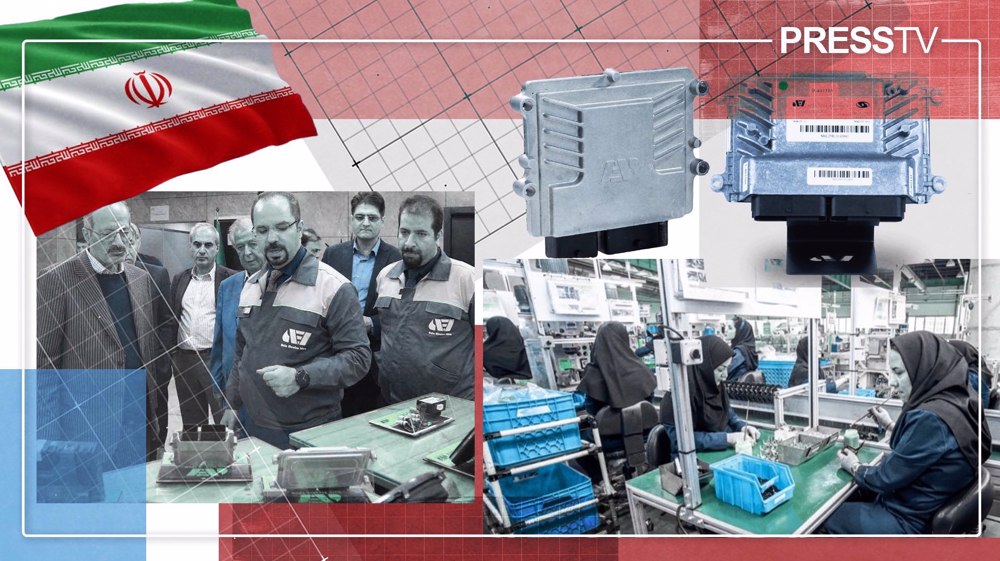
Earlier this year, Iranian engineers at a knowledge-based company in Tehran announced the start of widespread use of a new generation of advanced engine control units (ECUs), which are the electronic “brains” managing a vehicle’s engine. This innovation, led by Azin Electro Idea—part of the Azin Khodro Industrial Group—incorporates modern microcontrollers, refined software, and meticulous calibration to achieve significant reductions in fuel consumption and emissions.
What an ECU Actually Does
To grasp the importance of an ECU, it’s essential to understand its function. The ECU controls various aspects of the vehicle’s engine, processing information from numerous sensors to optimize performance, fuel efficiency, and emissions. It determines how much fuel to inject and controls ignition timing, impacting the car’s overall efficiency.
Localizing production of the ECU involves comprehensive efforts beyond merely creating a metal enclosure with a circuit board. It encompasses hardware design, embedded software, calibration, diagnostics, and more—each requiring specific engineering expertise.
Company Behind the Achievement
Founded in 2019, Azin Electro Idea began its automotive electronics research in 2016. As part of the Azin Khodro Industrial Group, it focuses on developing the country’s automotive parts industry, employing over 6,000 specialists across various segments, including advanced electronics.
Azin Electro Idea started with a small team and has quickly scaled production from ECU testing to approximately 30,000 units by the end of 2020. The company aims for a production capacity of 1,200 units per day.
Three Products and One New Generation
Azin Electro Idea’s product line includes multiple ECU types, showcasing its engineering capabilities. The SIM2K34 serves conventional vehicles equipped with Siemens wiring, while the AZMT works with electronic throttles to manage engine functions more dynamically. The AZMT CVT further extends these capabilities by managing fuel and air controls, ignition systems, and automatic transmissions.
The company’s ECUs have been integrated into vehicle programs, with successful calibration projects already in place for various models.
Software, Testing, and Environmental Impact
The new ECUs are optimized for combustion management, significantly reducing fuel consumption and emissions. Given that vehicles are a major pollution source in urban areas, these innovations aim to alleviate environmental pollution, achieving emissions levels below regulatory limits.
Prior to market release, the products undergo rigorous testing for performance, durability, and environmental compliance—key steps that confirm their automotive-grade development.
Significance for the Domestic Market
The development of these ECUs greatly enhances supply security in Iran’s automotive industry. Historically reliant on international suppliers for advanced automotive electronics, local production now reduces vulnerabilities in the supply chain. Azin Electro Idea’s efforts lessen dependence on major international players, a critical advantage in the current sanctions environment.
With an increasing market share—over 30% of domestic demand for ECUs—the company has positioned itself as a key player, enabling automakers to upgrade technology without relying on imports.
Beyond the ECU
The new-generation ECU is just part of a broader portfolio, which includes advanced instrument clusters and multimedia systems now more common in domestic vehicles. Azin Electro Idea aims to become a leading developer in both the automotive and non-automotive sectors, with aspirations to rank among the world’s top companies.
From Components to Capability
While raw materials for its products are imported, the design, calibration, and software development are domestic achievements. The company’s strategic focus extends beyond automotive applications, eyeing opportunities in railways and the oil and gas industry.
Azin Electro Idea has built comprehensive capabilities despite challenges like payment delays and exchange rate fluctuations. Overall, its journey exemplifies how Iranian engineers can adapt and innovate in the face of restrictive access to advanced technologies, contributing to a self-sufficient automotive production model.

