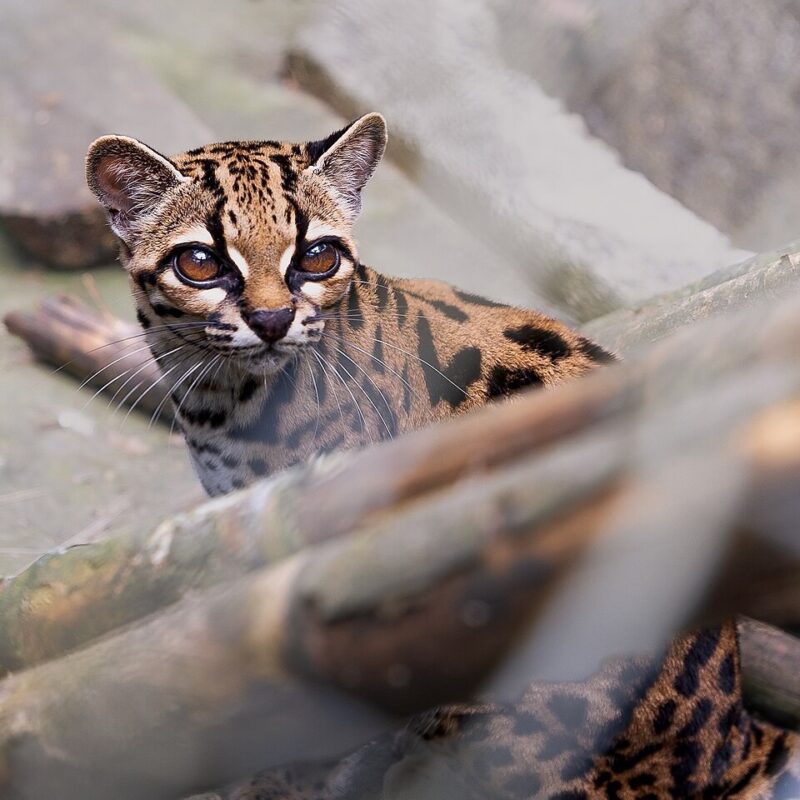
The recently identified tiger cat species, Leopardus tilcayo, is a significant discovery, marking the first new living cat species to be recognized in over a century. Found in Bolivia’s Yungas region, the species was confirmed through whole-genome data analysis of 38 individuals. It highlights the complexities of species classification in cryptic species complexes, where visually similar animals represent distinct genetic lineages.
Key Points:
-
Discovery Background: Local residents initially mistook the tiger cat for a domestic cat. Its wild behavior led to its transfer to a wildlife refuge, sparking curiosity and subsequent research by biologist Paola Nogales-Ascarrunz.
-
Genetic Analysis: The researchers, utilizing advanced genetic techniques, established that the previously grouped tiger cats actually comprise five distinct species, of which L. tilcayo is one.
-
Appearance: Leopardus tilcayo is small, roughly the size of a housecat, with light brown fur and rosettes, making it visually similar to other tiger cat species.
-
Conservation Implications: The classification of these tiger cats into distinct species helps conservation efforts by providing a clearer understanding of species distributions and their respective threats.
Additional Findings:
-
The study also recognizes a new subspecies in Peru, Leopardus tigrinus antisuyo.
-
The cat’s evolutionary history stretches back approximately 1.4 million years, indicating a long period of separation from its tiger cat relatives.
-
The research combined recent fieldwork and historical museum specimens, leveraging the field of museomics to enhance species classification efforts.
Importance:
The identification of Leopardus tilcayo illustrates how advancements in genetic research can lead to a deeper understanding of biodiversity, prompting more effective conservation strategies in response to modern threats facing wildlife.


