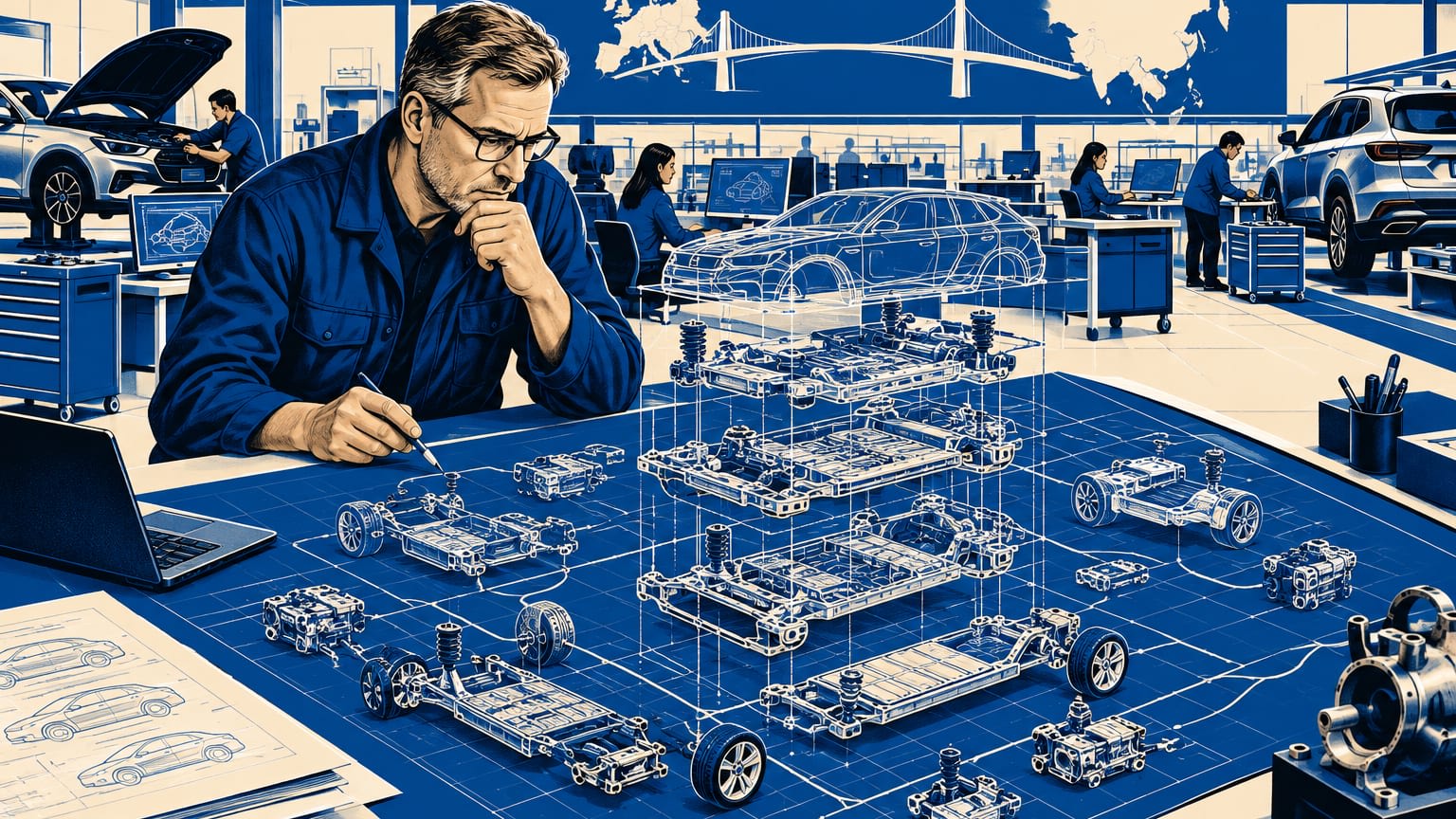
Geely is emphasizing the depth of its China-Europe engineering collaboration, built over 13 years with Volvo through their Compact Modular Architecture (CMA). Engineer Kennet Pettersson noted that he has worked on more than twice as many vehicle platforms at Geely as in his previous roles at Saab and Volvo, showcasing the efficiency and capability of Geely’s bi-national engineering system.
Jerker Andersson, Geely’s global senior chief engineer for electrical architecture, added that while establishing a research and development (R&D) center in Europe is straightforward, creating a functional organization with effective knowledge transfer is much more complex. This sentiment resonates with other Chinese automakers, like Chery, which plans to open an R&D center in the UK, but without the long-term relationships and shared culture that Geely has developed over years.
The relationship was forged on specific projects, primarily the CMA, which has allowed for extensive collaboration between Chinese and European engineers. This system aims to blend the speed of Chinese operations with the thoroughness of European engineering, balancing short-term needs with long-term durability.
Geely’s approach to vehicle development also signifies a shift towards integrating designs across markets, moving away from creating entirely different models for China and Europe. This evolution underscores the necessity of effective cross-border teams, where decisions on crucial components can be made collaboratively, regardless of location.
As Chery establishes its R&D presence, the success of this initiative will depend on its ability to foster a similar environment of cooperation that Geely has cultivated. In a competitive landscape, the effectiveness of these engineering teams will ultimately be reflected in the products they produce and the efficiency of their operations.

