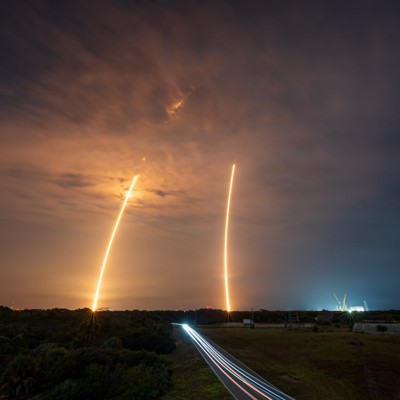
Cape Canaveral Space Force Station Enhances Drone Defenses
NATIONAL HARBOR, Md. — Cape Canaveral Space Force Station is set to bolster its defenses against small drones, responding to a heightened focus on securing U.S. spaceports amid a push for increased launch activities. The new measures will be part of a coordinated effort from the government, as emphasized by Space Force Col. Brian Chatman during the Air, Space and Cyber Conference.
New Technology for Enhanced Security
Col. Chatman, who oversees all East Coast launch missions, highlighted that Cape Canaveral is a priority for investment in advanced counter-drone technologies, provided by the Pentagon’s Joint Interagency Task Force 401 (JIATF 401). Chatman stated that these systems would integrate the latest technologies to improve detection capabilities against smaller drones.
Currently, while the base has solid defenses against larger aircraft, smaller drones pose a distinct challenge. Col. Chatman noted the need to enhance radar systems to detect and address these smaller threats effectively.
Increasing Launch Capabilities and Security Needs
Cape Canaveral is the busiest launch facility in the U.S., having launched 109 rockets in the past year. As the government aims for 1,000 launches per year by the end of the decade, ensuring the safety of such launch operations is an increasing national security priority. Experts have raised concerns about the potential vulnerabilities of launch facilities to a variety of threats, including land and sea attacks.
Collaborations for Improved Efficiency and Safety
In addition to government investments, private space companies are also contributing to enhancing security measures at the Cape. One launch service provider has proposed funding an automated scanning system to expedite vehicle inspections, potentially reducing wait times from 10 minutes to just 30 seconds.
Personnel Shortages and Future Needs
While technology upgrades are critical, the Space Force is also facing significant staffing challenges. A recent Government Accountability Office report revealed that about 25% of necessary positions remain unfilled, complicating support for increased launch operations. Some bases have reported having to close fire stations due to insufficient personnel, which raises concerns about safety and readiness during emergencies.
Col. Chatman emphasized that the Space Force will require support from the Air Force to meet the growing operational demands, highlighting the importance of inter-agency collaboration in this expansive growth phase.
Conclusion
As Cape Canaveral prepares for a future of increased launch frequency, the integration of advanced drone defense technologies, along with an emphasis on personnel recruitment and inter-service cooperation, will be crucial for maintaining operational readiness and safety in the evolving landscape of space operations.


