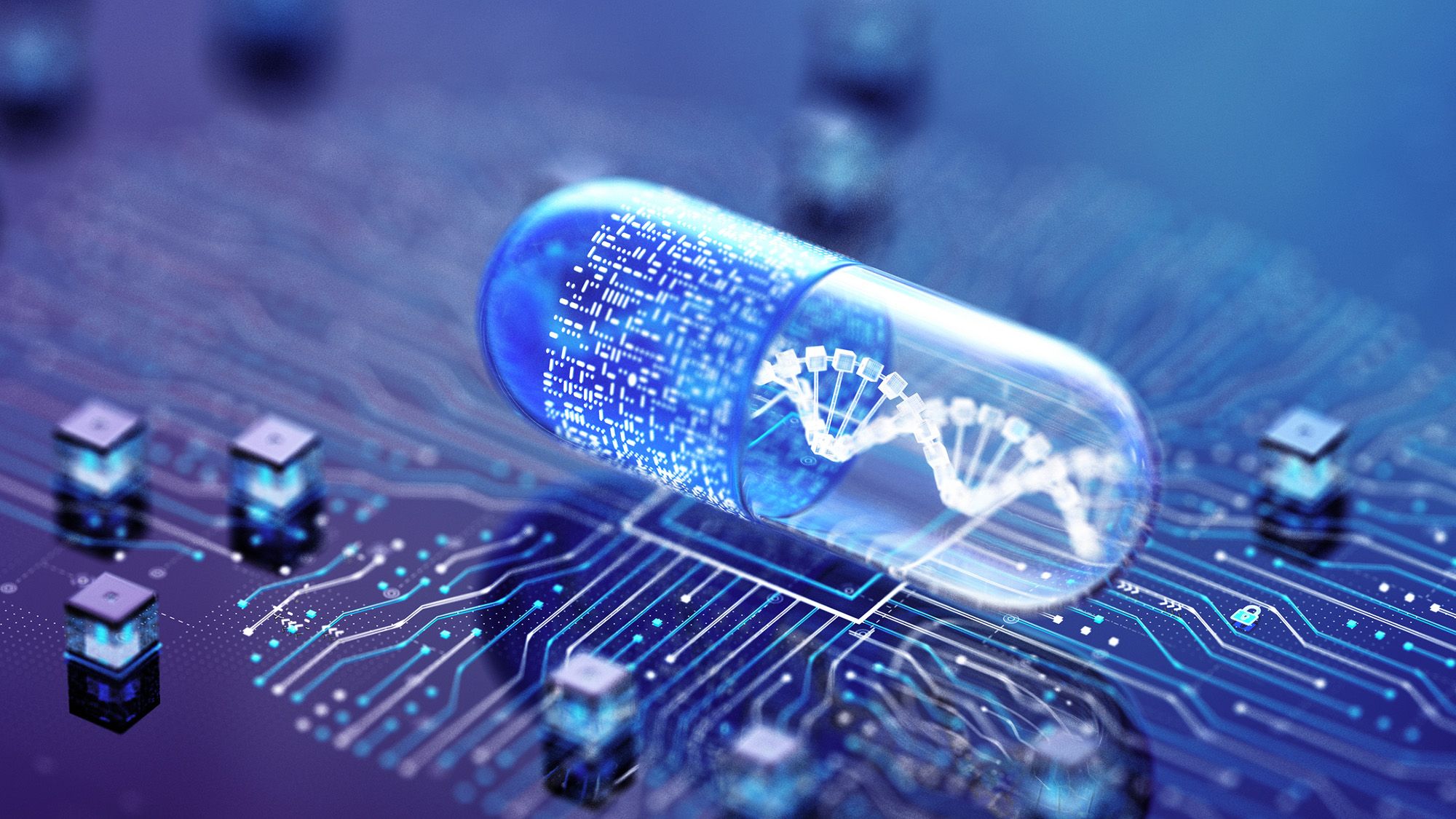
Scientists have developed a DNA-powered computer capable of performing calculations using an enormous number of DNA molecules suspended in a small drop of water. This innovative system utilizes the principles of physics, leading to greater efficiency compared to traditional computers.
Instead of consuming energy to process calculations, the DNA computer is designed to achieve a state that naturally reflects the correct answer. In this setup, the DNA molecules compete to bind to a scaffold, encoding the solution as they settle into their energetically favorable configurations.
The researchers introduced their system, termed the Scaffolded DNA Computer (SDC), in a study published in Nature. During testing, the SDC successfully executed over 700 calculations, including basic arithmetic and parity detection. While the computations can take time (with some lasting up to 14 hours), especially for more complex problems, the SDC shows promise because it is reusable and can operate in a range of conditions, making it distinct from previous single-use molecular computers.
Applications for such DNA-based systems could range from molecular data storage to computations within biological environments. Despite the current limitations in speed relative to silicon-based computers, the SDC’s ability to compute through the interactions of DNA molecules presents a fascinating new direction in computing technology.


