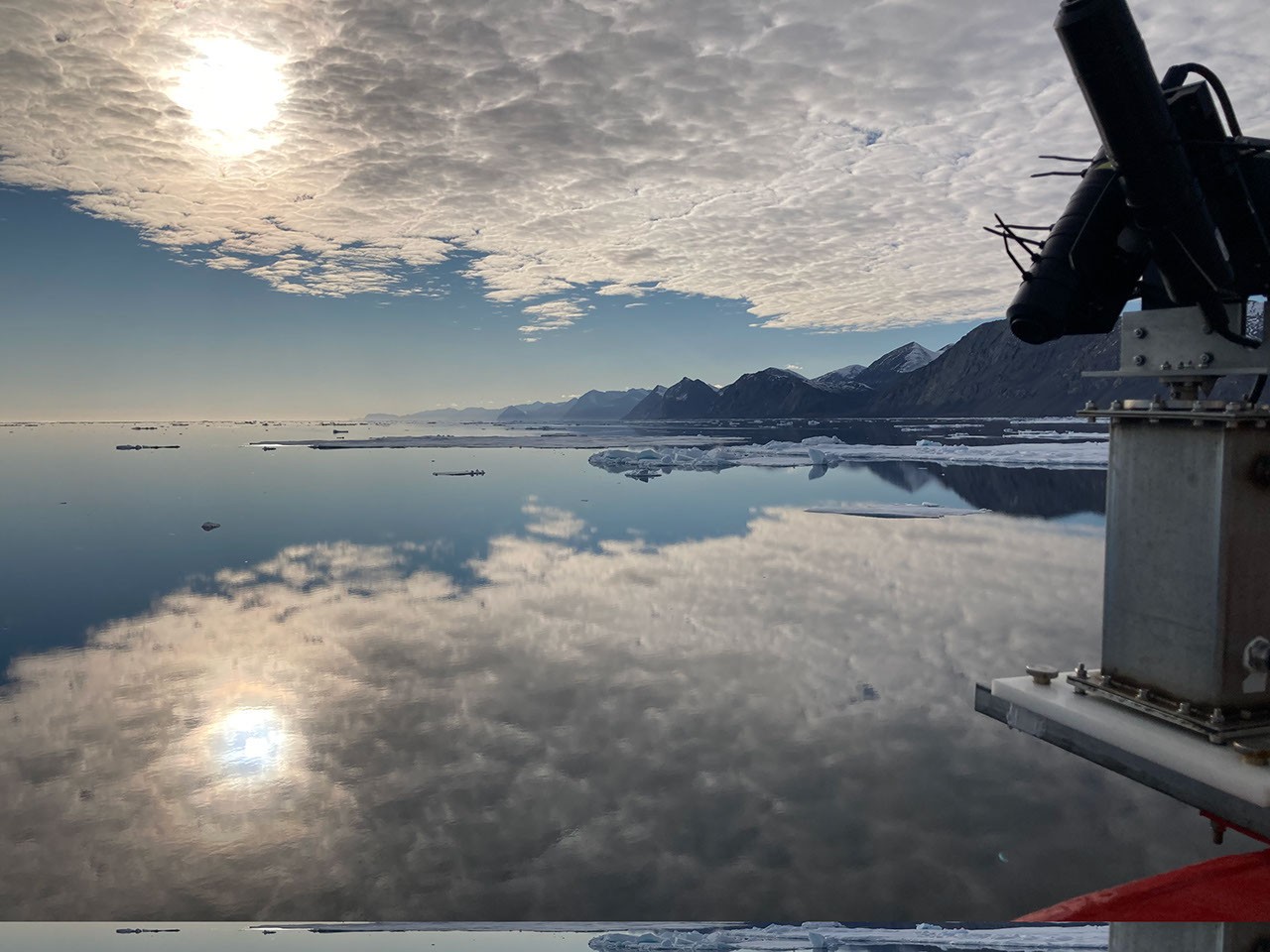
Into the Unknown
Witnessing the majestic icy landscapes of Greenland is a breathtaking experience. The glaciers are melting at an alarming rate due to global warming, yet the impact of meltwater on adjacent ocean waters remains a mystery due to limited field observations and the inherent challenges of navigating sea ice.
From August 6 to September 3, 2026, I participated in the CASCADES expedition, covering over 3,000 nautical miles to reach the Robeson Channel at 82°N. This critical area, located between Ellesmere Island and Greenland, is where cold waters and sea ice make their way southward from the Arctic Ocean. During our journey, we collected vital oceanographic data in fjords and settlements with captivating names like Ilulissat, Uummannaq, and Qaanaaq, exploring the interaction between ocean, ice, and meltwater.
Path to the Sea
As an ocean-color remote-sensing specialist, I focused on understanding how sunlight interacts with seawater and its components, paralleling NASA’s PACE satellite measurements from space. We also collected water samples to identify phytoplankton and suspended matter that contribute to the ocean’s vibrant colors. This ambitious international expedition, involving collaborators from Canada, Switzerland, France, and Greenland, aimed to unravel how carbon and nutrients traverse the ocean and how glacier melt influences this journey.
Ops and Opportunity
Each day aboard the CCGS Amundsen was unique. Our activities ranged from water sampling using CTD rosettes, gathering zooplankton and fish, to collecting sediment cores that allow us to reconstruct the history of the fjords. My specific task involved measuring light penetration in the water column and analyzing surface water color, providing insights into biological activity and phytoplankton community composition, crucial to marine ecosystems.
International Exploration
The CASCADES expedition is led by Jean-Éric Tremblay of Université Laval, with support from various organizations, including the Canadian Space Agency. Our multidisciplinary approach aims to deepen understanding of this rapidly changing environment and its implications for global climate patterns.
For more information, visit the CASCADES expedition website.


