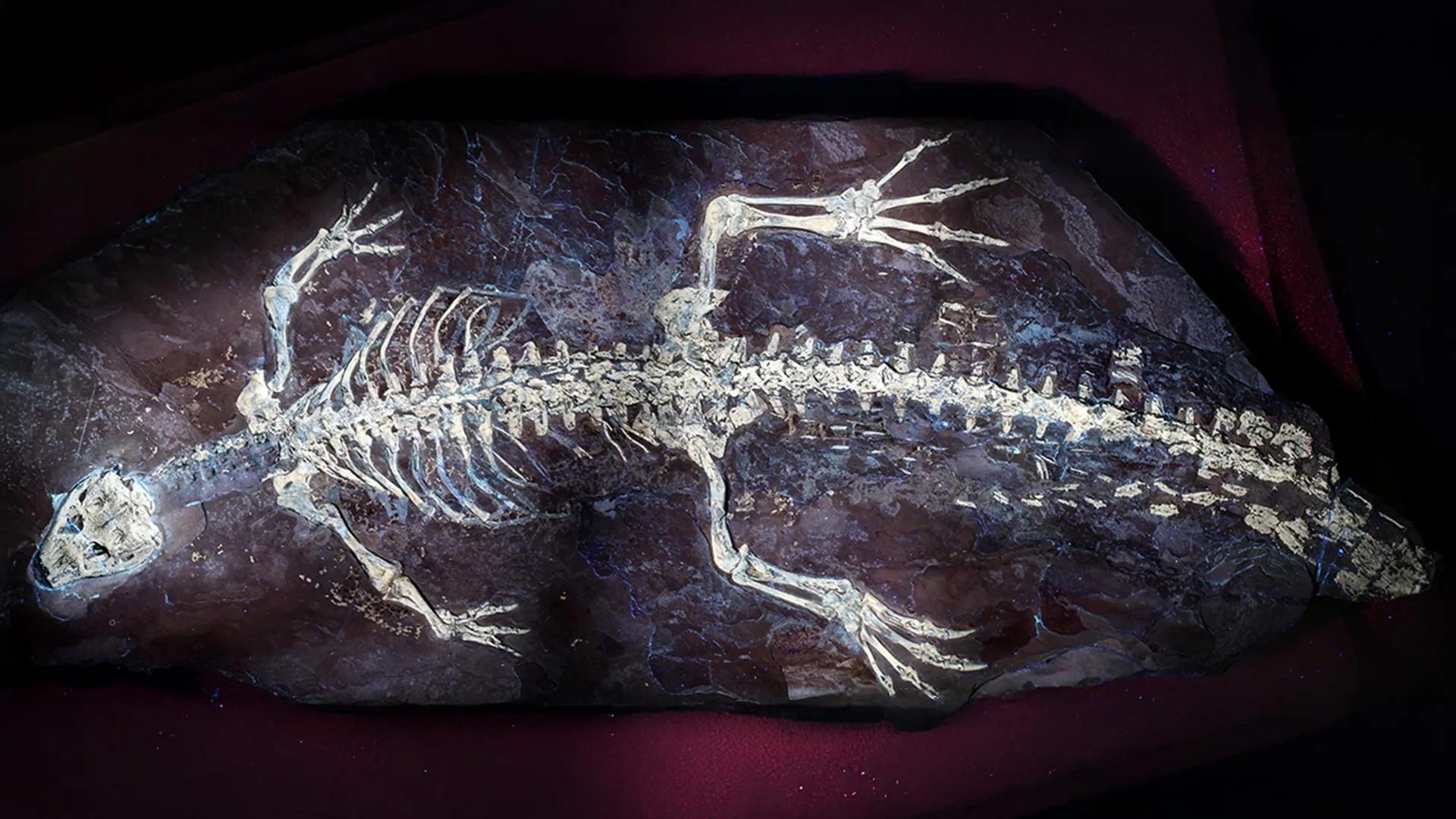
The discovery of a remarkably preserved fossil in northeastern Spain is offering new insights into an ancient crocodile relative, Montsecosuchus depereti, which lived about 125 million years ago. This study, published in the Zoological Journal of the Linnean Society, details the first comprehensive analysis of its soft tissues, including skin and sensory structures, made possible by ultraviolet light examination.
Key Findings:
-
Fossil Details:
- The fossil, approximately 50 cm long and over a century old, was found in the lithographic limestones of the Pedrera de Meià in Catalonia. Its exceptional preservation allows for unprecedented study of its morphology.
-
Soft Tissue Analysis:
- Researchers discovered varying shapes and sizes of epidermal scales. The analysis revealed a lack of modern crocodile features, like a high caudal fin, and suggested the early evolution of sensory organs in localized skin areas.
-
Respiratory System:
- Cartilaginous structures identified in the chest indicate that Montsecosuchus had an advanced respiratory system similar to modern crocodiles, suggesting early adaptations for a semi-aquatic lifestyle.
-
Coloration Patterns:
- Notably, the tail exhibited alternating light and dark bands under UV light, potentially representing its original coloration, which may have served as camouflage. This finding could make Montsecosuchus the oldest known crocodylomorph with evidence of coloration.
-
Broader Implications:
- The study contributes valuable information on the evolutionary history of crocodylomorphs while underscoring the critical role of Catalonia’s fossil record in understanding vertebrate evolution.
The Pedrera de Meià site is recognized for its exceptional fossil preservation, retaining both hard and soft tissues, and continues to be pivotal for paleontological research.


