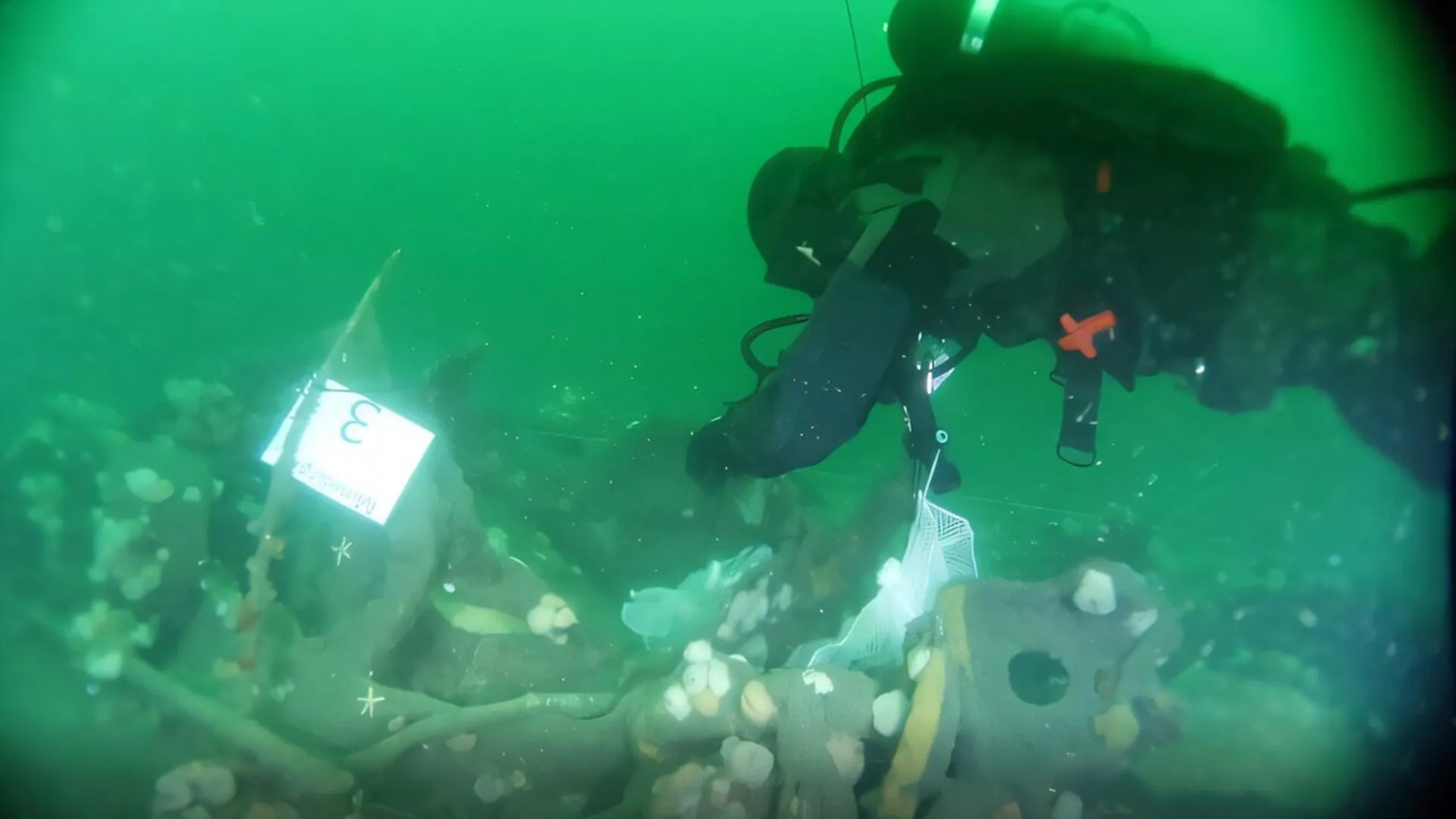
The article discusses the story of the German submarine UC-30, which sank in 1917, and the ongoing environmental concerns regarding shipwrecks in Danish waters, particularly those from World War I and II.
Key Points:
-
History of UC-30:
- UC-30 sank after hitting a British mine while returning to Germany.
- It carried many explosives, leading to the death of its 27 crew members.
-
Discovery and Environmental Impact:
- The wreck was discovered in 2016 by diver Gert Normann Andersen.
- A research project, NorthSeaWrecks, analyzed the wreck site and found traces of TNT pollution in nearby wildlife, water, and sediment.
-
The Impact of WWI:
- Naval supremacy was crucial for both Germany and Britain, leading to widespread use of submarines and mines.
- The North Sea became a graveyard of wrecks due to naval battles and mining efforts.
-
Danish Waters:
- A report in 2024 revealed the presence of over 10,000 wrecks in Danish waters, many dating from the world wars.
- Authorities are considering actions to address the pollution resulting from these wrecks.
-
Challenges in Removal:
- Germany has begun efforts to recover munitions from the Baltic Sea, but removing explosives is complex and costly.
- Sometimes, detonating underwater munitions can worsen pollution rather than mitigate it.
-
Technological Solutions:
- The REMARCO project is exploring safer remediation methods using seabed robots that can map and possibly retrieve dangerous munitions.
Conclusion:
While there are significant environmental risks associated with historical wrecks, especially from the world wars, research and technological advancements aim to identify effective solutions for managing these underwater hazards.


