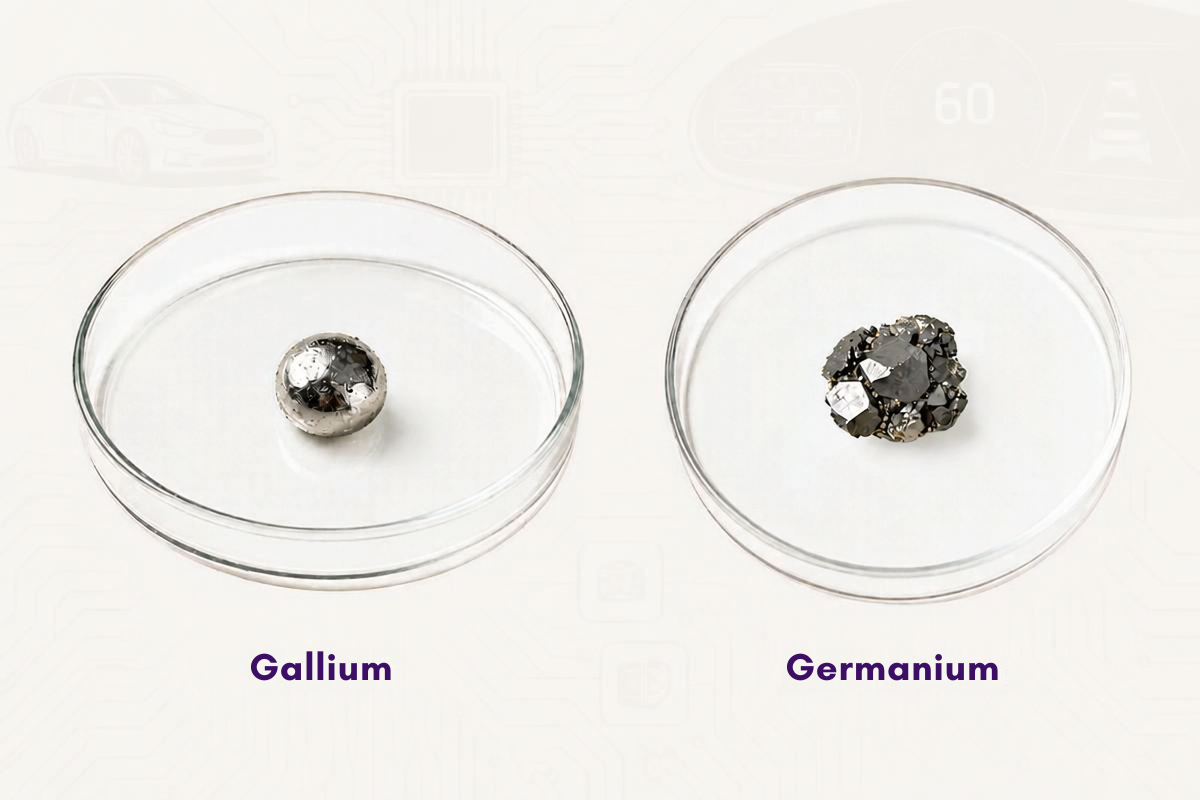
The automotive industry’s increasing reliance on electronics has heightened European dependence on imported critical minerals, especially gallium and germanium. A recent study from Chalmers University of Technology highlights their recycling potential, focusing on Electronic Control Units (ECUs) that govern essential vehicle functions, including electric vehicle battery management.
Despite currently low recycling rates—nearly zero for gallium and around 2% for germanium—the study emphasizes that industrial waste, semiconductor scraps, and obsolete electronics could become viable secondary sources if recycling infrastructure is established promptly. As electronics may account for 45% of manufacturing costs by 2030, the significance of semiconductor materials will intensify.
Both gallium, essential for high-performance semiconductor applications, and germanium, notable for its electron mobility, are recognized as critical by the European Union. However, 95% of gallium comes from alumina production by-products, and germanium is typically sourced from zinc refining residues, further complicating the supply chain, which is predominantly controlled by China.
Recent export restrictions from China have caused gallium prices to spike, reiterating the vulnerability of this supply chain. Meanwhile, recycling remains limited but has potential, especially from industrial scrap, with 30% of global germanium supply coming from recycled sources.
The study identifies companies pioneering in recycling these materials but notes that urban mining may require concurrent development of collection and recycling infrastructure. Emerging technologies like Flash Joule Heating could enhance recovery rates but are not yet widely implemented.
Challenges in recycling automotive electronics, including complexity and product design hurdles, have kept current incentives weak. As gallium demand grows, investment in efficient recovery and recycling practices will be crucial for future supply security, particularly in defense and advanced technology sectors.
The findings suggest that focusing on industrial residues and semiconductor scraps may hold more promise for Europe’s future in critical minerals than solely targeting end-of-life electronics.

