China’s Ministry of Industry and Information Technology has unveiled a comprehensive roadmap as part of its 15th Five-Year Plan for the automotive sector, aiming for a 70% market penetration of new energy vehicles (NEVs) by 2030. This target builds on the previous goal of 20% by 2025, which was exceeded with a 54% market share achieved last year. As of August, NEVs constituted 65% of car sales, suggesting that the new goal may be met ahead of schedule, potentially accelerated by rising fuel costs due to global events.
The plan emphasizes the importance of Chinese automakers becoming more competitive internationally, aiming for several to be among the top ten by sales, a position already achieved by BYD, SAIC, and Geely. However, these companies still lag behind global leaders like Toyota and Volkswagen.
To address overcapacity in the market, the ministry aims to curb excessive investment and enhance industry consolidation, while also enforcing antitrust measures. This comes in response to a significant decline in car sales earlier this year and concerns about safety and quality, particularly with connected and autonomous vehicles.
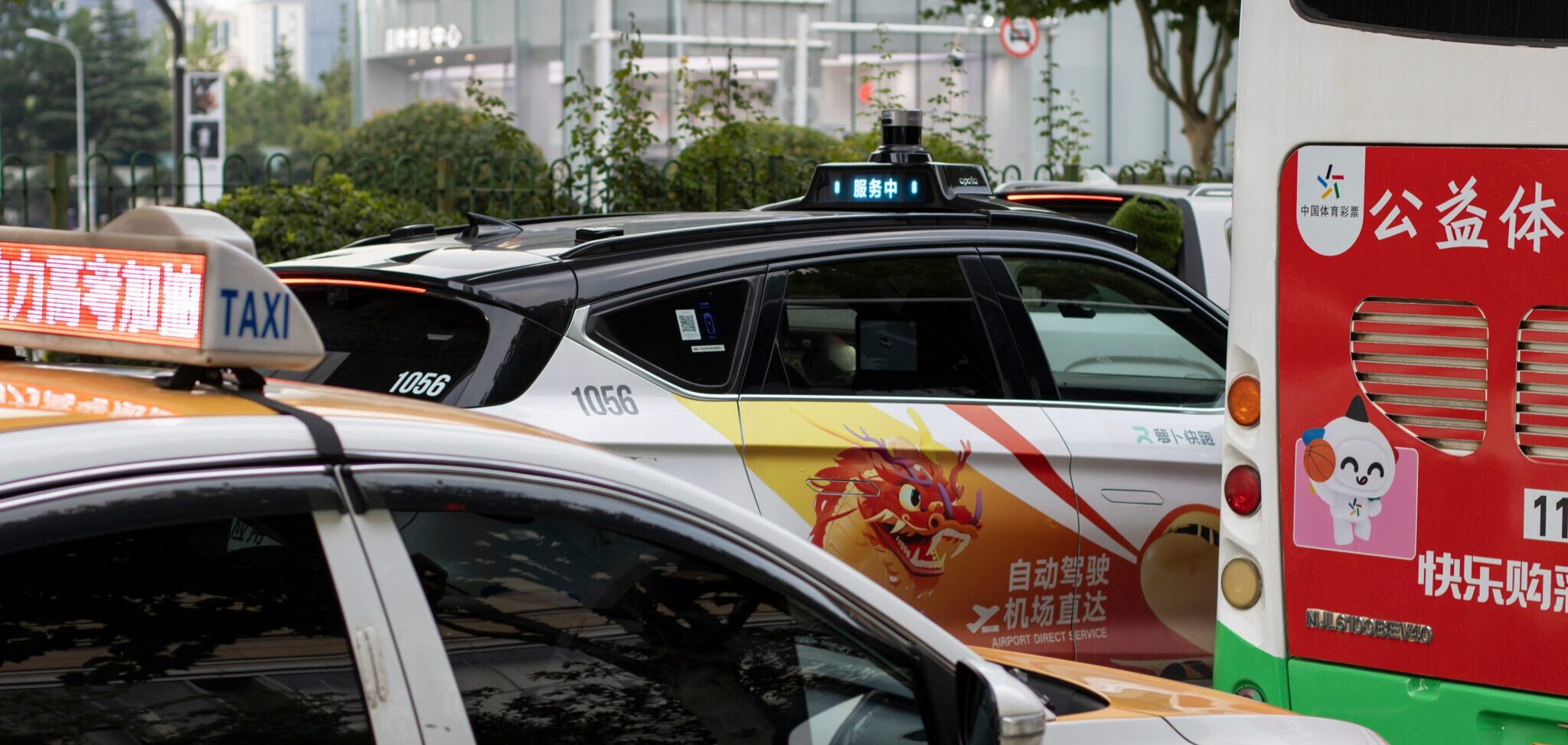
Notably, the roadmap emphasizes a distinct approach to autonomous driving, focusing on developing connected roadside infrastructure and vehicle-to-everything (V2X) systems in urban areas. This infrastructure-first model, contrasted with the vehicle-centric approaches of companies like Waymo and Tesla, seeks to share the computational load between vehicles and centralized municipal systems.
Further, the plan promotes the development of new battery standards and advocates for enhanced recycling practices of essential materials. A shift toward end-to-end AI in software development for autonomous driving aims to reduce dependency on intricate sensor systems and detailed HD mapping.
Overall, China’s strategy is geared towards facilitating a comprehensive ecosystem for NEVs and AVs, balancing innovation with safety, sustainability, and global competitiveness.

