Alaska Science Forum Time Capsule: Color Guard
Published 4:30 PM Wednesday, September 9, 2026
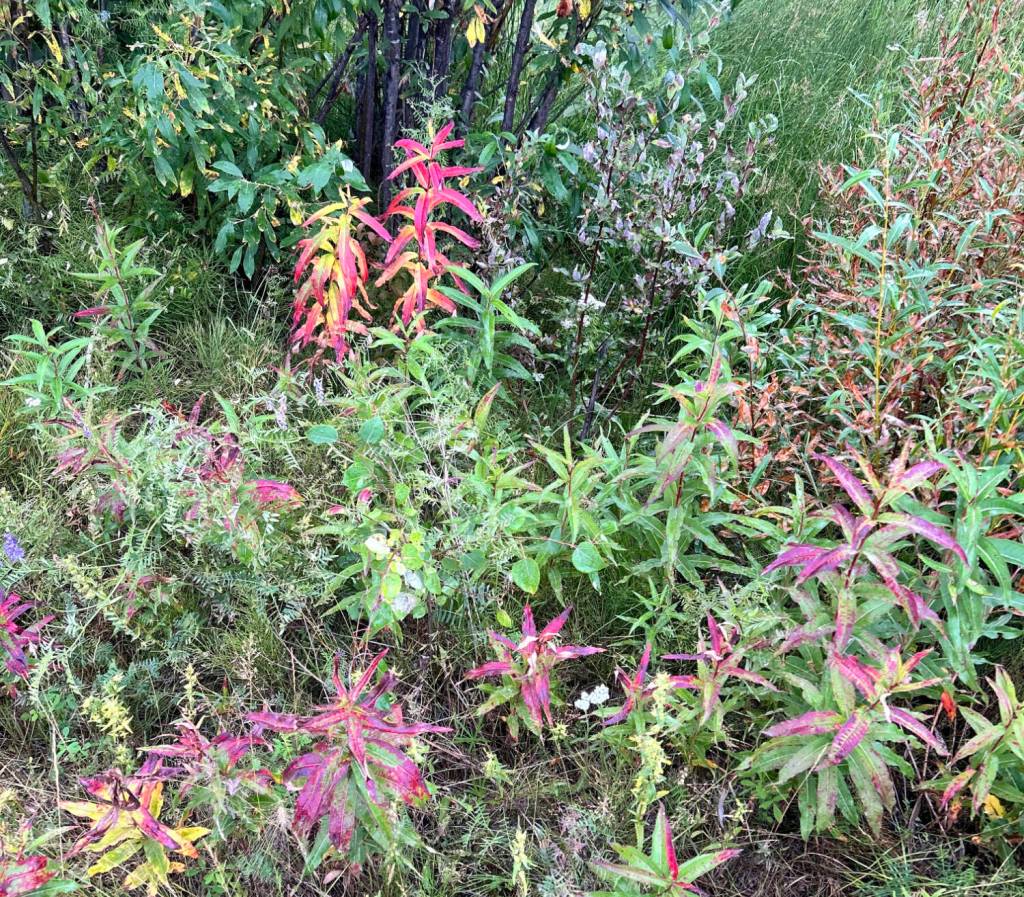
On the morning of September 3, 2026, all the leaves in Goldstream Valley were coated with frost—impacting both green willows and purple fireweed leaves. This phenomenon recalls reflections from Carla Helfferich’s piece for the Alaska Science Forum, originally published on September 11, 1997.
Carla’s narrative captures a weekend trip through the Alaska Range, where the breathtaking scenery along Isabel Pass held a subtle flaw: bright golden willows and vibrant purple dwarf fireweed leaves hinted at an early arrival of fall colors.
By early August, autumn was creeping in. “Why do the doggone plants have to start changing colors so early?” the author lamented, sparking discussions that led to deeper insights about plant survival at high latitudes and altitudes. These perennial plants, like willows and fireweed, engage in a high-stakes survival game each year.
Their survival strategy is straightforward: grow rapidly, flower, produce seeds, and conserve energy for the winter ahead. Plants that excel in this game survive to see another spring, while those that don’t ultimately perish. Factors such as hungry moose or shifting riverbanks can disrupt their chances, yet the plants that manage their energy well tend to thrive.
Flowering requires energy, and while a prolific bloom can lead to a bountiful offspring, the plants must balance immediate energy needs with future survival. Defensive chemicals protect against insects but deplete energy reserves—striking a precarious balance is key. Unlike human gamblers, plants operate on evolutionary programming, optimizing their decisions based on past successes.
The varying colors in Isabel Pass illustrate different survival strategies. Some willows, already yellowing, are betting on an early winter—effectively withdrawing needed resources from their leaves. In contrast, those remaining green are taking a risk, hoping winter holds off longer. Fireweed exhibits similar behaviors, showcasing a blend of risk and conservative energy management.
With climate change possibly altering timelines, the more conservative color-changers might eventually be outpaced by those holding onto their summer greens. However, significant changes in this dynamic are likely beyond our lifetimes.
Since the late 1970s, the University of Alaska Fairbanks’ Geophysical Institute has provided the Alaska Science Forum column free in cooperation with the UAF research community. Carla Helfferich penned for the forum from 1988 to 1994.