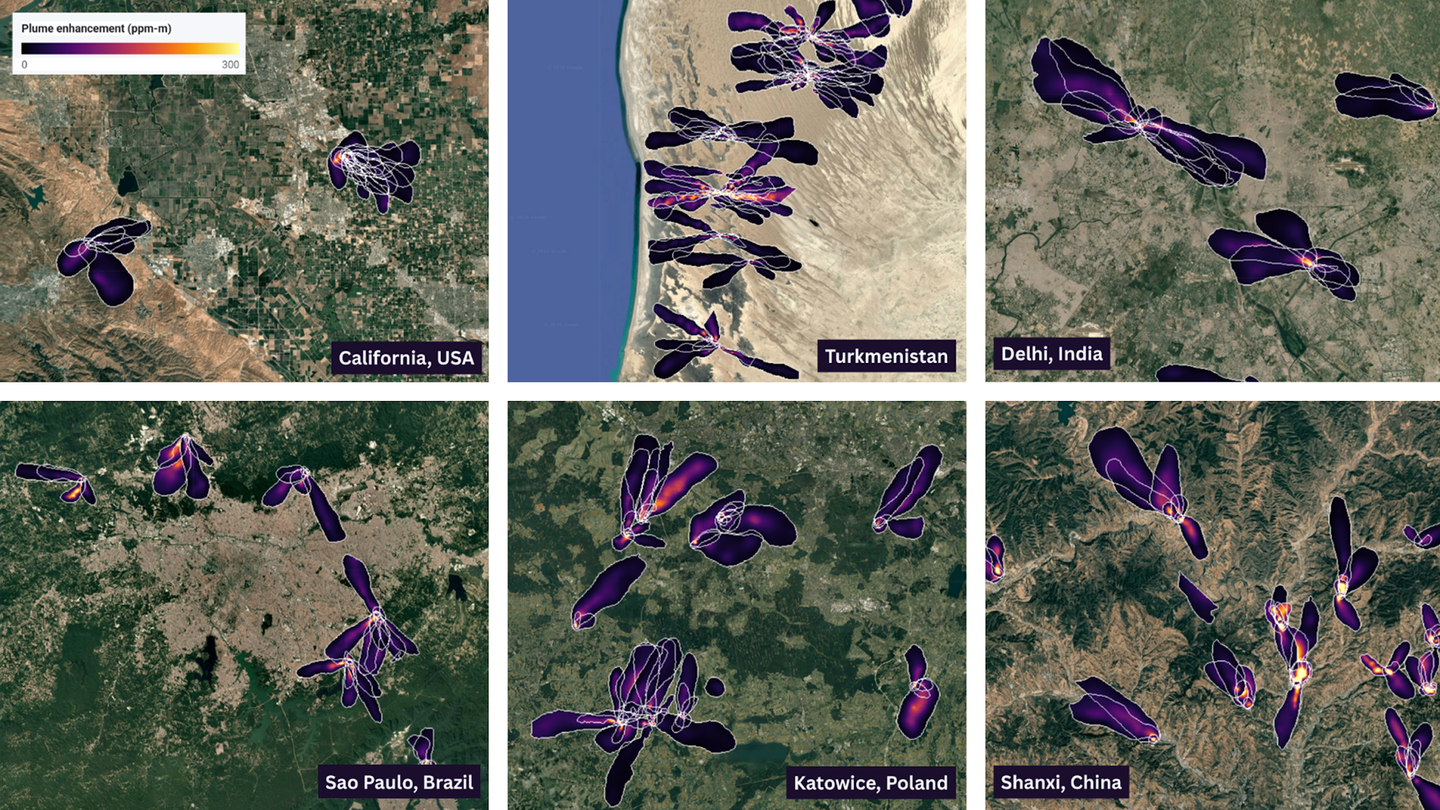
A recent study published in PNAS introduces MAPL-EMIT, an AI model developed by Google and NASA’s Jet Propulsion Laboratory (JPL) that tracks global methane emissions from space using NASA’s EMIT instrument. Methane, a potent greenhouse gas with a warming potential 30 times greater than carbon dioxide over a century, poses significant climate challenges.
MAPL-EMIT addresses a key bottleneck in methane detection by leveraging a dataset of 3.6 million simulated methane plumes. It significantly improves detection rates, finding 50% more plumes than human experts and uncovering over 23,000 additional sources, including the majority of the world’s largest emitting landfills. This enhances the ability to locate methane sources, facilitating quicker and more effective climate mitigation strategies.
Google has made the global plume database accessible via Earth Engine, along with an app for data visualization. Open-source models and inference tools are also available on Kaggle and GitHub for use by researchers, policymakers, and industry operators. For more details, you can check the Google Research blog.