By Marcia Dunn, AP Aerospace Writer
Published: Sept. 6, 2026, 2:42 PM PT
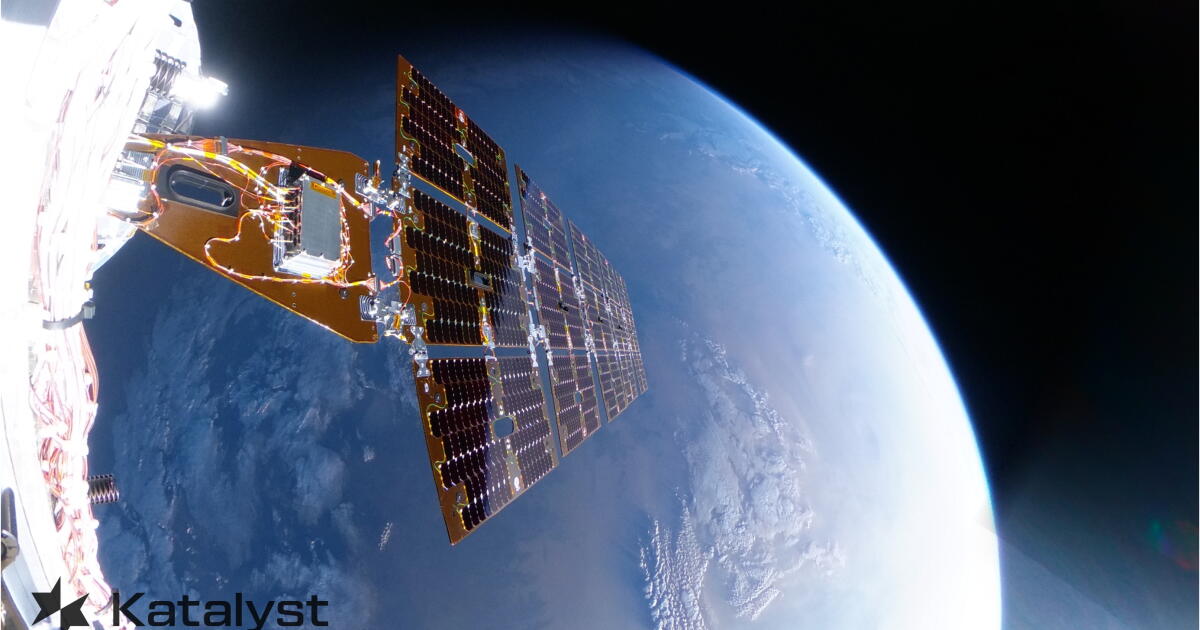
CAPE CANAVERAL, Fla. — A private spacecraft aimed at aiding NASA’s Swift Observatory came close to the failing telescope and captured images two weeks after the rescue mission was halted.
The three-armed robotic salvager, named Link, was forced to retreat due to low fuel levels, according to Katalyst Space Technologies.
“We got so close, but so far,” said Katalyst CEO Ghonhee Lee in an interview with the Associated Press.
Katalyst’s Link spacecraft reached within nine miles of Swift last Tuesday, gathering important sensor data for NASA. The rescue mission was initially abandoned in August due to Link’s operational issues, but Katalyst sought to gain experience for future satellite-servicing missions.
Link encountered significant problems shortly after its launch in July. Flight controllers stabilized the spacecraft as it entered an uncontrollable spin, depleting valuable fuel reserves. Ultimately, there wasn’t enough fuel to adjust Swift’s orbit for prolonged observations.
Lee attributed Link’s difficulties to a hurried assembly process, stating that the mission was completed in just nine months, often using available components instead of preferred parts.
NASA invested $30 million in this mission, viewing it as a low-risk experiment, although both parties were cautious about the possibility of space debris resulting from a collision.
“Unfortunately, it wasn’t the outcome we were expecting,” remarked NASA Administrator Jared Isaacman. “But that’s the type of missions we should be undertaking at NASA, as we will learn from the experience.”
Isaacman emphasized the importance of extending the lifespan of valuable spacecraft, particularly when salvaging is more cost-effective than replacement. This philosophy informed the design of the recently launched Roman Space Telescope, which is built for refueling, despite being stationed a million miles from Earth.
Lee suggested that Link likely lacks sufficient fuel for another close approach to Swift but will continue to operate its arms and collect data until it reenters the atmosphere and burns up.
Launched in 2004, Swift has a limited remaining lifespan, which is contingent on solar activity. Intense solar storms have hastened its descent, with its orbit currently at 208 miles, significantly lower than its original altitude.
NASA predicts that Swift will reenter the atmosphere between October and the year’s end. The agency resumed observations with Swift last month after a halt earlier this year to conserve energy.
Like Swift, the orbit of the Hubble Space Telescope has been affected by solar activity. Katalyst is working on a next-generation spacecraft to potentially boost Hubble into a more stable orbit.
“Hubble still has a few years of life left, right? So the good news is this isn’t imminent,” Lee stated.
He concluded that servicing aging telescopes and satellites is becoming less niche and more standard practice in the industry.