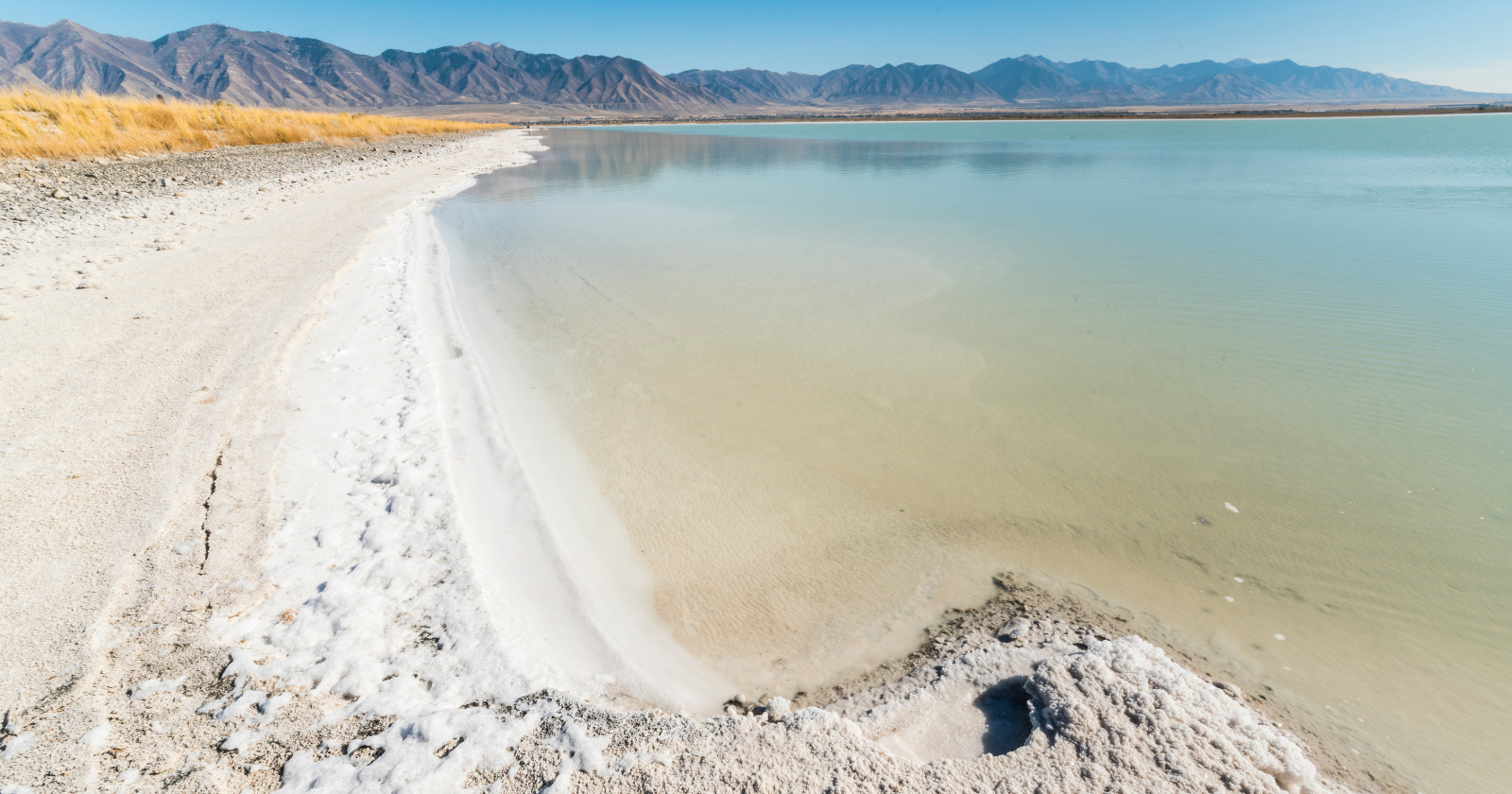
The phenomenon of fresh water rising beneath the salt crust of Farmington Bay in Utah’s Great Salt Lake has sparked significant interest. The discovery of circular patches of reeds, known as phragmites oases, indicates that fresh water is pushing up from below, contrary to the typical conditions of salt flats.
Key Highlights
-
Surveying Methodology:
- In February 2025, researchers used airborne electromagnetic sensors to survey the area, differentiating between brine and fresh water based on electrical conductivity.
- Results showed a transition from brine near the surface to fresh water about ten meters down.
-
Underground Structure:
- Analysis revealed an unusual geological formation, where most of the sediment falls off sharply to depths of three to four kilometers beneath the reed mounds.
-
Historical Context:
- Research indicates that the deep water may have existed for thousands of years, possibly leftovers from Lake Bonneville, a prehistoric freshwater lake.
-
Variability in Water Composition:
- Research on the southern shore presented a different story, indicating layers of brine and pockets of fresh water at various depths, showing lateral variation in the subsurface.
-
Environmental Implications:
- The Great Salt Lake is the saltiest body of water due to evaporation and has shrunk significantly since 1989, raising concerns about dust pollution.
-
Water Management:
- Proposed strategies involve drilling wells to manage dust and potentially utilize the fresh water without depleting the aquifer to a point where the reed circles vanish.
-
Future Research Needs:
- While there is evidence of fresh water resources, precise volume estimations and sustainable extraction rates remain uncertain, highlighting the need for ongoing research.
This evolving understanding of the hydrology beneath the Great Salt Lake has important implications for water resource management, particularly amidst challenges related to climate change and increased evaporation in the region.