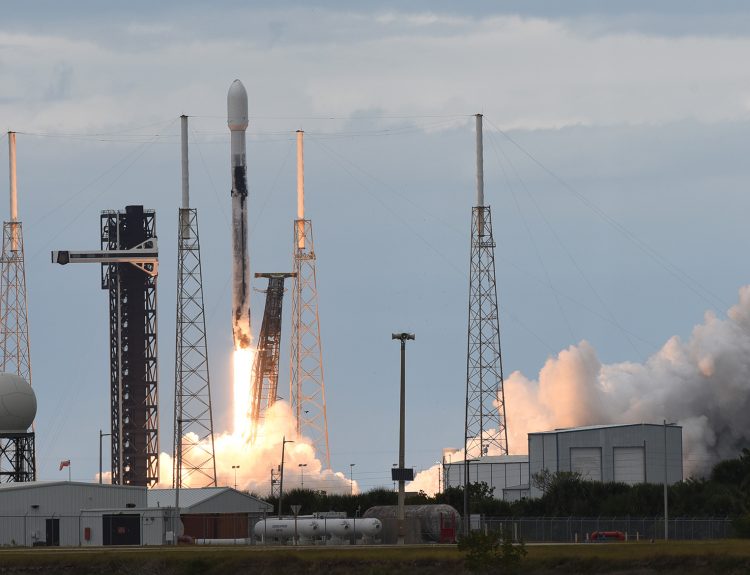
ANDØYA, Norway — Isar Aerospace, a German private rocket company, has made history by successfully launching a payload into orbit from continental Europe for the first time.
Highlights of the Mission
- The “Onward and Upward” mission occurred at 8:12 p.m. UTC from Andøya Spaceport, located approximately 190 miles inside the Arctic Circle.
- The Spectrum rocket carried out all its mission objectives, including passing through MaxQ, achieving main engine cutoff (MECO), successfully separating stages, and reaching orbital velocity.
- It crossed the Kármán line, the internationally recognized boundary of space at an altitude of 100 kilometers, and released its payload fairing.
- The mission delivered CubeSats into a sun-synchronous orbit around 500 kilometers above the Earth, ensuring consistent lighting conditions for imaging and monitoring.
CEO Statement
Daniel Metzler, the CEO and Co-Founder of Isar Aerospace, expressed pride in his team’s accomplishment, stating:
“We achieved within a few years what had taken the European space industry decades before. Europe now has sovereign access to space. We have entered into a new chapter for European spaceflight.”
Background of the Spectrum Rocket
This was only the second flight of the Spectrum rocket; its first attempt in March 2025 ended unsuccessfully. Historically, Europe has launched satellites primarily from Kourou in French Guiana.
Payload Selection
The mission’s payloads were chosen through the German Space Agency’s Microlauncher Competition, aimed at providing low-cost access to space for educational institutions and start-ups.
“Onward and Upward” Mission of Isar Aerospace. Source: YouTube
Understanding Orbits
The CubeSats were sent into a sun-synchronous orbit, allowing them to cross the same point on Earth at the same local time daily—critical for consistent data collection.
Types of Orbits
- Low Earth Orbit (LEO): 160 to 2000 km; used by satellites like the International Space Station, offering high-resolution views but suffering from atmospheric drag.
- Polar Orbit: Offers complete global coverage but with varying local times for imagery.
- Medium Earth Orbit (MEO): Includes GPS satellites; easier viewing at a larger scale but more challenging to reach.
- Geostationary Orbit (GEO): Located over the equator, providing constant coverage of a particular region, though challenging to reach.
For further insights, you can view related coverage on Isar Aerospace’s YouTube Channel.