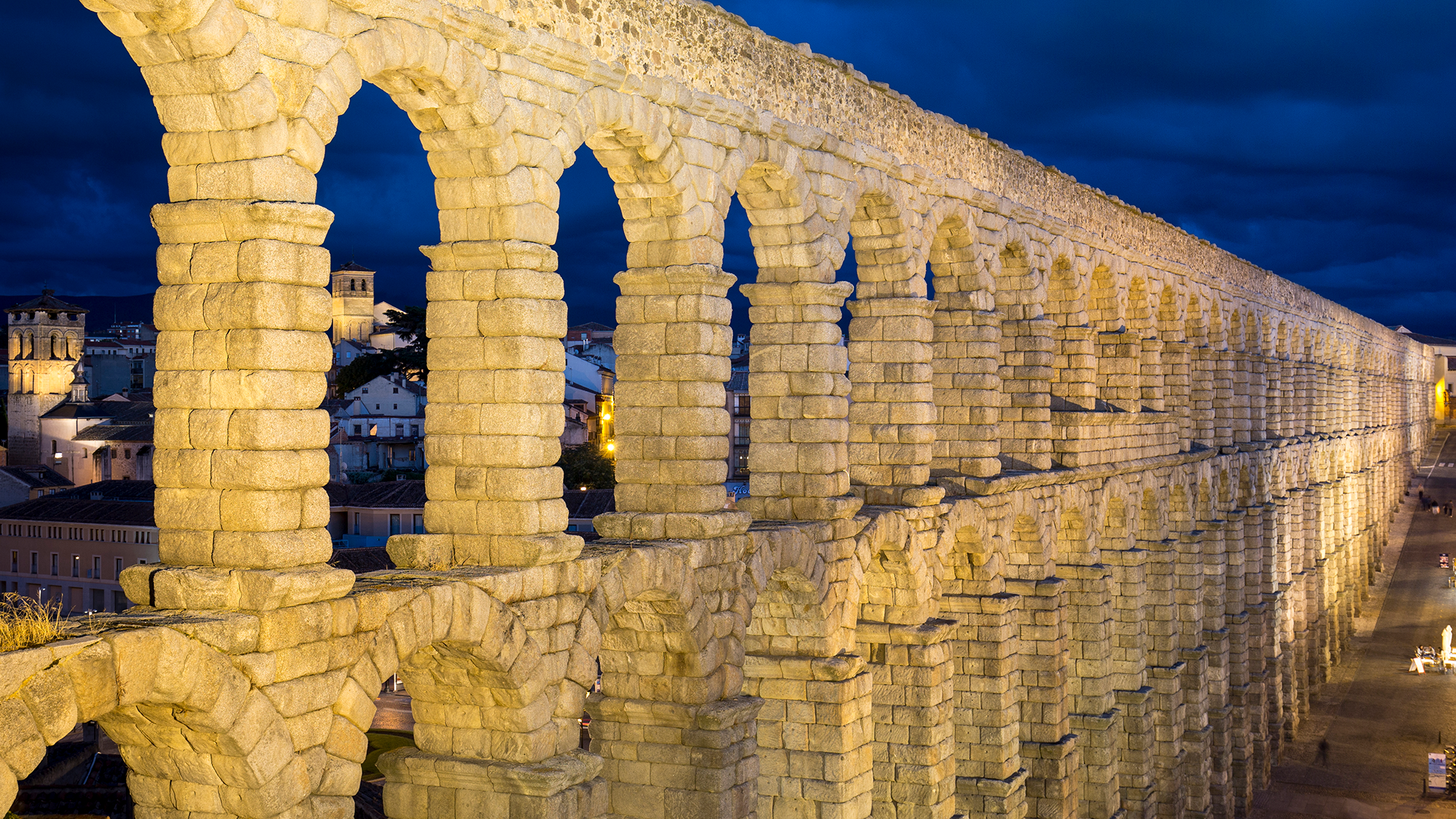
The Romans are famed for their remarkable aqueduct systems, which transported water to cities across vast distances. One notable example is the Valens Aqueduct, which stretched 250 miles (400 kilometers) to supply Constantinople (modern Istanbul).
To build these enduring aqueducts, the Romans meticulously selected water sources, often opting for springs. The design featured an ever so slight downward incline, ensuring a consistent flow toward the intended destination. Expert surveyors utilized tools like the libra and dioptra to determine proper routes and gradients.
Roman concrete, which included pozzolan, provided durability and longevity, crucial for structural elements in aqueducts. Additionally, strategic route selection over stable geological formations, and meticulous maintenance, often continuing into the Middle Ages, contributed to their preservation.
Some aqueducts even incorporated underground sections, with the final stages often featuring pools to sediment pollutants before entering distribution tanks. Maintenance required significant manpower, with estimates suggesting that around 500 workers could construct a 12.4-mile aqueduct in 15 years. Remarkably, many Roman aqueducts, including the Aqua Virgo built in 19 B.C., are still operational today.