President Trump Proposes United States Space Academy
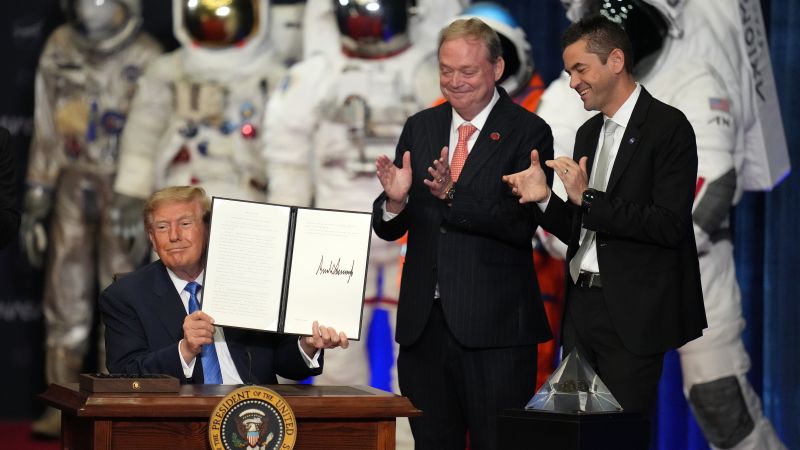
President Donald Trump is putting forth a proposal to establish a “United States Space Academy,” aimed at offering a tuition-free, four-year degree similar to those available at U.S. military academies. Instead of requiring graduates to undertake active-duty military service, those who complete their education at this federally funded institution could fulfill their obligations by taking positions at NASA or in other government civilian roles.
The initiative, detailed in an executive order signed on August 28, is intended to train a new generation of professionals, including astronauts, scientists, engineers, and civil servants. However, specifics about the academy’s administration and eligibility criteria will be decided by a commission led by NASA Administrator Jared Isaacman, which is expected to outline key details by Christmas.
Prior to leading NASA, Isaacman proposed a similar idea called the “Starfleet Academy,” inspired by the iconic “Star Trek” series. Alongside Isaacman, some lawmakers, including Senator Tommy Tuberville, have championed the idea of a Space Academy, though concerns about necessity have been raised.
Advantages and Challenges
Proponents assert that a dedicated Space Academy could address the increasing need for skilled professionals in the space sector, as NASA is facing stiff competition from the private sector for talent. A free education without military obligations could attract top students.
However, experts question the practicality and necessity of such an institution. Dr. Eric Merriam, a legal studies professor at the University of Central Florida, stated that a Space Academy must offer capabilities that currently existing educational institutions do not provide. There are concerns about costs, bureaucratic hurdles, and potential politicization of the curriculum.
Funding and Legislative Approval
One critical hurdle is how Congress will respond to the proposal, especially given that similar military academies cost around $1 billion annually. Currently, Trump’s executive order did not include congressional representatives on the commission that will develop the academy’s plans, prompting skepticism from some lawmakers about the project’s funding sources.
Broader Implications for Space Education
While some view the academy as an opportunity to train future leaders in the space sector, critics argue that enhancing current educational frameworks could serve the same purpose without incurring the costs and complications associated with a new institution. Many fear that the proposal is at odds with the administration’s history of budget cuts to NASA’s education and science programs.
In summary, while the proposition of a United States Space Academy has garnered interest, it brings forth several pressing questions regarding financial feasibility, institutional viability, and the broader context of U.S. space education and policy.