Skiing Without Snow: Bridging the Gap through Innovation in São Paulo
For Dr. Grazielle “Grazi” Lorenzini Bertucci, skiing has never been an obvious passion — at least geographically.
Though she grew up in São Paulo, Brazil, far from the snowy slopes, Grazi found a way to blend her medical expertise in sports medicine with her love for skiing. Her journey began with her first experience on skis at age 9, influenced by her family’s European roots in Austria and Italy.
Today, Grazi is pioneering an innovative approach in Brazil to help skiers — both experienced and newcomers — prepare for the slopes through the use of ski simulators. Operating out of a physiotherapy clinic known as Movitta, she encountered a recurrent issue: Brazilian skiers returning from vacations abroad with injuries.
The Skiing Dilemma
Unlike seasoned skiers living near prominent mountain regions, most Brazilians ski infrequently, often only for a week each year. This infrequency poses challenges such as fatigue and injuries from attempting to re-adapt to skiing after months of inactivity.
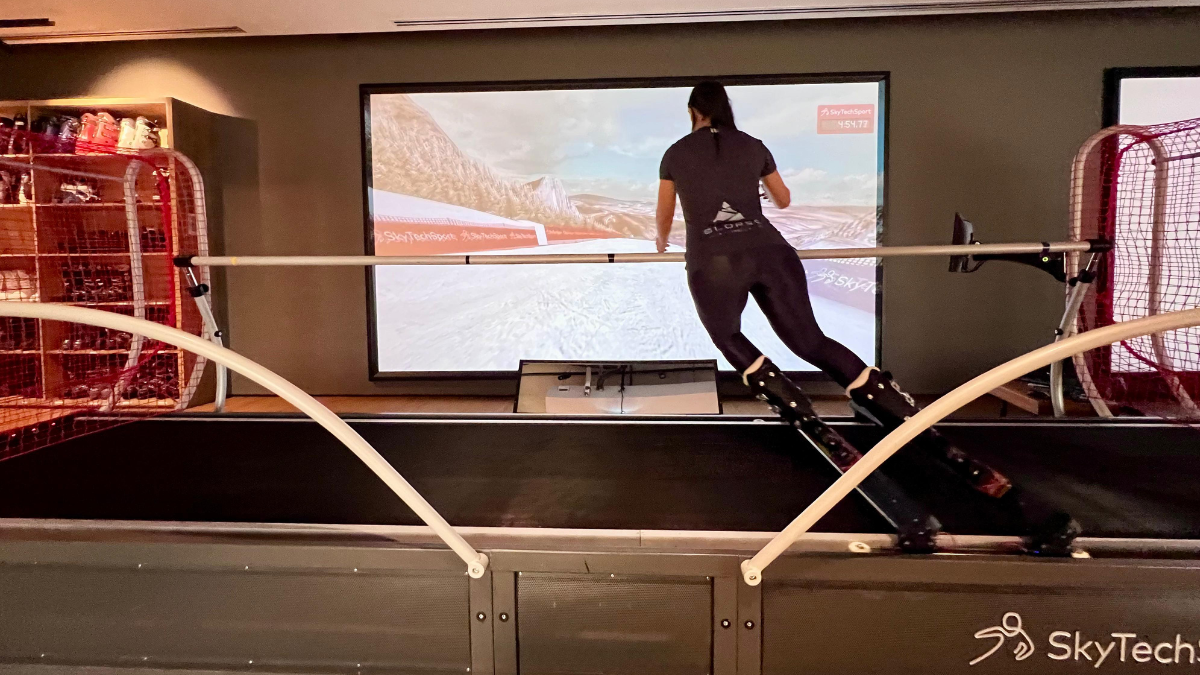
Many beginners struggle even more, having to learn essential movements like balance and weight transfer in a limited time. In 2024, Movitta introduced two SkyTechSport ski simulators to address these problems, allowing patients to simulate the skiing experience without needing to leave Brazil.
A Controlled Environment for Rehabilitation
Grazi highlighted the simulator’s role by stating, “It allows athletes to progressively rebuild confidence, coordination, balance, and strength before returning to the slopes.” The controlled environment of the simulator minimizes risk and allows for gradual reintroduction of ski-specific movements.
With additional training on the simulator, experienced skiers maintain their skills throughout the year, while beginners learn foundational skiing techniques. For those returning from injury, the simulator acts as a crucial bridge between traditional rehabilitation and the actual slopes.
Bridging Rehabilitation and Ski Training
Movitta’s innovative approach sparked the creation of the Slopes Ski & Snowboard Club in July 2025, entirely dedicated to snow sports training. This center now houses four SkyTechSport simulators and serves as a hub for Brazil’s skiing community — a community that often travels to ski abroad but previously lacked local training options.
Movitta focuses on rehabilitation and injury prevention, while Slopes expands into technical skill development for skiing and snowboarding. This unique dual-operation enhances both the physical preparation required to ski and offers recreational skiers an opportunity to engage in their favorite sport in warmer climates.
Making Skiing More Accessible
With ski simulators, Brazilians can practice ski-specific movements year-round. Beginners are taught foundational skills before their first trip to the snow, while recurring skiers can refine their techniques between vacations. This means that skiing no longer has to be limited to a weeklong trip; it can be part of a healthy lifestyle year-round.
Grazi emphasizes the potential for ski simulators to democratize skiing in Brazil. “They make skiing more accessible and encourage a healthier, more active lifestyle,” she stated.
Conclusion
The rise of ski simulators in Brazil illustrates an ingenious solution to geographical challenges. By transforming how skiing is practiced and prepared for, Grazi and her colleagues are building a thriving ski culture in São Paulo. While the mountains may still be miles away, the joy of skiing is much closer to home.