Lettuce Transformed into Protein Factories: The Future of Alternative Meat
Overview
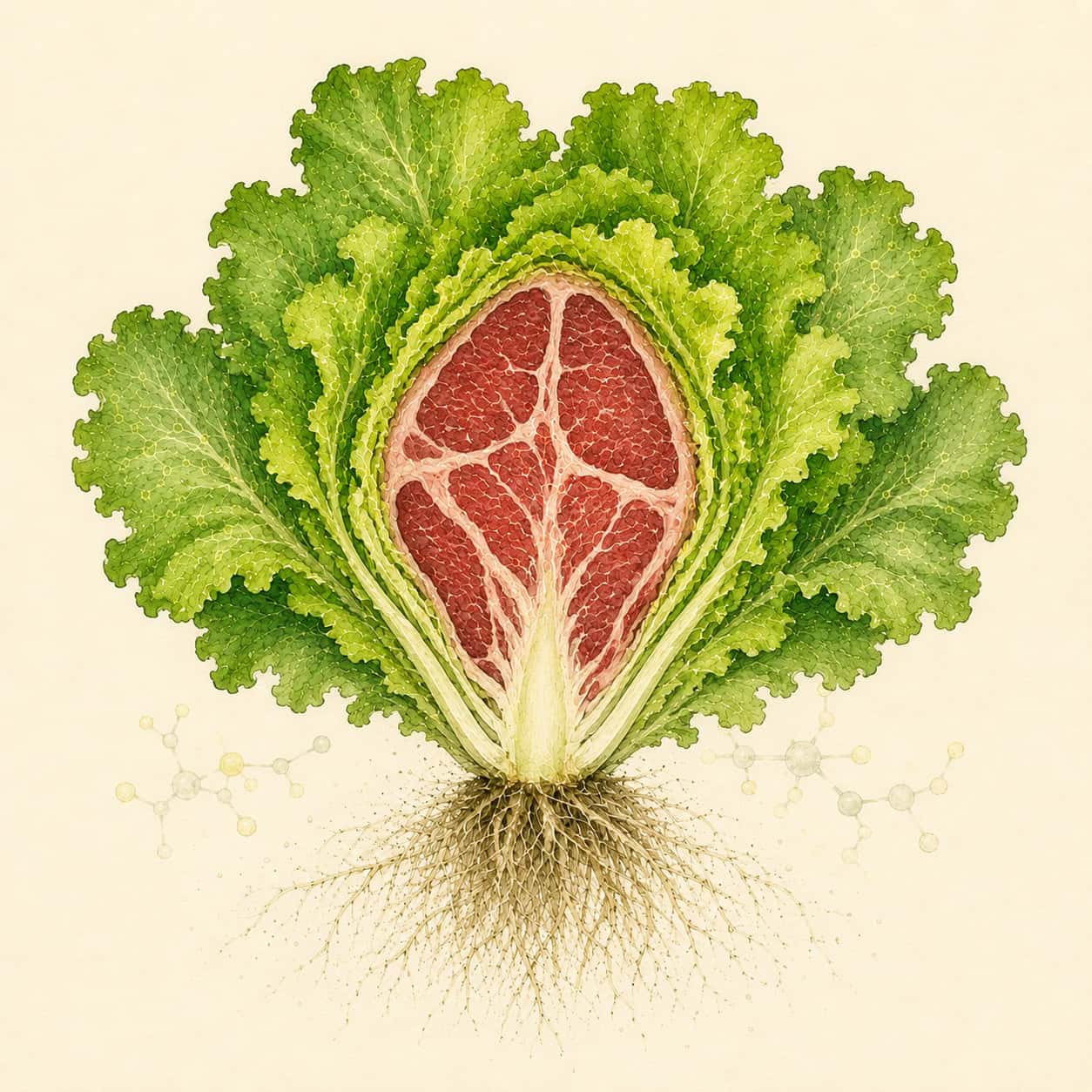
Researchers have successfully engineered lettuce and tobacco plants to produce myoglobin, a protein typically found in pig muscles. This breakthrough could revolutionize alternative meat production, although we shouldn’t expect to see “meaty lettuce” on our plates anytime soon.
The Science Behind Myoglobin
Myoglobin is an iron- and oxygen-binding protein crucial for muscle tissue color and flavor. It binds to heme, which not only affects meat color but also enhances the nutrient profile, as heme iron is better absorbed by the human body compared to the non-heme iron found in plants.
Plant Molecular Farming
The project, driven by researchers from Imperial College London, the Bezos Centre for Sustainable Protein, and others, explores the idea of using plants as production systems instead of traditional fermentation methods. This method, known as plant molecular farming, involves inserting genetic instructions into plants to produce needed proteins, a technique that has been in use for about 40 years for medicines and vaccines.
Chloroplasts as Production Sites
The focus of this research is on chloroplasts, the components in plant cells responsible for photosynthesis. Chloroplasts contain their own genomes, allowing researchers to manufacture proteins effectively. In the study, tobacco plants outperformed lettuce in terms of myoglobin production, yielding three times more when the genetic material was inserted into their chloroplasts instead of their nuclei.
Current Limitations
Despite the success, the quantity of myoglobin produced is minimal — approximately 48 milligrams per kilogram of engineered lettuce, which is significantly lower than the myoglobin content in muscle tissue. Therefore, while the initial results are promising, substantial improvements are needed before this could compete economically or nutritionally with existing sources of myoglobin.
Future Implications
The potential to create an edible, biofortified food enriched with heme iron is an exciting prospect. However, the study did not determine whether plant-based production is more sustainable than current methods. Additionally, the research team plans to enhance the functionality of the produced myoglobin, focusing on ensuring it contains the necessary heme structure.
Conclusion
This research opens new pathways for scalable, sustainable protein production using plants, marking a significant step toward alternative meat products. However, further studies will be necessary to evaluate the economic viability and nutritional benefits of such innovations.
For a more comprehensive understanding of the study, you can read the full article published in Frontiers.