The Impact of Human Activity on Everest’s Glaciers
Everest Base Camp: An Elevated City
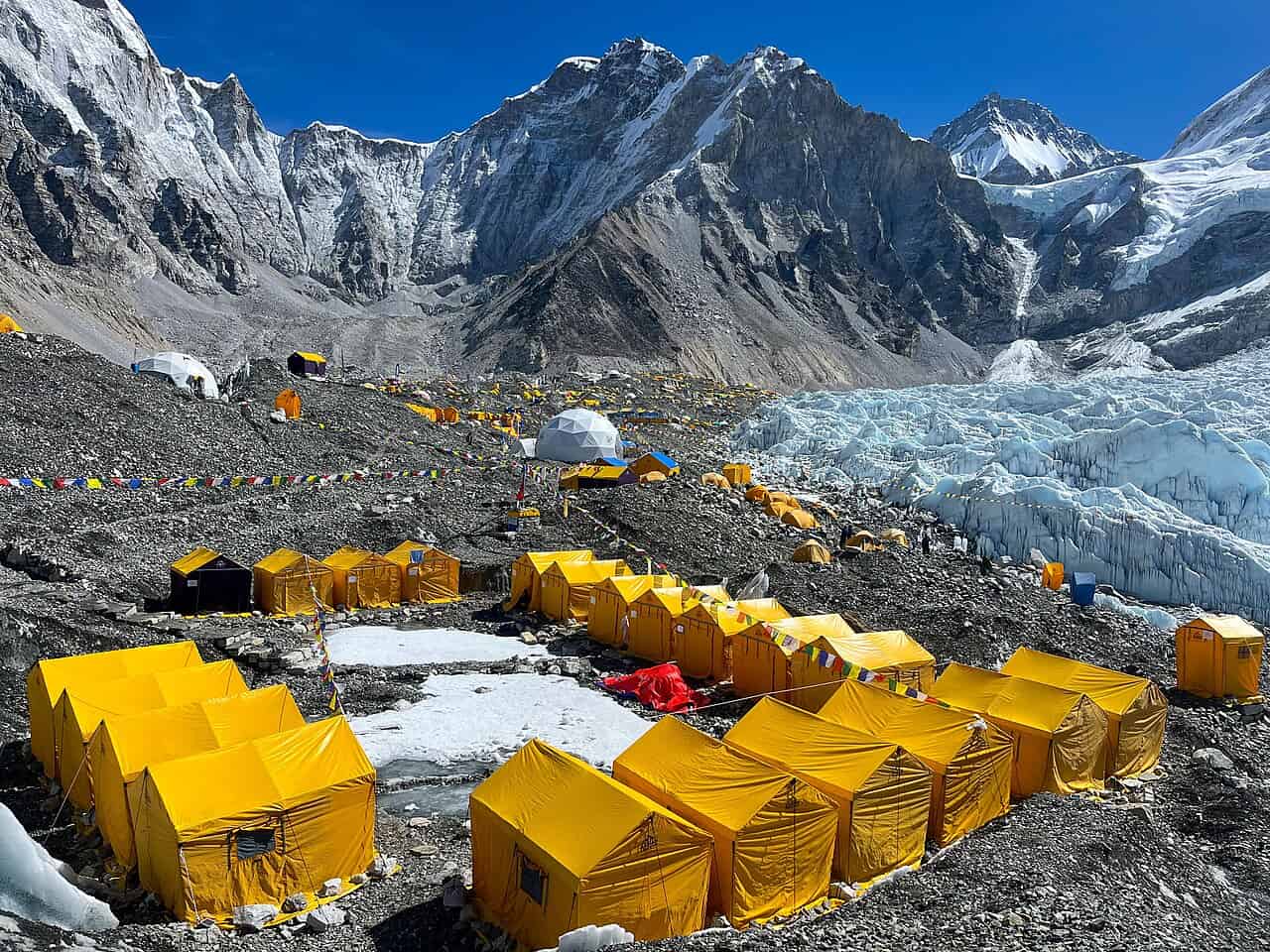
Every spring, a small city forms at Everest Base Camp, set at over 5,300 meters above sea level on the Khumbu Glacier. This temporary settlement hosts around 1,600 tents, equipped with amenities like kitchens, generators, showers, and even heated floors, supporting more than 2,000 climbers and staff for up to 50 days.
However, with large numbers of people come significant challenges, including waste management. During the 2023 climbing season, researchers estimated that Base Camp generated approximately 6,766 liters of urine daily, leading to concerns about its environmental impact on the glacier beneath.
The Heat Factor
Interestingly, urine, typically at a temperature of about 37°C (98.6°F), was found to contribute heat to the glacier, with estimates suggesting it could melt around 154 tons of ice over the season. Yet, this is only a fraction of the overall heat being produced. In contrast, fuel-related activities (such as cooking and heating) were identified as the primary contributors to glacier melt, accounting for about 94% of heat generated by human activities at Base Camp.
Climate Change: The Larger Context
While Base Camp’s activities may locally impact the glacier, the overarching threat remains climate change. A 2019 study found that Himalayan ice loss has accelerated significantly, doubling since 2000. Without addressing the broader environmental issues, localized impacts may be just part of a larger problem facing these high-altitude ecosystems.
Rethinking Base Camp’s Location
Researchers have proposed potential alternative sites for Base Camp to reduce its impact on the glacier. While relocating would introduce new challenges, sustainable energy sources and improved waste management practices could help alleviate the stress on the Khumbu Glacier.
A Call for Future Planning
As highlighted by study co-author Virginia Burkett, proactive measures at Everest are essential to preserve this fragile environment. Each season, thousands of climbers leave a lasting footprint, making it vital to consider the future of Base Camp and its environmental responsibilities.
Conclusion
The interaction between human activity and climate change at Everest requires thoughtful strategies to balance the allure of adventure with the pressing need for environmental stewardship. The findings underscore the need for urgent attention to the impacts of tourism and climate change on some of the planet’s most vulnerable ecosystems.