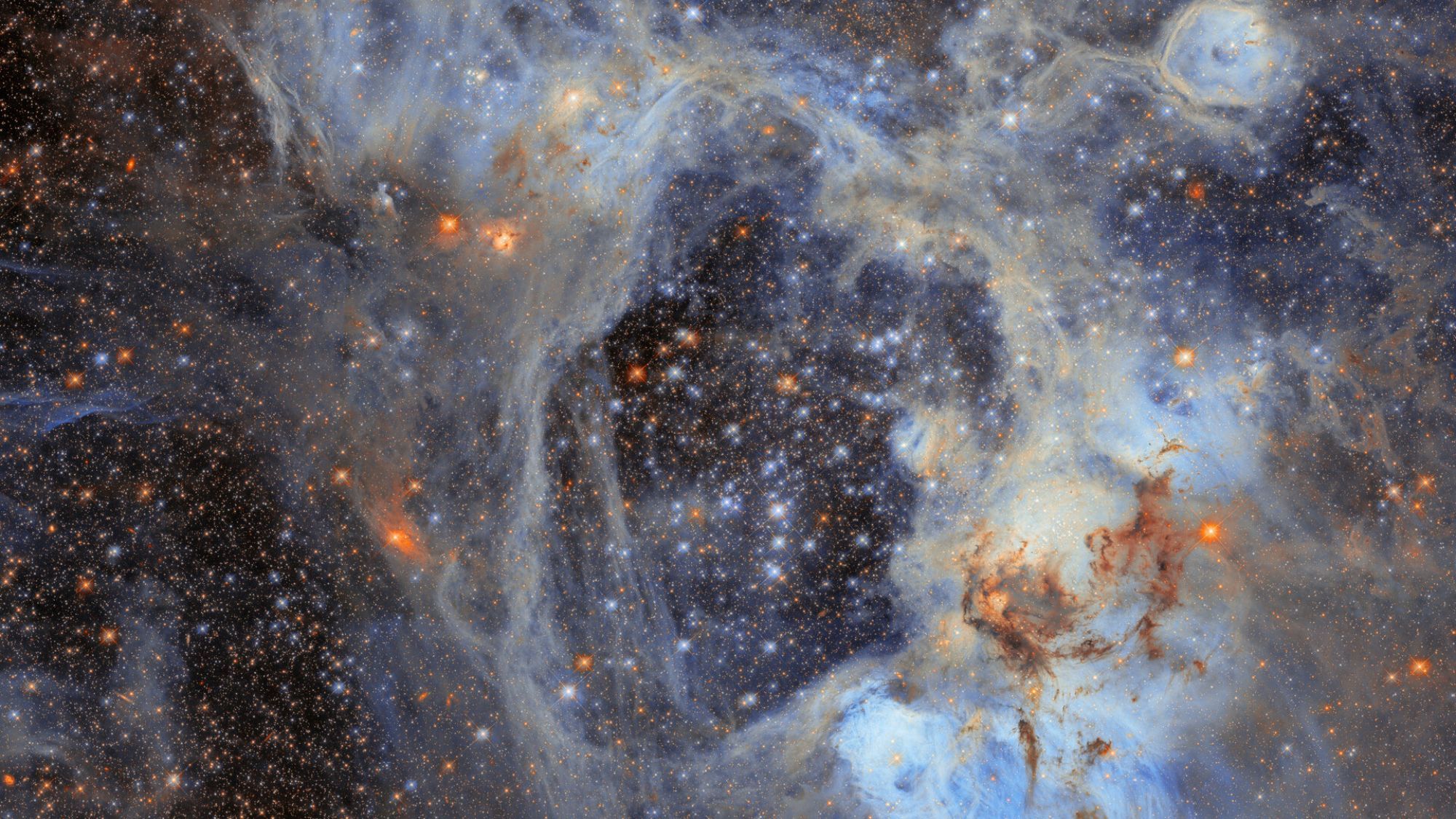
N44: The Supernova Nebula
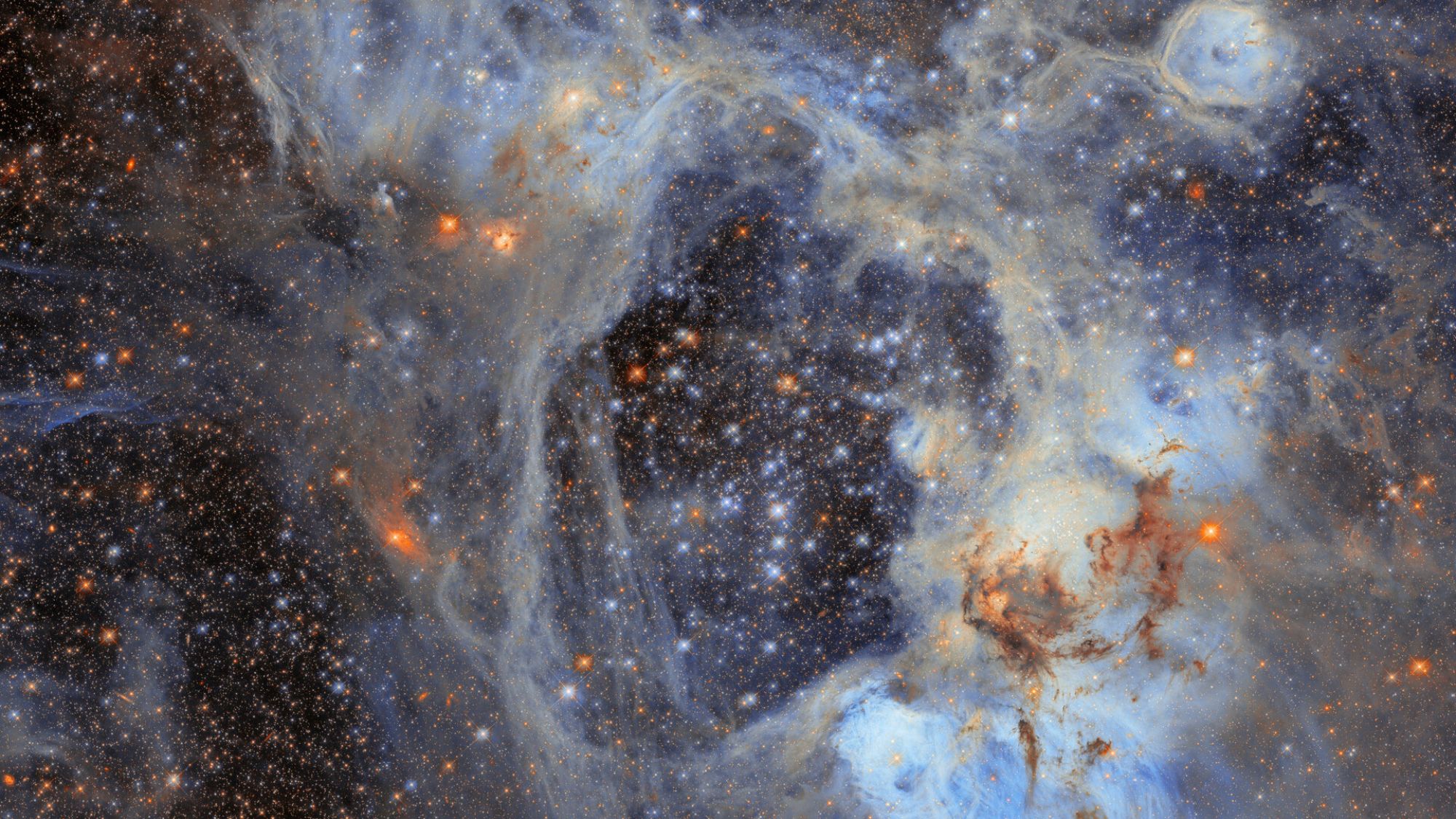
This nebula is named LHA 120-N44, or N44 for short, and it’s located in the constellation Dorado. (Image credit: ESA/Hubble & NASA, D. Gouliermis)
Located about 160,000 light-years away, the Large Magellanic Cloud (LMC) is home to the fascinating nebula N44. The Hubble Space Telescope recently captured stunning images revealing its intricate structure, prominently featuring a superbubble—a giant void at its center surrounded by dusty tendrils.
What is N44?
N44 is an emission nebula situated in the constellation of Dorado, noted for being a dynamic site of rapid star formation. The superbubble at its center spans roughly 210 by 140 light-years, a truly staggering size, especially compared to the distance from our sun to Pluto, which is less than a single light-year.
Why is N44 Noteworthy?
The origin of the superbubble is still a mystery. One theory suggests that the void may have formed due to supernova explosions or stellar winds that cleared gas from the nebula. This results in the surrounding gaseous shell, where new stars continue to be born.
The nebula emits a dazzling glow due to a process known as ionization. The gas becomes energized by nearby stars, resulting in an array of luminous colors as it cools and releases energy.
NASA’s Hubble Space Telescope is strategically used to study N44 because it provides excellent conditions for observing star formation. It has surveyed nearly half a million stars within this nebula, revealing about 30,000 early-stage stars.
N44 has gained attention in scientific discussions and popular media over the years, being featured in studies and articles due to its unique structures and star formation dynamics.