The LUX-ZEPLIN Dark Matter Detector: A Glimpse into the Unknown

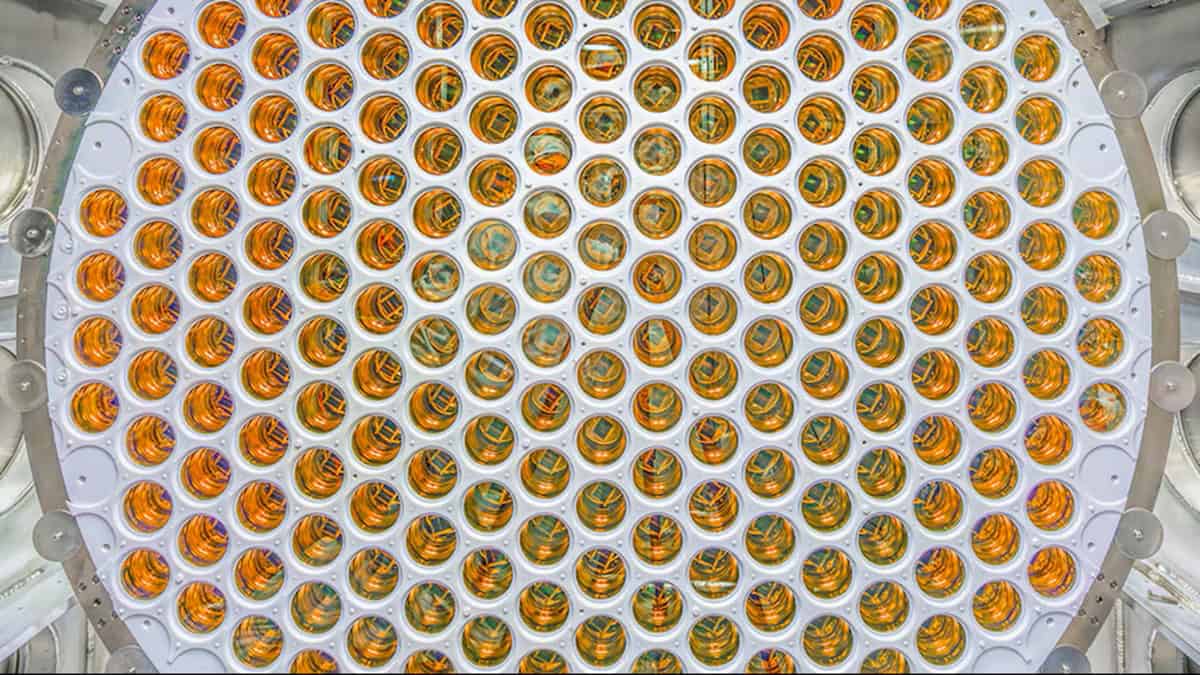
Credit: Matthew Kapust/Sanford Underground Research Facility.
Understanding Dark Matter
Dark matter remains one of the most enigmatic components of the universe, constituting about 27% of its mass-energy. Unlike regular matter, dark matter does not interact with electromagnetic forces, making it invisible and detectable only through its gravitational effects on visible matter, such as stars and galaxies. Remarkably, the ordinary matter we observe (like stars and galaxies) accounts for a mere 5% of the universe’s total content.
The Search for Dark Matter
Researchers have built increasingly sophisticated machines to catch dark matter particles. Many detectors, including the LUX-ZEPLIN (LZ), are embedded deep underground to shield them from cosmic radiation and other forms of interference. Despite years of searches yielding mostly nothing, LZ recently detected a single energetic collision on June 16, 2023, sparking interest and speculation about the possibility of detecting dark matter.
The LZ’s Promising Signal
Located nearly a mile underground in a former South Dakota gold mine, the LZ detector recorded an event that researchers couldn’t easily explain away as background radiation or noise. This detection presents the most promising direct hint of a dark matter particle to date, though it’s important to note that the scientific community approaches the finding with cautious optimism.
Challenges and Future Prospects
Although this event is intriguing, it does not meet the standard for a confirmed discovery in particle physics (5 sigma significance). It presently stands at about 2.6 sigma, which means there’s still a significant chance that it could be a statistical fluke. If the signal is indeed associated with dark matter, it suggests a need to revise existing models that predict how these particles should interact with matter, hinting at potentially more complex forms of dark matter than previously envisioned.
Conclusion
While the tantalizing signal from LZ may mark the beginning of a new chapter in the quest to understand dark matter, more data and analysis are required to confirm if this is a revolutionary discovery or just another anomaly in the long history of dark matter research. The scientific pursuit continues, and future studies will play a pivotal role in either validating or challenging this extraordinary occurrence.