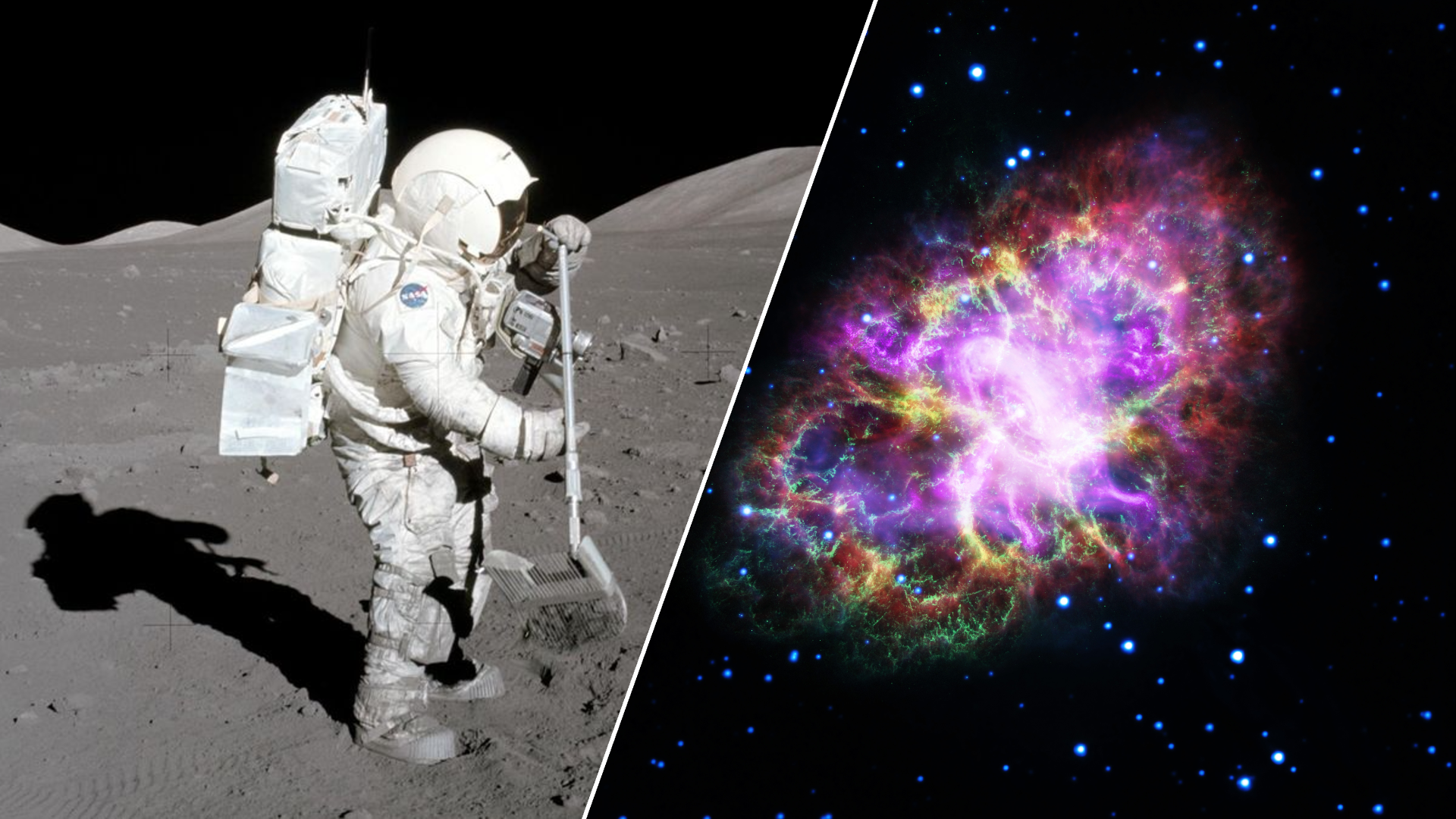
Scientists have developed a new computer model that allows for the analysis of lunar regolith—moon dust mixed with supernova debris. This breakthrough helps uncover the history of supernova explosions that occurred near Earth millions of years ago.
When stars explode as supernovae, they release radioactive isotopes which can travel through space and settle on celestial bodies, including the moon. Previous research on these isotopes found peaks in supernova activity occurring approximately 2.3 and 7.3 million years ago.
Earth’s records of supernova activity have been largely lost due to erosion and tectonic activity. In contrast, the moon’s surface remains largely unblemished, providing a potential record of supernova events going back 80–100 million years. However, “impact gardening”—a process whereby impacts from micrometeorites and asteroids disturb the regolith—complicates the analysis.
To address this, the research team, led by Emily Costello from the University of Hawaii, constructed a mathematical model to decipher the depth and concentration of supernova radioisotopes in the lunar soil. This model balances various physical mechanisms such as impact compaction, radioactive decay, and space weathering.
The model has shown promise, correlating well with deep-sea sediments on Earth and existing Apollo lunar samples. Future lunar missions, particularly the Artemis program, aim to retrieve deeper samples from the moon, further enhancing our understanding of supernova history and the solar system’s evolution.
The work was published on August 14 in Physical Review Letters.