Alaska Science Forum: Seeking the Benefits of a Parasite
Published: 3:30 am Wednesday, September 2, 2026
As the berry-picking season enthralls me, I’m reminded of the interconnectedness of nature, particularly how flowers and their pollinators contribute to our vibrant ecosystem. This summer, I discovered a surprising factor in this relationship: a parasitic plant known as woolly lousewort, or Pedicularis lanata.
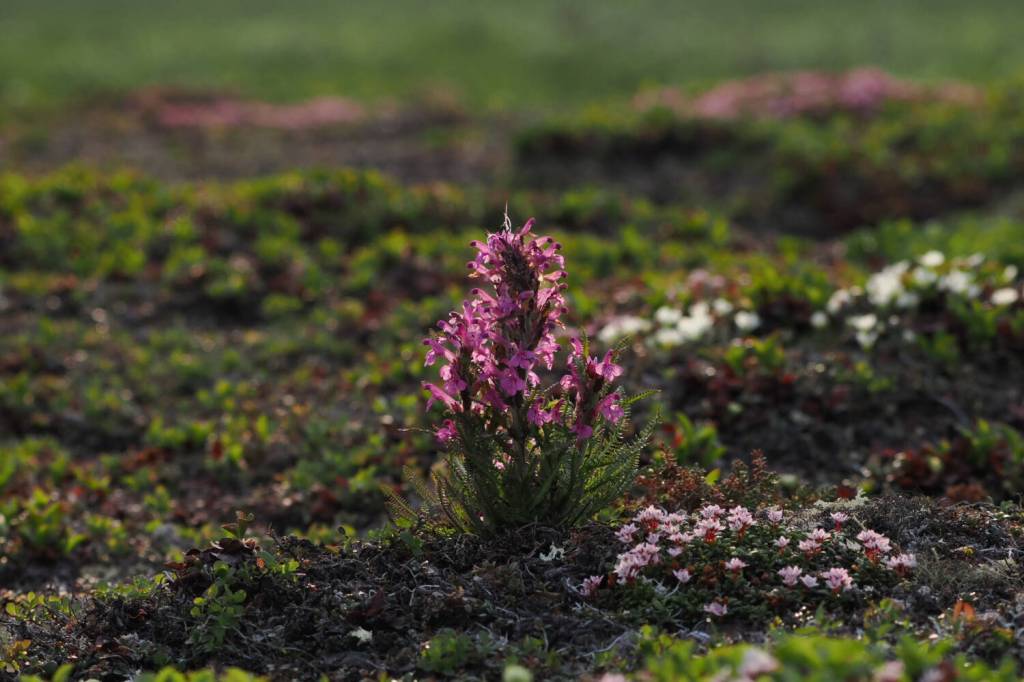
This native Alaskan hemiparasite emerges each spring from its taproot, presenting hairy leaves that form a silvery, fluffy cone. Unlike true parasites, woolly lousewort can photosynthesize but still relies on host plants for water and nutrients.
As summer progresses, lousewort unfolds into beautiful pink flowers that may play a critical role in increasing berry production in the Arctic tundra. Graduate student Jonathan Carcache, now pursuing his PhD at Florida Atlantic University, suggests that the striking blooms attract pollinators, benefiting not just the lousewort but also surrounding flora.
Carcache hypothesizes that enhanced pollination leads to greater fruit and seed production, thereby offsetting the costs of lousewort’s parasitic behavior. “You hear ‘parasite’ and you think, ‘This is bad.’ But it could be offering other resources that we’re not yet envisioning,” he notes.
During his summer at the University of Alaska Fairbanks’ Toolik Field Station, Carcache set out to answer two key questions about lousewort’s impact on neighboring plants, focusing on Cassiope tetragona (arctic white heather). He aimed to determine whether plants near lousewort benefitted from increased pollination and if this translated into more successful seed production.
To investigate, Carcache collected approximately a thousand heather stigmas for analysis and hand-pollinated hundreds of flowers to examine seed count in conjunction with parasitism. This research brings to light the complexity of ecological relationships, emphasizing that symbiotic interactions can oscillate between mutualism and parasitism.
As winter approaches, Carcache will analyze the seeds and pollen grains to quantify the benefits of lousewort’s parasitic role. Meanwhile, I will relish my berries with a newfound appreciation for the natural partnerships at play.
Since the late 1970s, the University of Alaska Fairbanks’ Geophysical Institute has provided the Alaska Science Forum column free in cooperation with the UAF research community. Haley Dunleavy is the communications manager at Toolik Field Station.