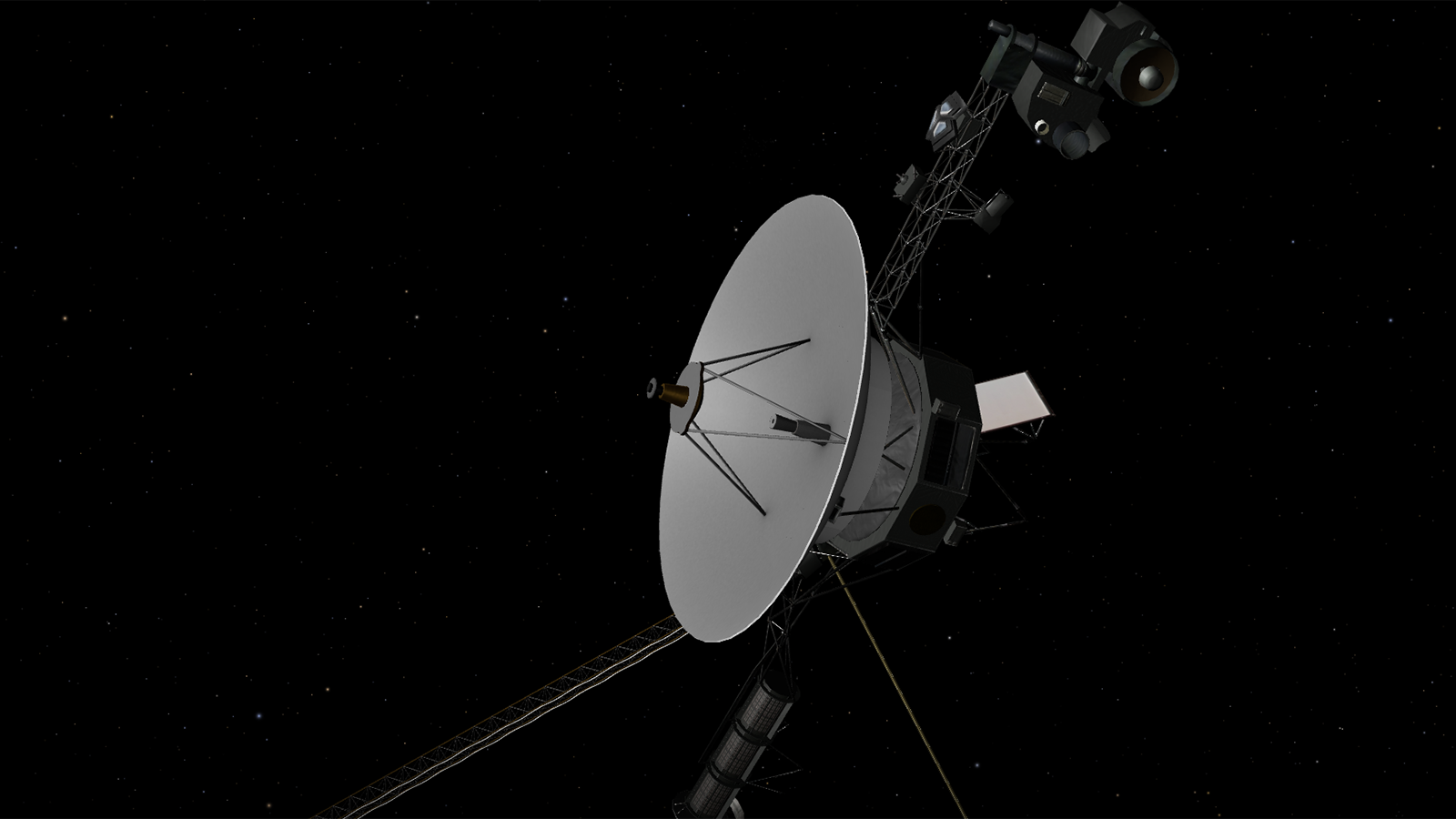
Voyager 2’s Legacy and Challenges
Voyager 2 has surpassed expectations, exploring all four giant planets and, after crossing into interstellar space, continues to send back valuable data even with outdated technology. However, by 2026, Voyager 2 faced severe power constraints as its radioisotope generators lose about four watts of power annually, equivalent to a small night-light’s output.
The “Big Bang” Maneuver
In an effort to manage power consumption, engineers executed a complex reconfiguration called the “Big Bang” in July 2026. This involved simultaneously shutting down high-power devices and activating lower-power alternatives, achieving nearly a 10-watt reduction in power demand. The maneuver was crucial because poor timing could have led to critical components freezing, jeopardizing the mission.
Current Instruments
Voyager 2 is now equipped with three functioning instruments: a magnetometer, a plasma wave subsystem, and a cosmic ray subsystem. These instruments directly measure interstellar conditions, something no Earth-based telescope can replicate.
The Importance of Timing and Distance
Due to the spacecraft’s vast distance, communication takes significant time; a command round trip can take about 39 hours. Each command must be carefully planned, considering the aging hardware and unknown variables after decades in space.
Continuing the Mission
Launched in 1977, Voyager 2 was originally designed for planetary encounters, but its interstellar journey illustrates remarkable engineering resilience. The recent power-saving maneuver allows for continued data collection for at least one more year, vital for understanding the heliosphere and interstellar medium.
Conclusion
Though the mission’s ultimate end is inevitable, the “Big Bang” has granted additional time for priceless scientific observations, reinforcing its legacy in space exploration. Voyager 2 now stands as a testament to human ingenuity and the quest for knowledge beyond our solar system.