Enhancing AI Prompts for Fleet Analysis
To optimize your interaction with AI in fleet management, incorporating specific contextual elements into your prompts is essential. Here are the six critical elements recommended for crafting effective prompts:
-
Role: Define who is asking the question and from what perspective. Specify your position, such as fleet manager or operations analyst.
-
Fleet Context: Detail the vehicles, applications, and operational conditions relevant to your analysis. This includes specifics about vehicle types, usage patterns, and environmental considerations.
-
Task: Clearly outline what you want the AI to analyze, compare, or create. Be as specific as possible about the outcomes you are seeking.
-
Decision Criteria: Identify the key factors influencing your decisions, such as costs, risks, and performance measurements. This helps the AI tailor its analysis according to your priorities.
-
Output: Specify how you want the results organized, whether in a summary format, chart, or detailed report.
-
Safeguards: Instruct the AI on how to handle uncertainty, missing information, and verification processes. This ensures the analysis remains grounded in reality.
Example of an Effective Prompt
Instead of a vague inquiry, use a structured prompt that encapsulates the six elements:
- Less Effective Prompt: “What EVs should I buy for my fleet?”
- Enhanced Prompt: “As the fleet manager for a pharmaceutical company operating in the Northeast, I need recommendations for three EV models to replace our current compact crossovers. Our fleet averages 18,000 miles per year, with daily travel under 150 miles. Please compare these models based on range, cargo capacity, charging needs, cold-weather performance, cost, and suitability. Highlight any missing information that could affect your recommendations, and differentiate between facts and assumptions.”
Importance of Context and Iteration
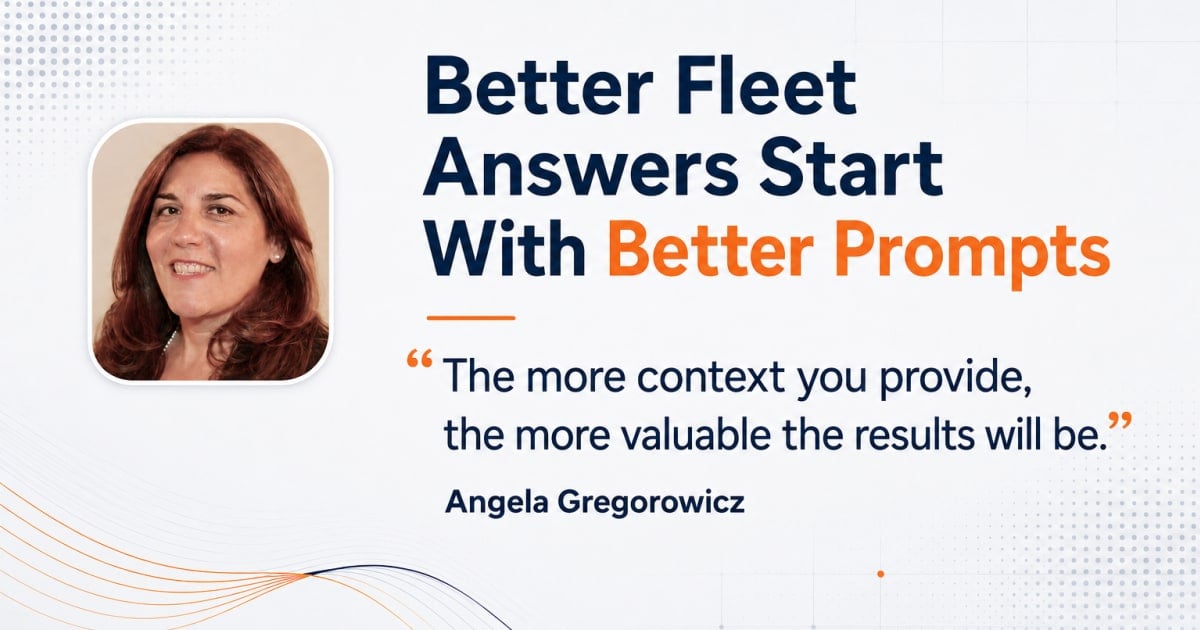
Providing context allows AI to draw on applicable insights, leading to more relevant recommendations. Moreover, don’t stop at the first answer. Use follow-up questions to refine the AI’s output, ensuring it aligns with evolving operational realities.
Vigilance in Verification
Despite the capabilities of AI in processing data, remember that it doesn’t guarantee infallibility. Always verify vehicle specifications and rely on your operational expertise to interpret data meaningfully.
With these guidelines, your AI queries will be more structured and capable of yielding actionable insights tailored to your fleet’s needs.