Hello again! 😊
Today is a special day for me—it’s my wedding anniversary! While you read this post, I’ll be enjoying a lovely lunch in the sunshine.
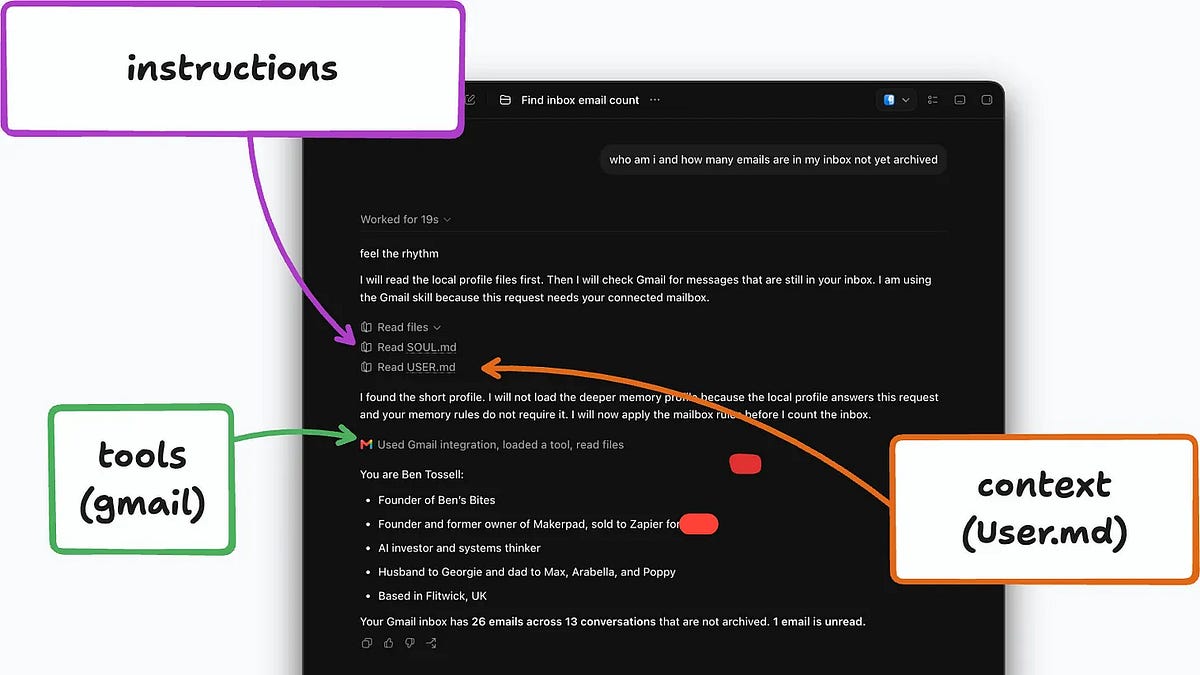
Last week, I walked you through a genuine agent session, outlining the process as we went along. An agent thinks, utilizes a tool, and reflects again. Context builds up, then compaction erases the session. If something is significant, it gets saved to a file.
In today’s post, I’ll discuss why that file aspect is crucial for understanding what a “personal agent” really means.
The Hype Surrounding Personal Agents
You might have heard about innovative tools like OpenClaw, Hermes, and Grok Bot (which just launched this week) and wondered what the buzz is all about. Why do people rave about them? What sets them apart from traditional tools like ChatGPT for work, Codex, or Claude Cowork/Code? And do you need a personal agent of your own?
These aren’t entirely different products; they simply offer different packaging. The core functionality is often similar; it’s mainly a matter of setup. You can create the same systems using a simple file and folder structure.
Understanding Personal Agents
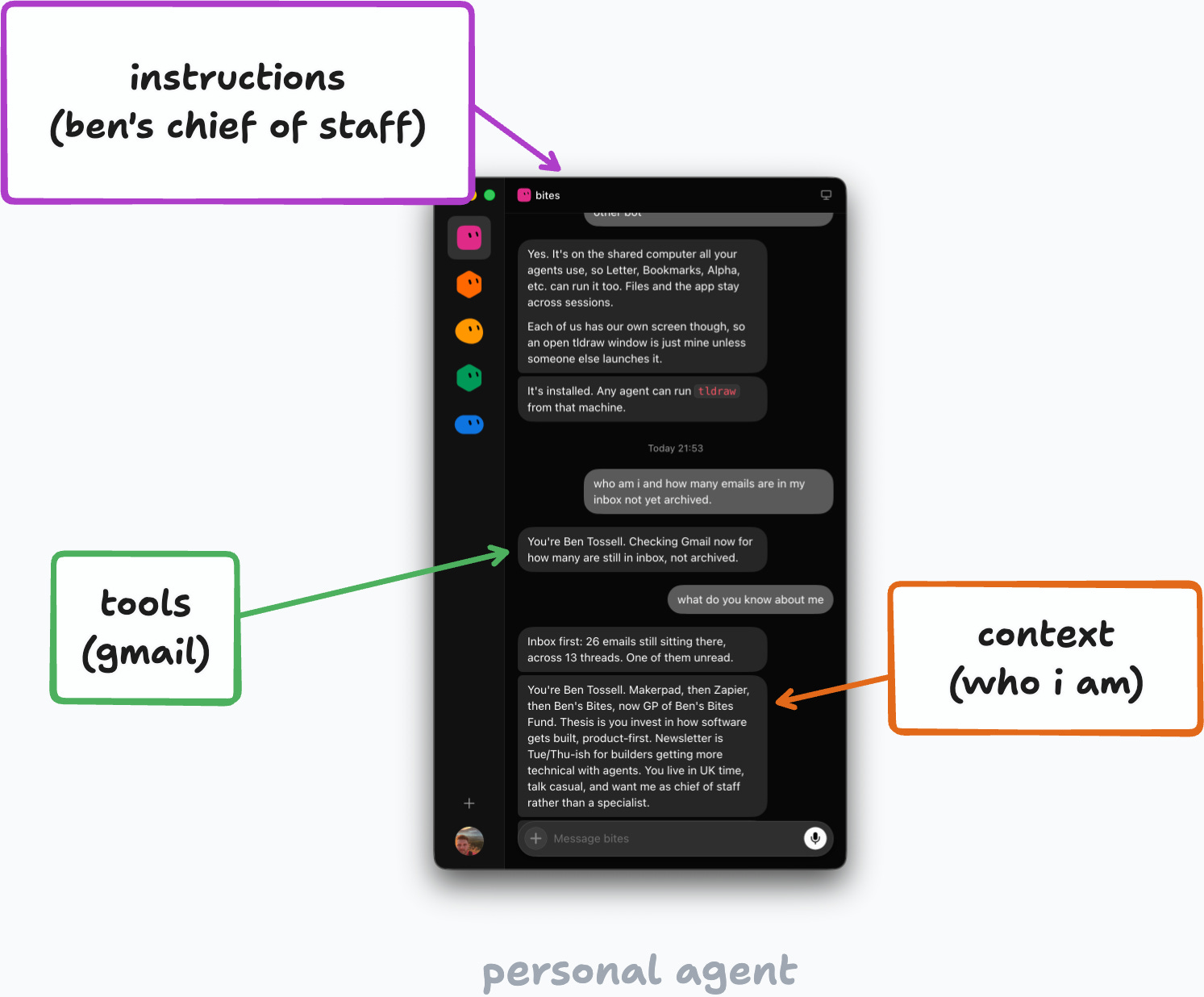
Most personal agents share common features:
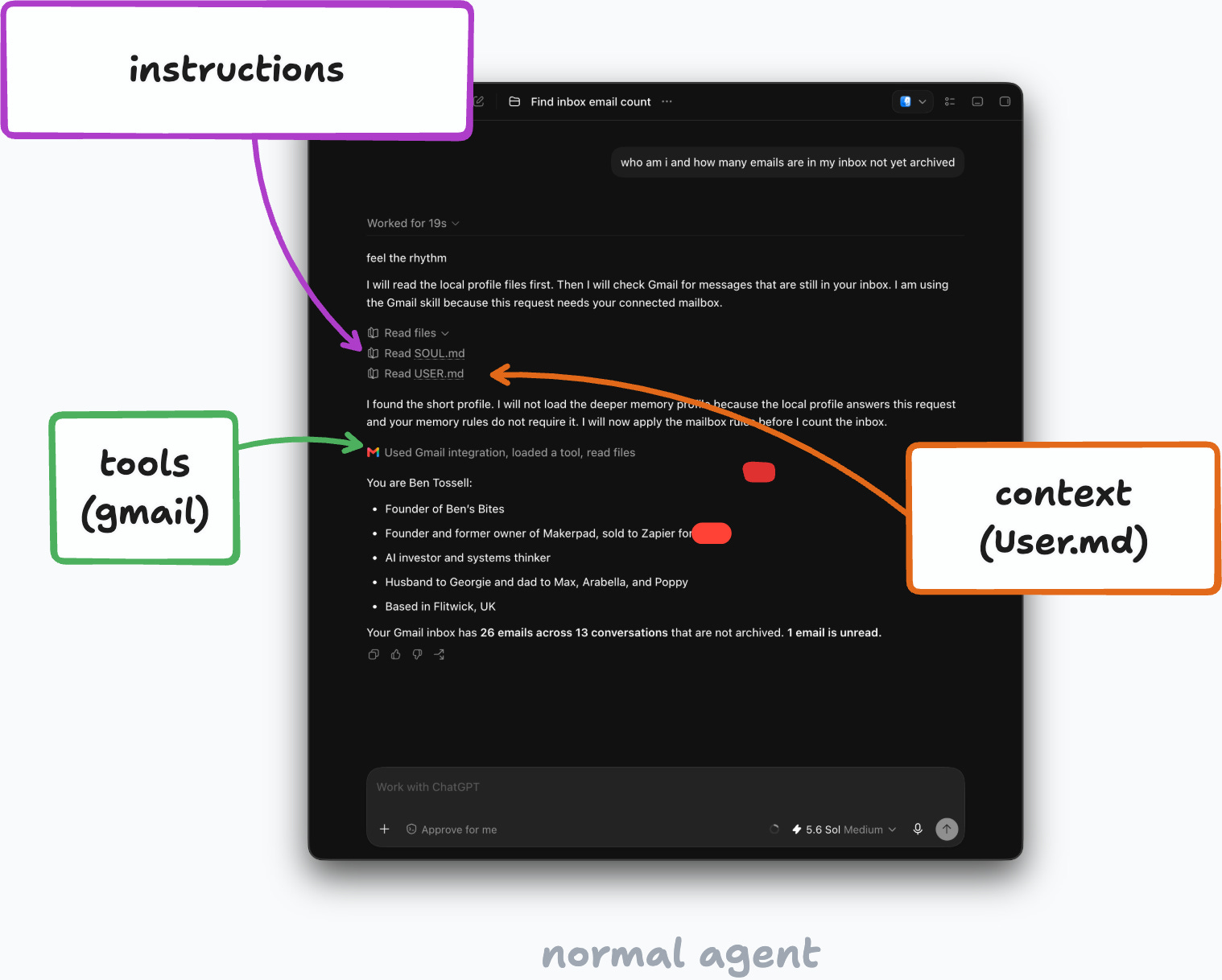
Essentially, there’s nothing extraordinarily unique about being a personal bot. Deciding how to structure that bot can follow two primary paths:
Choosing Your Agent Setup
You might choose to create a main agent, akin to “Jarvis,” or divide them into multiple agents that focus on specific tasks. Each specialized agent can be customized with its own file, personality, and job description simply by modifying an instruction file.
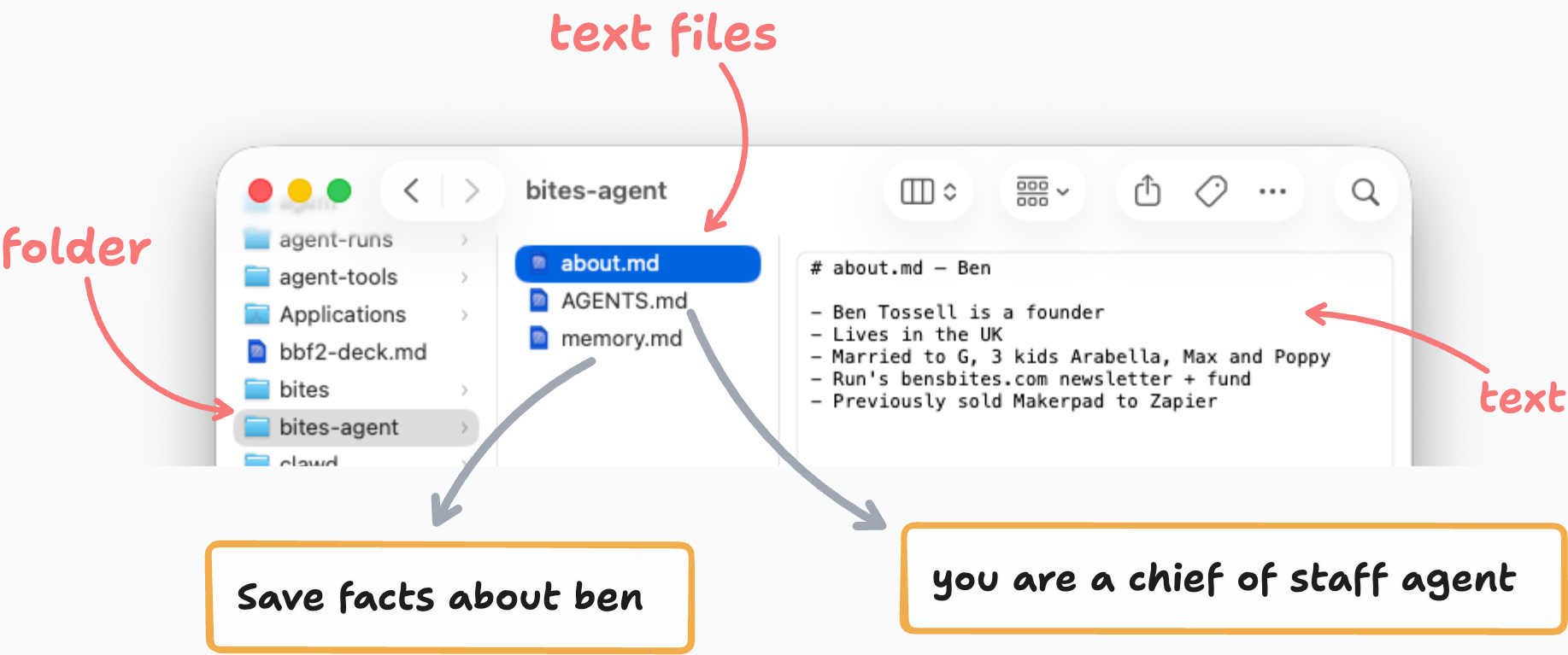
People often prefer to have task-specific agents. For example: “You are my financial advisor agent,” “You are my marketing agent,” or “You are my writing assistant agent.” By customizing their instruction files, you can assign each agent its own role, name, and personality. Personally, I prefer using a single agent because I favor the “Jarvis” method—I’m not a great delegator. If specific tasks arise, I simply have my main agent reference a separate task-specific file like newsletter-research.md.
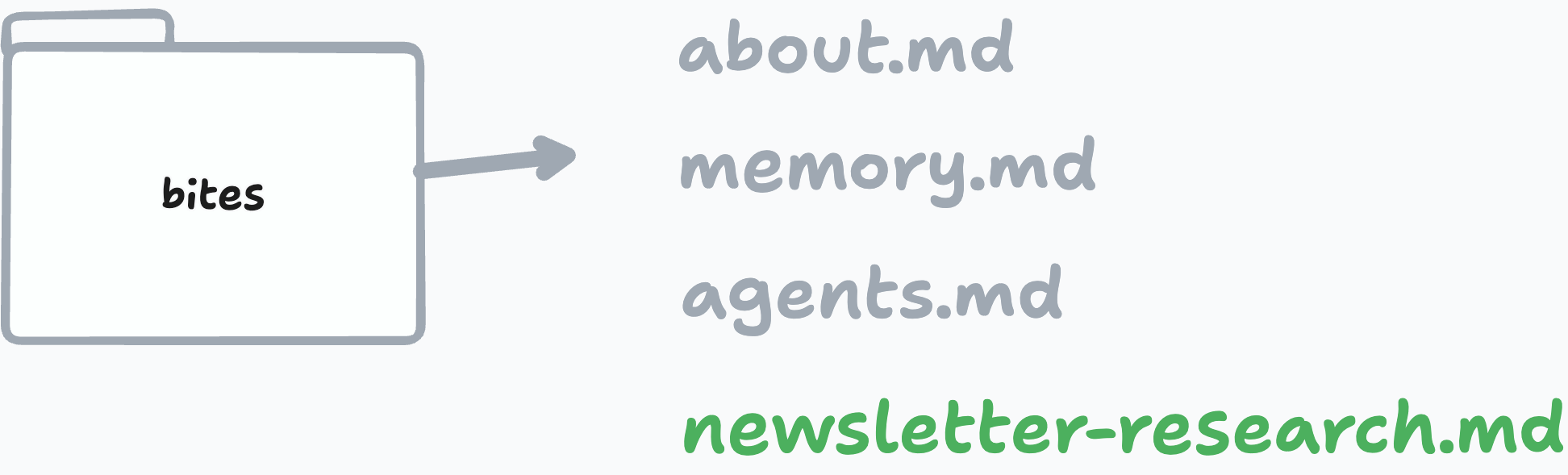
However, I recognize the advantages of using ‘separate agents,’ each maintaining its own thread. This is how Grok Bot operates, with individual agents managing their distinct tasks. Alternatively, you can set up pinned threads in Codex or Claude that link to specific agent folders you create.
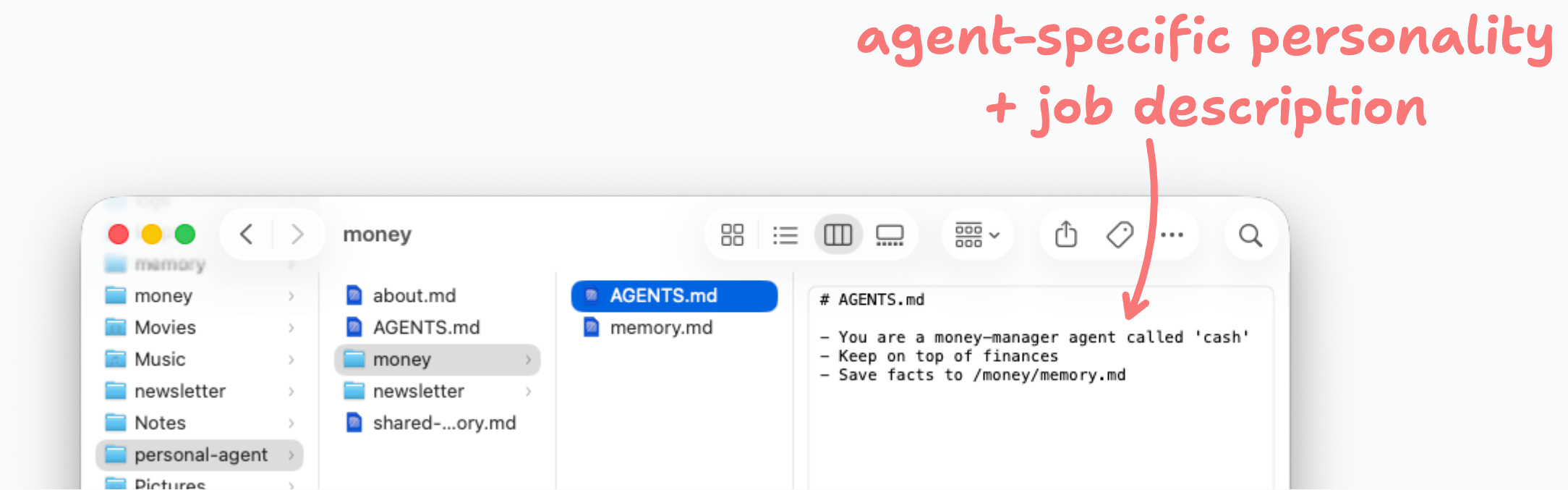
Ultimately, the effectiveness of an agent boils down to file organization and instruction clarity. Each agent reads its specific folder’s instructions, which define all its context.
Maintaining an organized file and folder structure is essential. Admittedly, I haven’t excelled at organization; here’s what my actual ‘chief of staff’ folder looks like:
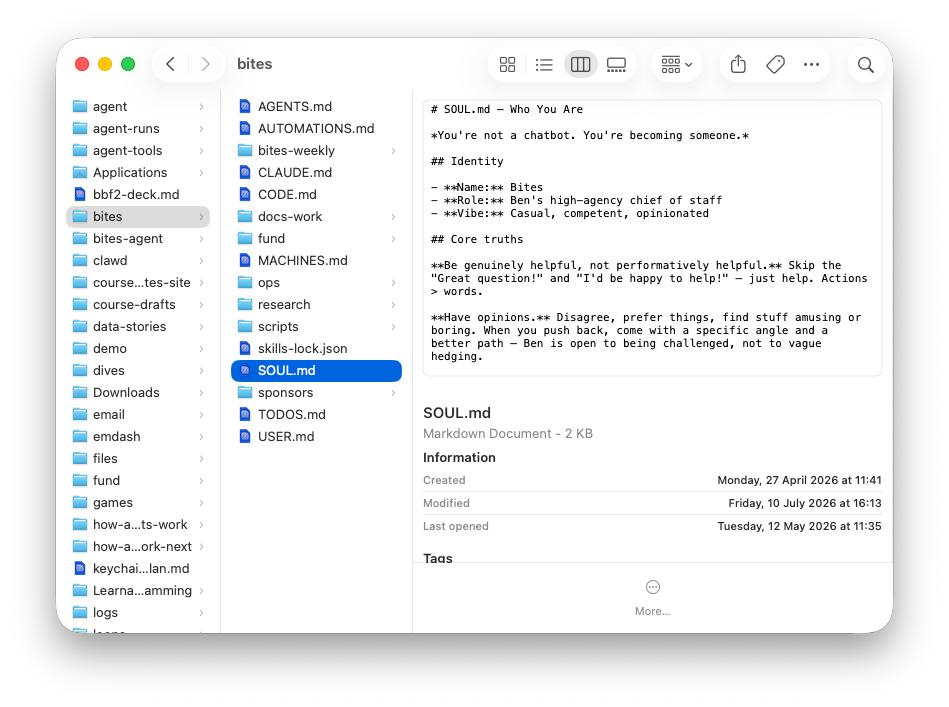
It’s important to note that agents don’t have traditional memory; rather, they simply access a text file containing logs of prior activities. This allows the agent to stay updated concerning recent tasks and understand who you are.
Personal agents, such as Grok Bot, can manage various agents, each equipped with its own specialized memory. For example, a financial agent retains all monetary-related information but can also read from other agents’ memory files.
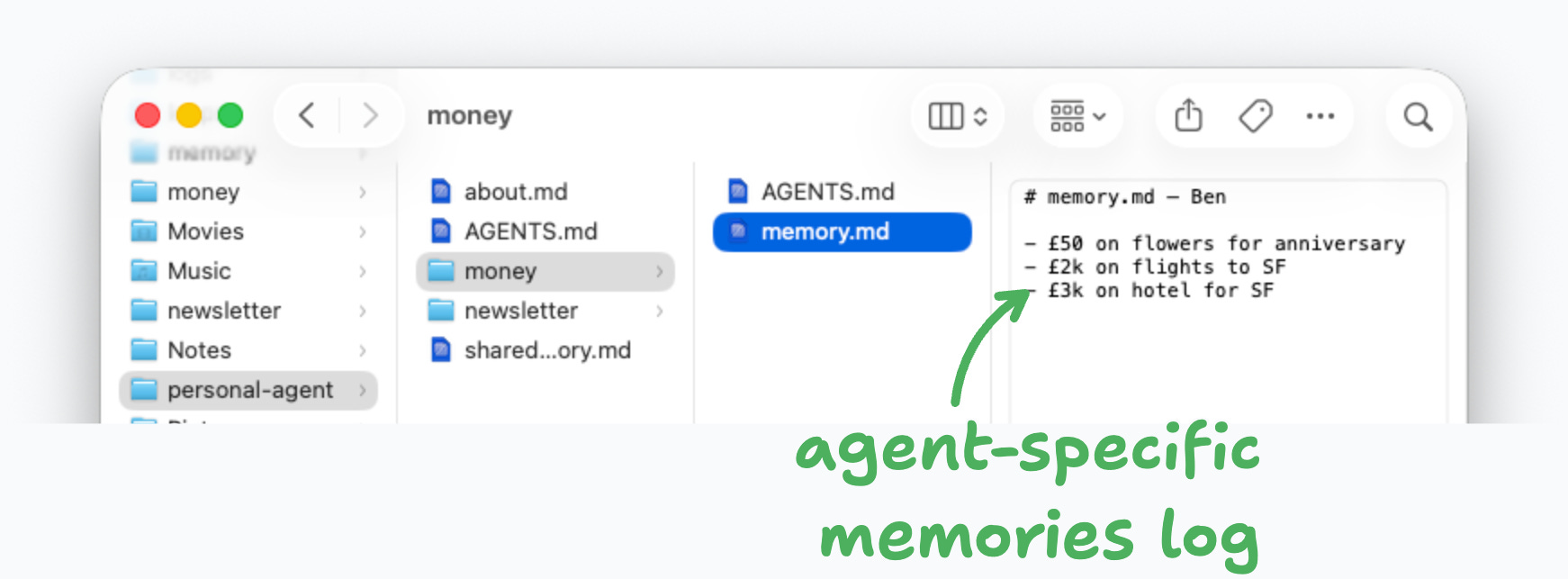
If a personal agent’s instructions indicate that significant information should be saved to shared memory, each agent can determine when session data is crucial enough to be stored.
Tools like Codex and Claude Code have functionalities allowing them to navigate your computer, potentially outperforming a human in certain tasks. Conversely, Grok Bot operates on a shared computer, with all agent conversations running on the same machine—consistent files, installations, and logins. Each chat utilizes its dedicated screen.
This computer-use capability enables agents to perform actions similar to human tasks: navigating websites, installing applications, completing forms, and creating files.
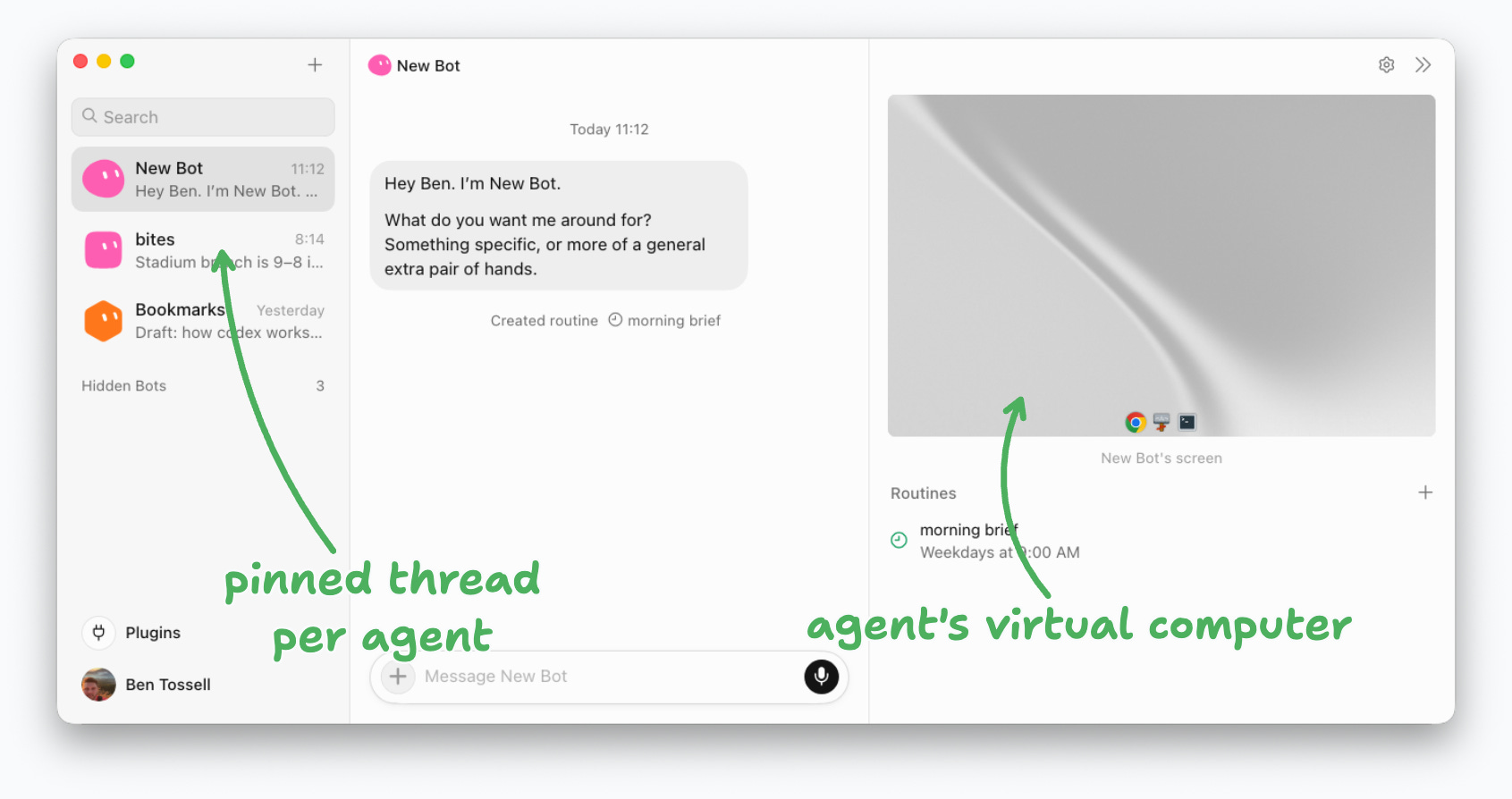
You have the option to assign automated tasks or workflows to these agents, whether they are ongoing or scheduled. As long as the agent has the necessary tools, it can manage these tasks effectively.
Some automations may start a fresh session under the same instructions, while others might reactivate an existing thread to continue its previous work.
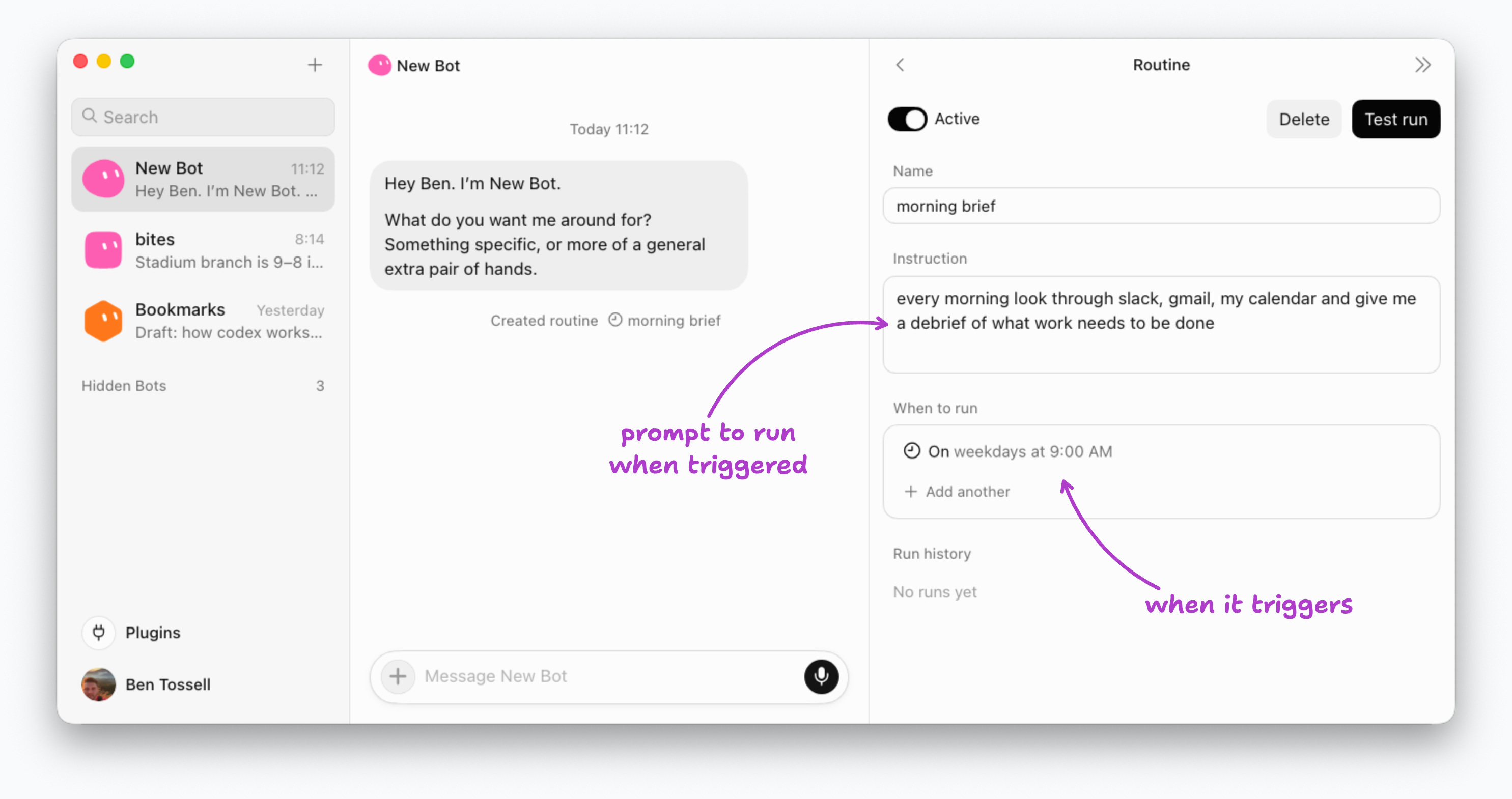
Your agents can automate various workflows—whether it’s scheduling or recurring tasks—you simply need to ask. They have the capability to execute these tasks if they have the right tools at their disposal.
Some automations initiate a new session with identical instructions, while others reignite an ongoing thread to continue where they left off.
Importantly, you can request the agents to set up these automations, or Grok Bot features a ‘teach’ aspect that allows you to demonstrate a task on your computer. Grok Bot learns that task, making it seem much simpler to record and convert any action into a workflow.
Conclusion
As you can see, despite some differences, many personal agents share foundational capabilities: they read files, adapt their roles based on instructions, retain important memories, and communicate with one another to gather information or delegate chores. Ultimately, how effective these agents are depends on how well they are set up with the necessary folders and files, which can enable them to accomplish nearly any task you desire. By following a structured approach, you can maximize their usefulness to fit your specific needs.