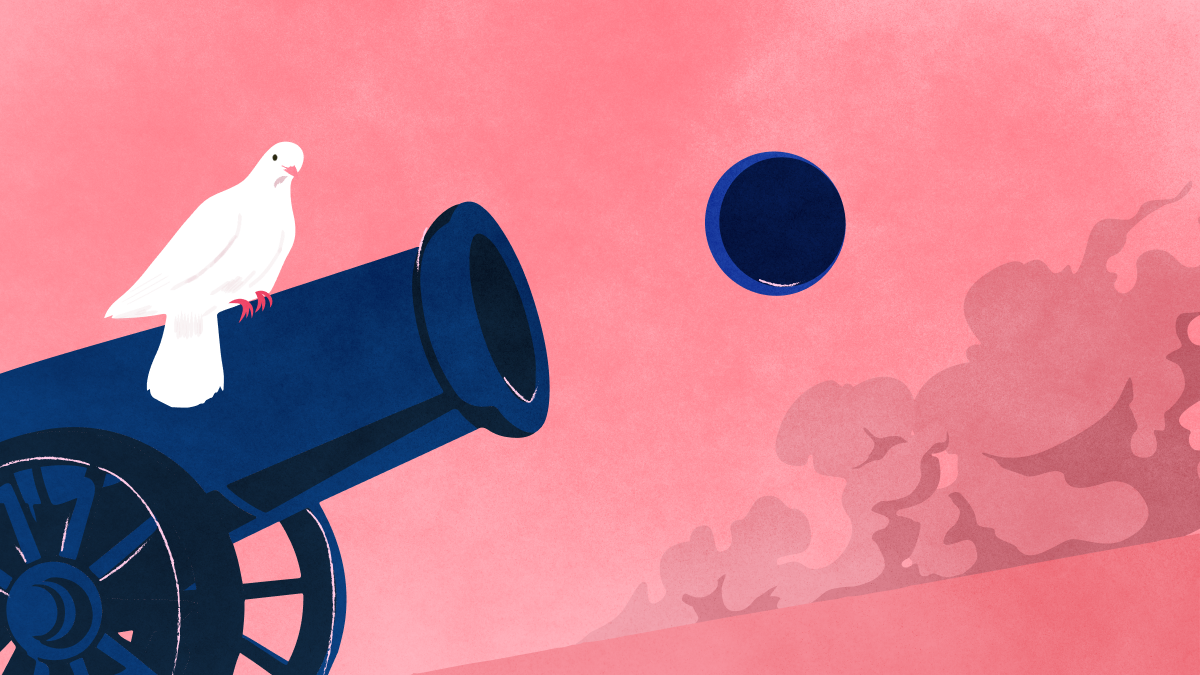
America’s origins are steeped in conflict. The American Revolution, culminating in the adoption of the Constitution, enshrined foundational concepts of liberalism—natural rights, governance by consent, and limitations on governmental authority. Yet, the Revolution marked merely the inception of a war-oriented identity within the United States. From 1798 to 2023, the nation has engaged in 469 recognized military interventions, averaging 2.08 operations per year.
Subsequent military endeavors diverged significantly from the initial fight for independence. These later conflicts did not aim to liberate the populace from foreign control; rather, they involved the use of military power to influence global affairs—often under the pretense of promoting liberty. As we approach the 250th anniversary of the Declaration of Independence, it’s crucial to ponder the threats that warfare presents to the liberal ideals upon which the nation was founded.
The perils of war were underscored by prominent figures in America’s early history. In 1795, James Madison observed:
Of all the enemies to public liberty, war is perhaps the most to be dreaded, because it comprises and develops the germ of every other. War is the parent of armies; from these proceed debts and taxes; and armies, and debts, and taxes are the known instruments for bringing the many under the domination of the few. In war, too, the discretionary power of the Executive is extended; its influence in distributing offices, honors, and emoluments is amplified; and all means of seducing the minds are added to those of subduing the people. No nation could preserve its freedom amidst continual warfare.
Similarly, in his farewell address a year later, President George Washington warned against “overgrown military establishments which, under any form of government, are inauspicious to liberty and particularly hostile to republican liberty.”
What Madison and Washington acknowledged was that war posed significant risks to the very freedoms the revolutionaries sought to protect. Unfortunately, these warnings have largely faded into obscurity, even among many classical liberals.
Over time, the accepted scope of American governmental authority has notably broadened, along with the powers associated with warmaking. While historical developments are complex, they can generally be categorized into three distinct phases. The first phase involved continental expansion during the early to mid-19th century, characterized by events like the Louisiana Purchase, the Florida Purchase, the annexation of Texas, the Oregon Treaty, and the 1848 Mexican cession. The second phase, initiated by the Spanish-American War in 1898, marked the projection of U.S. military power within the Western Hemisphere. This included the Roosevelt Corollary, which asserted that the U.S. could intervene militarily in the region as deemed necessary. The third phase began with World War II, establishing America as a global hegemon and attempting to act as the world’s policeman.
Regardless of the perceived benefits or intentions behind these military actions, they incur substantial immediate and long-term costs. As Madison and Washington cautioned, war impacts both the scale and the scope of government activities. Let’s examine each of these aspects in detail.
Conflict is an expensive endeavor, with costs often extending far beyond the duration of the fighting. The United States allocates more resources to defense than the next ten countries combined, including China, Russia, and Saudi Arabia. Approximately 17 percent of all federal spending goes toward defense-related issues. Historically, warmaking has often led to the introduction of new taxes, many of which persist long after the war has ended. Moreover, political scientist Sarah Kreps documents how the U.S. shifted its approach to financing wars from tax revenues to debt following the Korean War, a move that obscured the true costs of war from the public. This transition not only contributed to growing public debt but also undermined democratic accountability.
Military engagements also come with severe humanitarian costs. The Department of Defense reports approximately 1,151,012 battle deaths in the principal wars involving the U.S., alongside an additional 857,000 conflict-related fatalities and over 2.5 million injuries.
The detrimental effects of war on democratic principles extend far beyond these immediate consequences. A key characteristic of war is the centralization of state authority. The necessity of resource allocation and decision-making during wartime pulls political power from peripheral units toward the central government. As political scientist Bruce Porter noted, “A government at war is a juggernaut of centralization determined to crush any internal opposition that impedes the mobilization of militarily vital resources. This centralizing tendency has historically resulted in the erosion of human liberty and rights.”
This centralization fosters bureaucratization, where government agencies acquire greater power and resources. During conflict, new agencies are often established and staffed with government funds. As the nation unites against a common enemy, responsibilities previously held by civilians become subsumed by state objectives. For example, during World War II, the Office of Price Administration restricted the types and quantities of goods available to consumers, while the U.S. Department of Agriculture encouraged citizens to cultivate “victory gardens.” The Office of War Information controlled the dissemination of information to the public, dictating when and how it was released. The War Powers Acts of 1941 and 1942 authorized the president to make sweeping changes to government operations, censor communications, and appropriate land for military use. Notably, over 10.1 million individuals were conscripted into the U.S. Armed Forces through the draft.
This bureaucratic expansion and the redirection of governmental authority towards the center contribute to diminishing the pluralistic character of democracy. Rather than serving as a counterbalance to the central government, local political entities increasingly align with its objectives.
The unifying effect of war diverts the focus of citizens from domestic governance and freedom debates to an external adversary necessitating a potent centralized response. As economist Robert Higgs observed, this shift often instigates profound ideological transformations regarding the role of the state in citizens’ lives. Such changes affect both public perceptions and elite governance approaches. For instance, current airport security protocols—introduced post-September 11, 2001—would have seemed intolerable to travelers in 1999. To assert the government’s goal of combating terrorism, civilians must undergo searches of their possessions by federal agents every time they board flights. Many Americans accept these measures in the name of “national security,” despite the intrusive nature of such protocols and the disappointing performance of the Transportation Security Administration (TSA). Younger generations, unfamiliar with pre-9/11 security processes, perceive the current situation as the norm.
In the context of the war on terror, surveillance practices have expanded dramatically. The Bush administration, for instance, enhanced surveillance powers through the USA PATRIOT Act and other initiatives, facilitating extensive data collection by government agencies. Under the Obama administration, these surveillance capabilities were further amplified, allowing the National Security Administration (NSA) to share details of collected communications with law enforcement agencies without warrants. Local authorities have also followed suit; for example, police in New Orleans have employed facial recognition technology for overall surveillance, despite laws opposing such practices.
Additionally, there are less visible costs to consider. Winston Churchill famously remarked, “In wartime, truth is so precious that she should always be attended by a bodyguard of lies.” While a compassionate government might strive to balance truth and deception to serve the “national interest,” the historical evidence shows that governments often exploit their control over information to mislead citizens. This practice is especially harmful in the context of military conflict, as officials frequently exaggerate threats and the advantages of war while minimizing the negative consequences (e.g., President George W. Bush’s infamous “Mission Accomplished” speech following the Iraq invasion).
The broader implications of this informational control erode the necessary checks on governmental authority. Even if citizens aspire to remain informed about policymakers’ actions, they are often impeded in doing so. Citizens can be viewed as obstacles that officials must negotiate to achieve their goals instead of being recognized as the source of governmental legitimacy. Moreover, restricting information in the context of foreign interventions effectively weakens the press as a fundamental check on government power.
It’s crucial to understand that these changes and their implications for liberty do not occur suddenly. While some shifts during conflicts are immediately apparent (e.g., conscription and rationing), others are more insidious. This observation is not novel; in his writing on war, Alexis de Tocqueville highlighted this very danger:
There is no long war that, in a democratic country, does not put liberty at great risk. It is not that you must fear precisely to see, after each victory, conquering generals seize sovereign power by force, in the manner of Sylla or Caesar. The danger is of another kind. War does not always deliver democratic peoples to military government; but it cannot fail to increase immensely, among these people, the attributions of civil government; it almost inevitably centralizes in government’s hands the direction of all men and the use of everything. If it does not lead suddenly to despotism by violence, it goes softly by habits. All those who seek to destroy liberty within a democratic nation should know the surest and shortest means to succeed in doing so is war. That is the first axiom of the science (volume 2, pp. 1160–1162).
Considering these changes collectively is essential for comprehending the true costs of military engagement. While some costs are immediate and observable, many remain hidden. Numerous observers have argued that America’s proactive interventions benefit both the U.S. and other nations globally. However, the issues outlined suggest that a militaristic U.S. foreign policy undermines the very principles its leaders claim to safeguard.
Our Founding Fathers understood the complexities of warfare and the ensuing risks. They articulated caution regarding these perils and sought to impose limitations on governmental authority. Yet, these constraints have proven insufficient in curbing the expansion of government power during wartime. As previously noted and discussed in related works, warfare allows governments to bypass, disregard, or eliminate existing restrictions. Contemporary policymakers face little incentive to self-impose limitations, and future conflicts are likely to reignite the trend of eroding these constraints.
It is understandable for readers to feel discomfort—after all, the Revolutionary War utilized illiberal methods to realize liberal objectives. What should those committed to liberal principles make of this contradiction? Two considerations should be borne in mind. First, the American Revolution was unusual in that it was endogenous to the colonies, not an external intervention. The distinction is stark between a population rising against foreign domination and seeking to influence another society. Second, while the American Revolution illustrates that liberal aims can be achieved through illiberal actions, it also raises doubts about whether those orchestrating wars and foreign interventions possess the knowledge or motives to consistently achieve such goals. Indeed, for reasons outlined above and others, skepticism regarding the efficacy of military actions to promote liberty is entirely warranted.
What, then, can be done for those wishing to advocate for liberty? If U.S. foreign policy has not led to the flourishing of liberal ideas, what alternatives exist?
The solution may lie within the principles espoused by our Founding Fathers and the ideals that guided them. Rather than attempting to “fix” other nations and exert control over the world, we might prioritize domestic policies that reinforce the freedoms upon which our nation was founded. Embracing a fundamental skepticism toward governmental power can help us recognize that genuine cooperation in a self-governing society originates from the bottom-up rather than the top-down. We should consider policies that facilitate the free movement of goods and services, alongside the individuals who provide them.
Most importantly, we must acknowledge that pursuing interventions or wars in the name of liberty and freedom is inherently contradictory. The attempt to safeguard and promote liberal ideas through illiberal measures—both at home and abroad—stands in direct opposition to the values that inspired the American Revolution.
Endnotes
[1] “Principal Wars” in these figures include the Revolutionary War, War of 1812, Mexican War, the U.S. Civil War, World War I, World War II, the Korean War, the Vietnam War, and the Persian Gulf War.
This article first appeared as an essay at A Call to Liberty and has been reposted here as part of Econlib’s celebration of the 250th anniversary of the Declaration of Independence.

