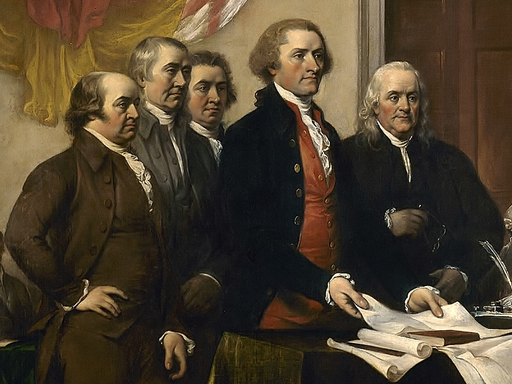
The exploration of connections between European political economic thought and the American Revolution is a fascinating area of study. Scholars are particularly intrigued by the potential influence of Adam Smith on the Founding Fathers. The appeal lies in the idea that if such a connection existed, it should have played a significant role in shaping America’s identity as an independent nation.
During the eighteenth century, Americans had cultivated a strong reputation for cherishing freedom and individualism. Their Puritan ancestors were known for their adventurous spirit, venturing into the wilderness in search of new opportunities. Additionally, Americans were often at the forefront of various commercial enterprises. Thus, the possibility of linking Smith’s ideas to those of the authors of foundational texts like the Declaration of Independence and The Wealth of Nations, both published in 1776, seems quite natural.
However, it’s essential to approach this topic with caution. Long before the grand theories of Europe were established, American colonists were already engaged in trade and social interactions. Notably, John Locke looked to America to illustrate the concept of a state of nature, emphasizing the significance of contracts in societal formation: “In the beginning,” he noted, “all the world was America.”
Adam Smith also drew upon the experiences of America’s colonies to demonstrate the benefits of free trade and critique the drawbacks of regulations. This suggests that rather than viewing European ideas as the originators of American thought, it is imperative to recognize how American experiences profoundly influenced European intellectual discourse.
It would be equally misguided to assume that Americans were oblivious to European intellectual progress. Many eager learners engaged with the writings of eminent thinkers, enhancing American concepts, particularly those surrounding liberty. The works of Hume, Locke, Montesquieu, and Smith played significant roles in shaping these ideas. What, then, can we ascertain about Smith’s impact on the author of the Declaration?
Smith on Self-Government and Order
Thomas Jefferson was familiar with Smith’s writings, specifically The Theory of Moral Sentiments. Before 1776, Jefferson read this work as well as the writings of other Scottish philosophers, as each provided reasons to trust individuals in exercising personal and political autonomy. Each thinker articulated that human beings, guided by either social conventions (like Hume) or natural law (like Kames), could use their liberties to foster a prosperous and orderly society, unhindered by authority.
Smith’s exploration of moral sentiments aligns with thoughts from Hume and Kames, as they all sought to explain the underlying motivations that foster intimate community and family ties. In The Wealth of Nations, Smith shifted towards examining how broader commercial interactions among merchants promote order. Even in this shift, he was building upon ideas that had been articulated for nearly two centuries.
Many writings, including those by Mandeville, expressed the notion of order in economic matters. Hume’s essays, recommended by Jefferson in correspondence with Robert Skipwith on August 3, 1771, contained similar discussions in “On Commerce.” This context indicates that Smith was synthesizing pre-existing thoughts rather than presenting an entirely original perspective. Importantly, Jefferson’s intellectual framework shared roots with Smith’s influences, particularly the French Physiocrats.
The Physiocrats emphasized agriculture as foundational to wealth, yet they were equally dedicated to free markets. Jefferson not only appreciated their writings but also maintained a personal friendship with one of their key figures, Pierre S. Dupont de Nemours. While some historians debate the extent of Smith’s influence from the Physiocrats, he obviously engaged with their ideas, setting the stage for Jefferson’s amicable reception of concepts in The Wealth of Nations.
Jefferson acquired his first copy of The Wealth of Nations in 1785 while in France. He may have read segments earlier, but references in his correspondence only emerge after this date. In a letter to his son-in-law, Thomas Mann Randolph (May 30, 1790), Jefferson proclaimed, “In political economy, I think Smith’s Wealth of Nations the best book extant.” This remark signals that while he found significant value in the text, it took some time for him to thoroughly digest its comprehensive content. Ultimately, the influence of Smith became increasingly evident in Jefferson’s writings.
Reading Smith’s Very Big Book
Many readers, both contemporary and historical, have found the extensive details of The Wealth of Nations to be a challenging endeavor. Jefferson himself reflected on these exhaustive pages in a note to a political confidant, Joseph Cabell, on January 31, 1814, referring to the “tedious pages of Smith.” The meticulous nature of Smith’s writing has invited criticism from two opposing interpretations, which must be considered to grasp the text’s historical context and Jefferson’s engagement with it.
On one side of the debate, strict advocates of laissez-faire claim that Smith’s work is inconsistent, often permitting what he disallows in other contexts (see Rothbard 1995, 435–474). For instance, some challenge how he treats value—subjectively concerning price but objectively around labor decisions.
Conversely, those advocating for a stronger governmental role criticize Smith for leaving openings that imply a more interventionist stance on commercial policy (Martin 2011, 110–125). Supporters often cite Smith’s advocacy for a national bank or his approval of the Navigation Acts as evidence of this claim. This back-and-forth reinforces each camp’s beliefs, but neither fully captures Smith’s intentions.
At his core, Smith asserted the need for a comprehensive understanding of costs when formulating policy. He pioneered what is now recognized as the concept of opportunity costs. His analytic approach, focused on potential advantages and disadvantages, advanced political economy beyond prior understandings.
Smith’s incomplete theory of value does not diminish his contribution. His key realization was that every individual assigns a value to their time, which is essential when deciding how to allocate labor. This realization marked a significant departure from earlier perspectives and laid the groundwork for David Ricardo’s concept of comparative advantage. While Ricardo’s assertion that labor was a measure of all value is debatable, it underscores the complexities involved in interpreting Smith’s work. This nuance does not negate Smith’s substantive contributions.
Jefferson Reading Smith
Returning to Jefferson’s perspective on Smith, it becomes clear that Smith’s advocacy for self-governance resonates strongly in his work. By analyzing Smith’s insights in the context of 1776, it becomes evident that a thorough evaluation of costs supports a minimally invasive governance approach. Smith, neither an anarchist nor an absolutist, weighed the exceptions to non-intervention through detailed comparisons of maritime defense costs versus benefits.
Interestingly, post-1785, Jefferson’s views began to reflect Smith’s principles. In his 1793 Report on Foreign Commerce as Secretary of State, Jefferson endorsed the notion of free trade yet conditioned it on national defense needs. Given the political climate—with trade restrictions, sailor seizures, and shipping interdictions—Jefferson deemed defensive measures necessary to safeguard national maritime resources.
Smith similarly argued that the defense of Great Britain relied on its naval strength, stating that navigation laws were crucial for preserving it. He concluded that the necessity of defense outweighed economic concerns, describing the Navigation Act as one of England’s wisest commercial regulations. Jefferson echoed this sentiment, noting that while shipping had inherent value as an industry, it was essential for national defense.
Despite the potential for Jefferson to derive similar views from various sources—like the well-known mercantilist Sir James Stuart—direct evidence of his engagement with The Wealth of Nations appears later.
Reading Smith and Others
Jefferson’s letters reveal a consistent and thoughtful engagement with Smith’s text over time. He often compared The Wealth of Nations with other economic literature, demonstrating his belief that economic relationships entwine with individual self-governance.
Throughout Jefferson’s letters, The Wealth of Nations serves as an influential text, though gradually it was complemented by clearer and more concise statements of its underlying principles, focusing on the unintentional orderly relations arising from voluntary exchanges. In a letter to the French economist Jean Baptiste Say on February 1, 1804, Jefferson remarked on Say’s examination of Smith’s opinions alongside Malthus’s recent work.
Later, on June 14, 1807, Jefferson offered advice to young John Norvell from Kentucky, suggesting that for inquiries into money and commerce, Smith’s Wealth of Nations was essential, unless Say’s work—which conveyed similar concepts more succinctly—was available, albeit in a non-translated version in America.
In subsequent correspondence in 1813 with John Wayles Eppes, a relative, Jefferson referenced Smith’s insights on money and banking to critique the then-popular notions of paper money financing initiated by Hamilton. Here he clarified Smith’s views, asserting that Smith favored a stable currency rather than advocating for paper’s priority over gold and silver:
The only advantage which Smith proposes by substituting paper in place of gold and silver money…is ‘to replace an expensive instrument with one much less costly, and sometimes equally convenient’; that is to say…‘to allow the gold and silver to be sent abroad and converted into foreign goods,’ and to substitute paper as being a cheaper measure. But this does not increase the nation’s capital. The coin sent out held equal value to the goods imported. Thus, it is merely a change in form within the national capital, shifting from gold and silver to other goods. (November 6, 1813)
Jefferson’s final conclusion about Smith emerged during his work on translating ideas from another French economist, Destutt De Tracy. In a letter to fellow independence leader John Adams on October 14, 1816, he noted that Tracy framed all political economy principles with clarity and conciseness akin to Euclid, marking a significant advancement.
In a prospectus for the translated work published in 1817, Jefferson reflected on Smith’s contribution to political economy, underscoring his lasting influence and the continuous evolution of thought within economic discussions:
Adam Smith, first in England, published a rational and systematic work on Political Economy; generally adopting the grounds of the Economists but differing on specified subjects. As the system was novel, extensive arguments and details were necessary to establish principles that are now readily accepted. Therefore, despite its acknowledged merit, his book has often been viewed as verbose and tedious.
In France, John Baptiste Say produced a superior work on Political Economy characterized by clear organization, lucidity, and an extension of principles within half the volume of Smith’s work. Tracy’s work will further build on the insights of his predecessors, demonstrating a rigorous logic and commitment to truth while condensing essential principles into a more concise format. (Refer to Destutt de Tracy’s A Treatise on Political Economy at the Online Library of Liberty)
Endnotes:
For cited correspondence, please refer to the National Archives at https://founders.archives.gov/
[1] The most comprehensive examination of Smith’s influence situates him within the broader context of ideas accessible to Americans during the revolutionary and early republican epochs. This remains an unpublished work: Richard B. Vernier, “Political Economy and Political Ideology: The Public Debt in Eighteenth-Century Britain and America,” Oxford University D.Phil., 1993.
References:
Appleby, Joyce, Economic Thought and Ideology in Seventeenth-Century England (Princeton 1978).
Clark, Henry C., Commerce, Culture, and Liberty: Readings on Capitalism Before Adam Smith (Indianapolis, 2003)
Martin, Christopher, “Adam Smith and Liberal Economics: Reading the Minimum Wage Debate of 1795–96,” Econ. Journal Watch, 8,2 (May 2011) 110–125.
Rothbard, Murray N., Economic Thought Before Adam Smith (Auburn Al 1995).
Young, Jeffrey T., “Adam Smith and the Physiocrats,” History of Economic Ideas, 10, 3 (2002), pp. 7–28.
This piece has been reposted as part of our celebration of the 250th anniversary of the Declaration of Independence.