This is what happened to their teeth.
Acid-related tooth damage is becoming increasingly prevalent among teenagers, according to studies.
“These are damages that can never be repaired. The acid in acidic drinks dissolves the minerals in the teeth,” explains Julie Marie Haabeth Brox.
Brox recently completed a doctorate at the University of Oslo’s Institute of Oral Biology, which involved significant research beyond just feeding mice large amounts of Coke.
Her studies also revealed substances that may offer better tooth protection than the fluoride commonly used today.

The experiments
“After just two weeks, we saw a major loss of tooth substance in the mice. After four weeks and six weeks, the damage had become even more extensive,” she states.
The dental researcher in Oslo also conducted another experiment.
“This second experiment involved giving mice different fluoride compounds produced in the lab, while they were allowed to drink Coca-Cola for six weeks,” she notes.
The researchers compared the protective effects of two commercially available fluoride compounds in the mice.
Brox and her colleagues discovered that metal fluorides might offer better protection against acid damage than the traditional fluoride used in toothpaste.
Stannous fluoride and silver fluoride
“The first study highlighted the significance of preventing acid damage, particularly by limiting intake of fizzy and energy drinks,” Brox states.
“In the second and third studies, we established that both stannous fluoride and silver fluoride provide better protection against acid damage compared to the sodium fluoride commonly used today,” she adds.
Brox and her colleagues are not the first to research the effect of various fluorides on tooth enamel.
Numerous studies have shown that fluoride compounds containing metals, such as tin and silver, may offer enhanced protection against acid damage compared to the typical sodium fluoride.
In a 2019 study involving 33 participants, British researcher Nicola West and her team found that stannous fluoride provided significantly better protection than sodium fluoride. A similar conclusion was reached by Dutch researcher Marie-Claire Huysmans and her colleagues in a 2011 study involving 12 participants.
130 litres of soda per person
Julie Marie Haabeth Brox conducted these three experiments as part of her doctoral research.
While she acknowledges that other fluoride compounds may be even more effective than the fluoride most widely used today, her primary focus remains on prevention and educating people about the associated risks. This is crucial, especially as Norwegians are likely consuming an average of around 130 litres of soda annually.
This translates to approximately 2.5 litres of soft drinks per person every week throughout the year.
Notably, this figure does not account for the soda many Norwegians purchase across the border in Sweden.
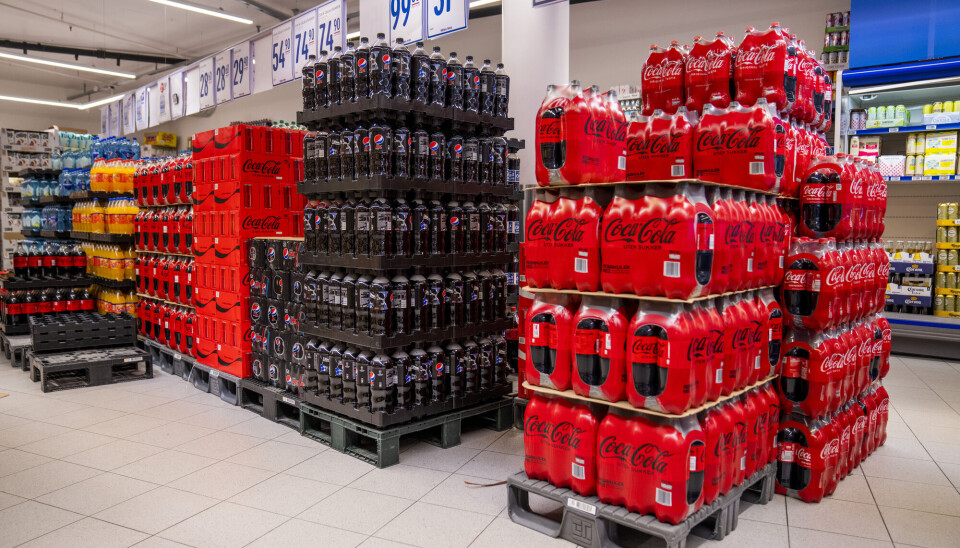
“We live in an era where trends, advertising, and social media make sugary and acidic drinks exceedingly appealing, especially to children and teenagers,” Brox states.
Label the bottles
Brox highlights that public health services spent over 38 million USD in 2025 on treating acid-related tooth damage.
“What if some of this money could be redirected towards more research?” she proposes.
Brox believes there is a strong need for additional research into how to make acidic drinks less harmful.
“It should be possible to achieve this without manufacturers having to compromise on flavor or commercial appeal,” she asserts.
Finally, she emphasizes the necessity for consumers to receive better information about these products.
One practical solution could be to mandate that manufacturers of acidic drinks clearly label their products with warnings regarding the risk of dental erosion—essentially indicating their acidity levels.
———
Translated by Alette Bjordal Gjellesvik
Read the Norwegian version of this article on forskning.no
References:
Brox, J.M.H. Dental erosion: Onset, progression, and prevention strategies, Doctoral thesis at the University of Oslo, 2026.
Bull, V.H. & Melbye, E.L. Ungdom mangler kunnskap of syreskader (Teenagers lack knowledge about acid damage), Norwegian Dental Journal, 2023. DOI: 10.56373/2023-8-3
Huysmans et al. Reduction of erosive wear in situ by stannous fluoride-containing toothpaste (Abstract), Caries Research, 2011. DOI: 10.1159/000331391
Melbye et al. Consumption of acidic drinks, knowledge and concern about dental erosive wear in Norwegian high school students, Acta Odontologica Scandinavica, 2020. DOI: 10.1080/00016357.2020.1761030
Statistics Norway: Stor auke i daglegvarekjøp av mat- og drikkevarer (Large increase in grocery purchases of food and beverages), 2025.
West et al. Randomized in situ clinical trial evaluating erosion protection efficacy of a 0.454% stannous fluoride dentifrice, International Journal of Dental Hygiene, 2018. DOI: 10.1111/idh.12379
Key Takeaways
- Norwegians consume an average of 130 litres of soft drinks per person annually.
- Soft drink consumption contributes significantly to acid-related tooth damage, especially among teenagers.
- Research shows that metal fluorides like stannous and silver fluoride may offer better protection against tooth erosion than traditional sodium fluoride.
- There is a call for clearer labeling on acidic drinks to help consumers understand the risks.
- Investing in research for less harmful acidic drinks could benefit public health significantly.
FAQ
What is the main cause of acid-related tooth damage?
The primary cause of acid-related tooth damage is the consumption of acidic drinks, which dissolve minerals in the teeth.
What types of fluoride offer better protection against tooth erosion?
Research indicates that stannous fluoride and silver fluoride provide superior protection against acid damage compared to traditional sodium fluoride.
How much soda do Norwegians drink annually?
On average, Norwegians consume about 130 litres of soda per person each year.
What can be done to reduce acid damage from drinks?
Limiting the intake of fizzy and energy drinks can help reduce acid damage, along with improved research and labeling.
Why is labeling important for acidic drinks?
Clear labeling can inform consumers about the acidity levels of drinks, helping them make informed choices regarding their consumption.