
Navigating Member Acquisition Costs and Data Infrastructure Challenges in Fitness
The fitness industry is witnessing unprecedented growth, with more members joining gyms than ever before. However, while the influx of new members looks promising, behind the scenes, many fitness businesses face a major hurdle: understanding and retaining these members. According to Daniel Wischer, Senior Vice President of Global Enterprise Solutions at PerfectGym, the real challenge lies not in marketing but in the data infrastructure supporting these enterprises.
Operators can quickly state how many new members they’ve signed up monthly, but often struggle to identify those who haven’t checked in for weeks—a wealth of missed revenue opportunities lurks in this gap.
Challenges of Member Retention
While fitness participation continues to rise, sustaining engagement and ensuring member retention is becoming increasingly complex for multi-location operators. Many large fitness chains generate vast data sets regarding membership activity, class bookings, payments, and other services. Unfortunately, the systems currently in place often fail at managing this complexity. Instead of streamlined operations, many businesses end up with a patchwork of tools for booking, billing, and access control—each functioning well on its own but causing fragmentation that hampers overall performance.
These inefficiencies accumulate over time, turning into an operational blind spot. Although intuitive understanding might suffice in smaller gyms, it becomes challenging to manage across multiple locations. Erwin Korst, Senior Vice President of Global Enterprise Sales at PerfectGym, notes that operators often don’t realize their systems are hindering progress because everything seems to be working “well enough.” However, as member expectations rise, especially regarding personalization and AI, these limitations become glaringly evident.
Benefits of Connecting Data Systems
Transitioning to a more integrated system can significantly enhance an operator’s understanding of member retention. By creating a connected data environment, businesses can capture a comprehensive view of the member journey, identifying patterns of engagement and disengagement in real-time. This proactive approach allows for targeted actions to prevent cancellations before they happen, transforming retention from a mere cost center into a revenue engine.
Smart leaders in the fitness industry are already capitalizing on this approach. They identify opportunities for upselling and recognize at-risk members before issues arise, enabling the introduction of services like personal training and small group classes in alignment with actual member engagement. Rather than adding more fragmented tools, this strategy revolves around utilizing existing data more effectively.
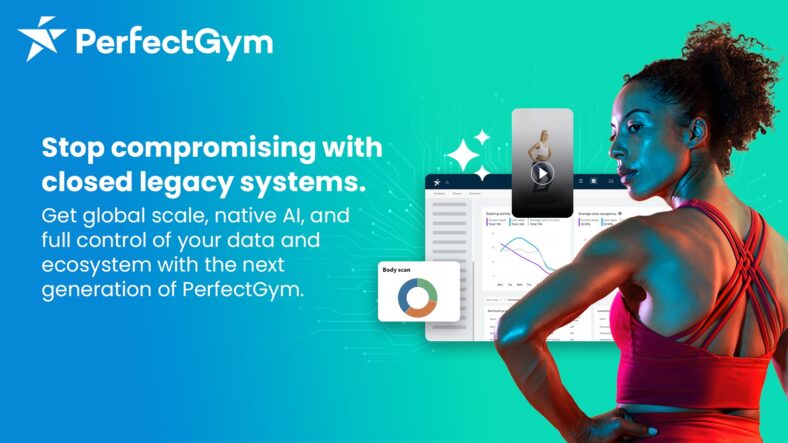
PerfectGym differentiates itself by offering a robust platform designed specifically for multi-location enterprises while remaining adaptable for smaller studios. Their approach focuses on consolidating various operational functions—from bookings to billing—into one cohesive system, facilitating a “single source of truth” for operators.
This unified setup can dramatically improve decision-making. By connecting various systems through an open API, PerfectGym aims to empower operators to fully leverage their data.
Evaluating Your Data Readiness
For operators wishing to assess their data capabilities, consider three key questions:
- Can you identify which members haven’t visited in three weeks?
- Are you aware of which locations are falling short in secondary revenue?
- Can you generate a unified member view without needing multiple logins?
If the answer is “no” to any of these questions, it may indicate a more significant gap between your current operations and the industry’s evolution.
Conclusion
As the fitness industry evolves and becomes more data-driven, it’s crucial for operators to reassess their infrastructures continually. A commitment to refining data strategies will not only facilitate better retention but also allow businesses to thrive in an increasingly competitive landscape. By addressing these data gaps and promoting a unified operational framework, fitness businesses can position themselves for long-term success and growth. Remember, understanding your members’ journey is not just about acquiring them; it’s about keeping them engaged for the long haul.