
In recent discussions, US special envoy Steve Witkoff recounted the final, fruitless attempts to establish a nuclear agreement with Iran. These talks ultimately fell apart just as the United States prepared to initiate significant military actions.
“President Trump sent me and Jared there to really determine on his behalf whether they were serious about doing a deal that addressed his objectives,” Witkoff explained, detailing a series of discussions he had with Jared Kushner, President Donald Trump’s son-in-law, in Geneva. The focus was on curbing Tehran’s nuclear ambitions.
Witkoff noted that the US delegation suggested a temporary halt to uranium enrichment for a decade.
“We discussed ten years of zero enrichment, and we would cover the cost of the fuel,” he stated. “They rejected that, indicating from the outset their intention was to retain enrichment capabilities aimed at weaponization.”
Witkoff and Kushner, who was responsible for facilitating the negotiations, sensed that reaching an agreement was unlikely by the conclusion of the second meeting. Nevertheless, they returned for a third session as a final attempt.
“By the end of the second meeting, it was evident that success was probably out of reach, but we made a third visit for one last effort,” he said. “The Iranian team wanted us to come back with an upbeat report,” Witkoff remarked. “That meeting did not yield positive outcomes.”
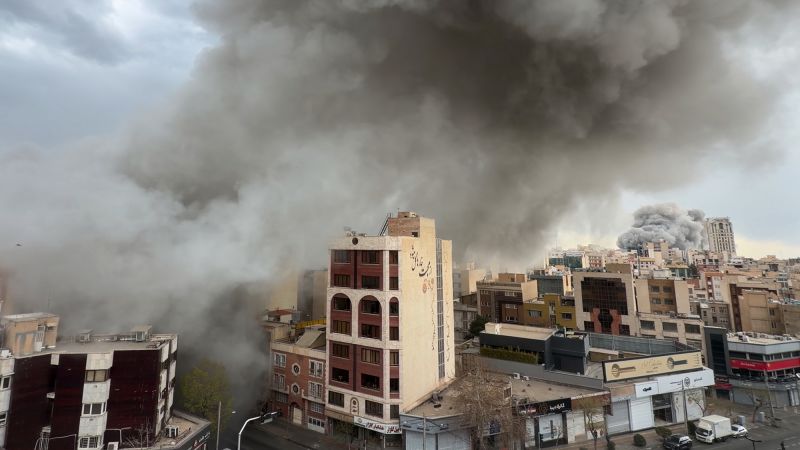
The failure of the negotiations prompted Trump’s announcement of joint military operations by the US and Israel against Iran.
Around the time of the military actions, Trump publicly encouraged Tehran to consider concessions. “They should negotiate, but they seem hesitant to go far enough,” he said during a stop in Texas. “They are reluctant to state the critical phrase: ‘We will not pursue a nuclear weapon.’”
Key Takeaways
- The US attempted to negotiate a nuclear deal with Iran, which ultimately failed.
- Efforts included proposals for a ten-year halt on uranium enrichment.
- The Iranian delegation’s rejection of these terms indicated their intentions regarding nuclear capabilities.
- Despite skepticism, negotiations continued up to a third round before the talks collapsed.
- The outcome led to military action against Iran announced by President Trump.
FAQ
What were the main points of the proposed nuclear agreement?
The US proposed a temporary halt to uranium enrichment for a decade, with financial support for fuel provided by the US.
Who were the key US figures involved in the negotiations?
Steve Witkoff and Jared Kushner were the main negotiators representing the US during the discussions.
What was the outcome of the negotiations?
The negotiations ultimately collapsed, leading to joint military operations by the US and Israel against Iran.
Did the Iranian representatives show any willingness to negotiate?
According to Witkoff, the Iranian delegation declined the proposed terms, suggesting they were not serious about reaching a deal.
What public statements did President Trump make during this period?
Trump encouraged Iran to make concessions but noted their reluctance to commit to not pursuing nuclear weapons.