AI is revolutionizing automotive development, particularly in vehicle testing, but its adoption raises significant trust issues within safety-critical engineering processes. Fernando Valera, CTO of Visure Solutions, emphasizes the importance of integrating AI with engineering context, governance, and traceability to enhance the agility, quality, and compliance of vehicle testing.
The Challenge of Software-Defined Vehicles (SDVs)
The automotive sector is rapidly evolving, with features like ADAS and over-the-air updates increasing software complexity while compressing development timelines. Verification and validation (V&V) teams must ensure that software releases meet stringent requirements across safety and cybersecurity standards, necessitating efficient testing without sacrificing quality.
The Role of AI
AI technologies, including large language models, are being utilized to streamline tasks such as reviewing specifications and generating test cases. However, the challenge lies in generic AI’s limitations; it lacks an understanding of crucial engineering relationships that determine vehicle safety and compliance.
Importance of Engineering Context
Automotive testing relies heavily on traceability. A minor software change can influence multiple engineering aspects, such as requirements and safety goals. Generic AI often fails to grasp these interconnections, which can lead to undetected compliance issues. As SDVs continuously receive updates, the need for context-aware AI becomes clearer.
Engineering Intelligence
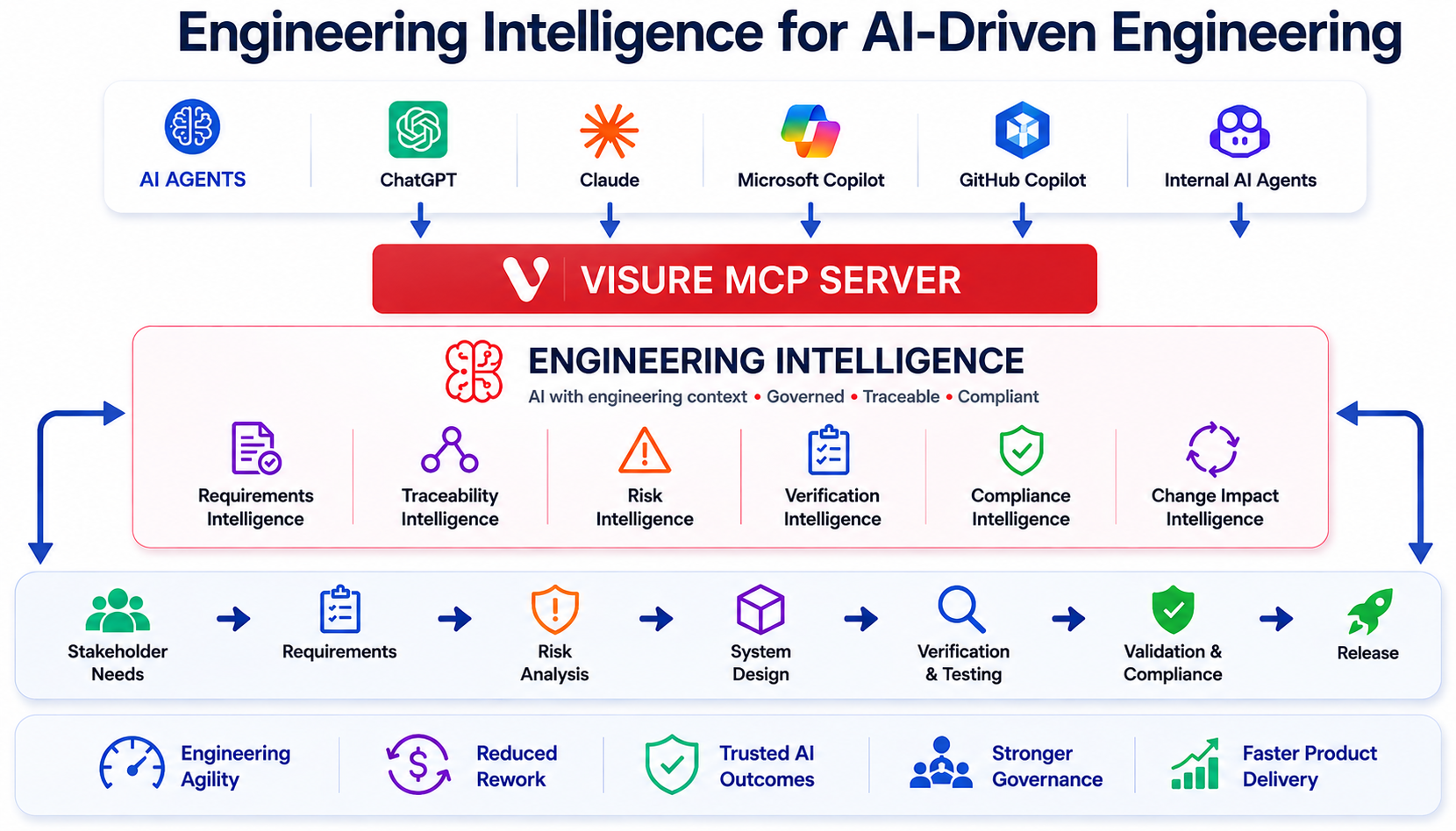
Engineering intelligence, an emerging approach, integrates AI with engineering knowledge, relationships, and traceability. This results in an AI system that can analyze context-rich engineering data, identify affected test cases, and evaluate potential impacts.
Key benefits include:
- Optimized Regression Testing: AI prioritizes tests, reducing redundant validation efforts while maintaining software quality.
- Enhanced Collaboration: Teams can access integrated engineering knowledge quickly, fostering better decision-making.
Governance and Human Oversight
For AI to be trustworthy in automotive applications, strong governance is crucial. Standards like ISO 26262 mandate traceability and evidence-backed decisions. Therefore, AI-generated insights should remain linked to canonical engineering data and require human review.
Implementation of Engineering Intelligence
Visure Solutions is pioneering this concept, exemplified by its AI assistant, Vivia, and the Visure MCP Server, which facilitates secure access to governed engineering information. This integration allows AI to enrich decision-making in the context of existing engineering workflows.
Looking Forward
The future of automotive testing will hinge not just on faster AI or automation but on embedding AI support within rigorous engineering methodologies that ensure safety and compliance. Engineering intelligence lays a robust foundation for achieving efficient validation while maintaining the discipline needed for developing safe, reliable vehicles.
For those interested in further exploring engineering intelligence, a webinar and additional resources are available.