Fetishism refers to the phenomenon where an object is imbued with meaning and significance that go beyond its practical uses. Originally derived from anthropology, the term describes objects believed to hold supernatural powers. When it comes to fetishism within broader contexts, it indicates a detachment of the value placed on an object from its actual utility. Consequently, these objects gain importance independent of their real-world functions.
Military institutions are notably vulnerable to this disconnection. Weapons are created with specific operational and strategic purposes in mind, yet successful weapons often develop reputations that overshadow their practical implications. For example, battleships symbolize naval dominance, tanks epitomize battlefield power, and fighter aircraft showcase technological advancement and martial skill. Such accolades become woven into military customs, professional identities, and national narratives.
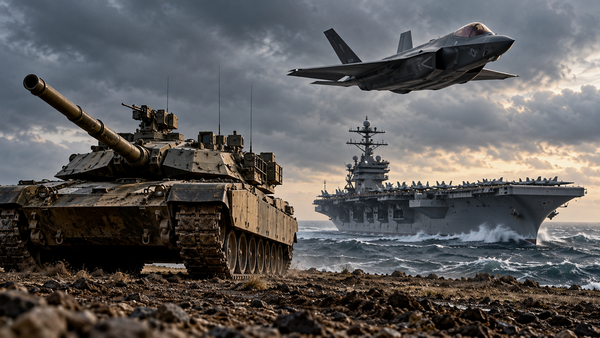
Enduring icons of U.S. military power: tanks, combat aircraft, and aircraft carriers
In the realm of weapons fetishism, the perceived value of a weapon can become dissociated from its actual utility, treating its worth as an inherent property. However, military effectiveness isn’t an intrinsic quality; it relies on the operational context, the capabilities of adversaries, available alternatives, and the objectives that military force intends to achieve. A weapon that provided substantial advantages can become less effective over time as circumstances shift. Advanced technology and high destructive capacity do not always equate to strategic efficacy.
Perceptions of military utility do not inherently adapt to changing realities. Weapons gain stature through past accomplishments or through the anticipation of future capabilities, while military organizations build doctrines, professional networks, procurement strategies, and industrial ties around them. Cultural, reputational, and institutional inertia can lead to ongoing investments in established weapons, even as their relative effectiveness wanes. The maintenance of these systems may turn into a goal in itself.
This situation does not always arise from irrational enthusiasm or intentional misrepresentation. Military professionals can genuinely believe in the effectiveness of familiar weapons while institutions strive to protect the investments and expertise built over decades. The distortion occurs when these commitments hinder re-evaluation of military effectiveness in light of changing conditions.
Furthermore, fetishism is not limited to well-established weapons. Newer weapons can garner inflated reputations based on unproven capabilities, creating significant organizational commitments before their operational effectiveness has been assessed.
This article delves into the development of weapons fetishism, explores its persistence, and examines how it skews modern American military priorities, resulting in what resembles a worship of weaponry.
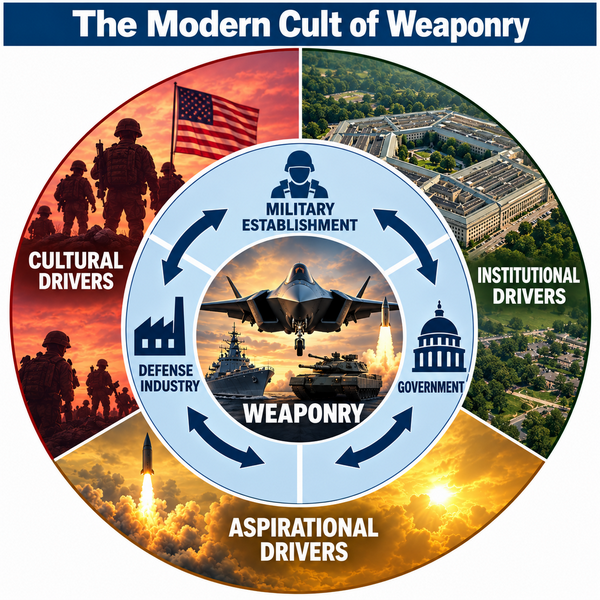
The Recurring Cycle of Weapons Fetishism
Military history is marked by cycles in which long-established weapons prove ill-suited to evolving technologies and tactics. Weapons that once represented military superiority can cling to their reputations even as the conditions that made them effective change. The gap between perceived and actual utility often surfaces through expensive battlefield lessons.
For instance, at the Battle of Crécy in 1346, French armored knights, adorned with the prestige of medieval combat, faced a devastating defeat at the hands of an English army using longbowmen and advantageous defensive strategies. This conflict didn’t entirely obsolete armored cavalry but did illustrate that its former superiority couldn’t be taken for granted in all combat scenarios. Military prestige had outstripped tactical validity.
Similarly, the Ottoman conquest of Constantinople in 1453 showcased another transformational moment. Despite centuries of resilience against sieges, the immense walls of the Byzantine empire fell to Ottoman artillery, exposing the vulnerability of medieval fortifications to gunpowder warfare. While fortifications remained integral to military strategy, their design had to evolve to keep pace with advancements.
The industrialization of warfare brought yet another dramatic clash between outdated assumptions and military reality. At the Battle of the Somme in 1916, British forces faced devastating losses against entrenched German defenses, highlighting the challenges of traditional offensive tactics against modern industrial firepower. This shattering experience eroded foundational beliefs regarding infantry assaults achieving decisive breakthroughs.
World War II further reshaped naval warfare. Battleships once epitomized maritime power but were rendered vulnerable as aircraft demonstrated their ability to strike from distances that outranged naval guns. Key assaults, including the British attack on the Italian fleet at Taranto and the Japanese raid on Pearl Harbor, marked the rise of carrier-based operations. Although battleships did not vanish overnight, this period signified the end of their dominance in naval strategy.
These instances illustrate a recurring cycle: new weapons and strategies gain recognition and prestige, leading military agencies to center their doctrines and procurement efforts around them. When technological evolutions alter warfare dynamics, the effectiveness of previous weapons diminishes. The established reputations and institutional commitments hinder necessary adaptations until a military setback forces a reassessment. The subsequent innovations then acquire their own prestige, initiating another cycle.
In the past, battlefield experiences often provided the requisite corrections to persistent military misjudgments. Today, modern military institutions have sophisticated analytical tools that should enable them to foresee such shifts without suffering catastrophic losses. The persistence of weapons fetishism, however, demonstrates the ongoing challenge in transforming evolving military realities into adaptable institutional strategies.
The Three Mechanisms of Weapons Fetishism
The enduring presence of established weaponry, despite evidence of declining effectiveness, can be attributed to three interrelated forces: cultural, reputational, and institutional inertia. Each operates through distinct mechanisms but collectively sustains weapons programs long after their strategic justification has diminished.
Cultural inertia stems from the symbolic meanings that weaponry acquires within military circles and the broader societies they serve. Weapons become representations of national strength, technological achievement, and martial virtue. For instance, battleships denote command of the seas, tanks symbolize armored power, and fighter jets reflect the valorous image of the lone warrior. These associations are often reinforced through military traditions, popular culture, and historical narratives.
The tendency to ascribe remarkable power to specific weapons has deep historical roots, framing military success in ways that oversimplify complex causes into the perceived extraordinary capabilities of a single weapon.
Professional identities within the military may be particularly sensitive to such attachments. Communities of fighter pilots, naval aviators, submariners, and armored warfare experts often have their prestige and traditions closely tied to specific weapon systems. Their dedication to mastering these instruments is understandable, but it can also hinder acceptance of new technologies or operational concepts that may diminish the significance of established specialties. Displacing a weapon could threaten not only operational capabilities but also professional identities.
Reputational inertia refers to the persistence of beliefs surrounding a weapon’s effectiveness. Weapons accumulate reputations through demonstrated successes or expectations of future capabilities, generating confidence that permeates military doctrines and procurement processes. Yet as operational contexts evolve, these anticipated capabilities may not materialize. Enhancements in technical performance might strengthen confidence in a weapon, even as it becomes less effective in achieving its stated mission. Over time, a weapon’s reputation may increasingly diverge from operational reality.
The conflict in Ukraine has highlighted the limitations of many touted advanced weapons. Systems like Javelin missiles, HIMARS, and advanced tanks have been celebrated for their potential impact, yet none has resulted in a decisive strategic outcome. Countermeasures, logistical demands, and battlefield adaptations have constrained their effectiveness. Despite setbacks, the prestige of these advanced platforms often remains intact, with shortcomings attributed to insufficient quantities or inadequate support systems. While such reasons may hold merit, they also risk obscuring a more honest reassessment of a weapon’s strategic utility.
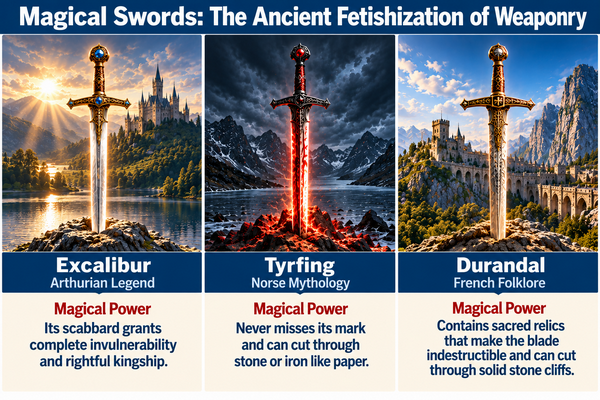
The enduring belief that a superior weapon can dramatically alter the course of a military conflict draws parallels to the ancient faith in magical swords. Military success relies on a network of interrelated systems and conditioning factors, not merely the exceptional qualities of individual weapons.
Reputational inertia isn’t exclusive to those weapons with strong battlefield track records; aspirational expectations can generate confidence and prestige even before a new technology has proven its operational value. Once established, these expectations can persist despite disappointing results. A pertinent example lies in the development of strategic missile defense.
Institutional inertia arises from the organizational and economic structures that develop around established weapons. Major programs foster networks of military commands, research institutions, defense contractors, political stakeholders, training facilities, and maintenance organizations. The reliance of military careers, organizational budgets, and industrial investments on the continuity of these programs complicates their discontinuation, even when superior alternatives become apparent.
This form of inertia is difficult to rectify because it often flourishes even when a weapon’s superiority is acknowledged to be lacking. Organizations can recognize shortcomings yet resist replacement due to potential threats to budgets, employment, authority, or longstanding investments. The rationale that significant prior investments warrant continued commitment can transform irretrievable expenditures into justifications for further investments.
These three forms of inertia interconnect and amplify each other. Cultural prestige validates ongoing investments, reputational confidence sustains expectations of performance, and institutional commitments provide the necessary resources and political backing for sustained weapons programs. Conversely, ongoing investment can enhance a weapon’s cultural significance and perceived reliability. The extent of institutional investment itself may be interpreted as evidence of its critical importance.
These dynamics also shape how alternatives are evaluated. Military organizations often assess new technologies based on existing force structures rather than their potential transformative capabilities. An unmanned aircraft might be compared to crewed fighters rather than evaluated as part of a fundamentally different operational system. Likewise, naval forces that are distributed may be judged against the concentrated offensive power of an aircraft carrier rather than assessed for their ability to accomplish strategic goals through distinct operational methods.
Consequently, established weapons become the benchmarks against which potential replacements are measured, even when genuine innovation requires rethinking those very standards. Technological advancements may prioritize the preservation of known capabilities rather than exploring more effective substitutes.
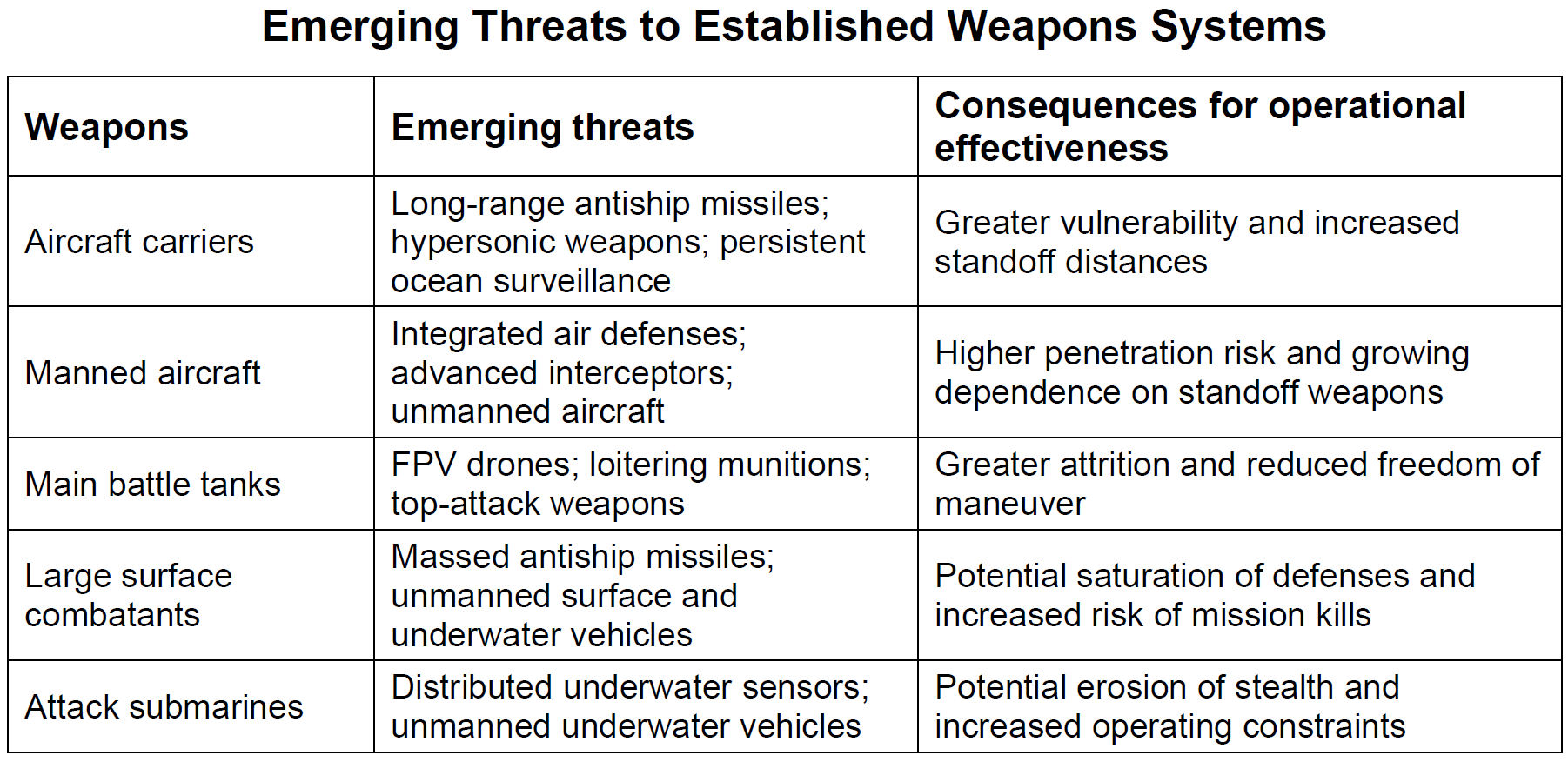
Weapons fetishism thus emerges not from a singular irrational preference but from the interplay of beliefs, reputations, and organizational interests. Contemporary examples of this tendency are especially evident in the ongoing development of tanks, manned combat aircraft, major surface vessels, and strategic missile defense systems.
The Main Battle Tank
The main battle tank has held a prominent role in modern ground warfare since World War II. Fusing mobility, armor protection, and heavy weaponry, tanks became pivotal in mechanized offensives. Their historical triumphs solidified a lasting reputation for decisive combat effectiveness, further reinforced by the institutional authority of their commanders and the prestige of armored units.
Tanks’ historical advantages lay in their ability to deliver concentrated, protected firepower at critical points. Armored formations could breach defensive lines and exploit gaps at remarkable speed. Despite facing capable adversaries, tanks provided a blend of tactical mobility, direct firepower, and survivability that few other ground assets could match.
However, the advent of precision-guided anti-tank munitions began to compromise these advantages. Relatively low-cost guided missiles empowered infantry to target armored vehicles from long distances, while top-attack munitions exploited vulnerabilities in lighter top armor. This escalation has driven up costs and complexity for tank protection, without necessarily eliminating threats to their operation.
The conflict in Ukraine has accelerated this shift. Persistent aerial surveillance, reconnaissance drones, precision artillery, and extensive minefields have made massed armored maneuvers increasingly perilous. Modern drones have introduced affordable weaponry capable of damaging or destroying high-value vehicles. Furthermore, continual surveillance and precision strikes jeopardize the assembly, movement, and coordination of armored formations. A tank could survive a direct assault yet find itself immobilized or isolated under adverse conditions.
In response, militaries have implemented additional armor, electronic countermeasures, active protection systems, and adapted tactics. Yet these adaptations also lead to increased costs and logistical demands. The cumulative effects of protective enhancements raise critical questions: how much investment is warranted to maintain the operational effectiveness of a weapon increasingly exposed to hostile environments?
None of this implies that tanks have become obsolete. They still possess essential capabilities for direct fire support, protected movement, and operations against fortified positions. Their ongoing deployment in Ukraine underscores their role in important battlefield functions, though their efficacy now heavily relies on accompanying forces, terrain considerations, and state of play.
Thus, the critical issue isn’t whether tanks retain utility but whether their historical prestige justifies their honored status within military structures and procurement agendas. While a weapon may remain functional, it might become less cost-effective compared to emerging alternatives for specific missions. Cultural ties to armored power, along with institutions’ commitments to mechanized formations and confidence rooted in past successes, could blind military and political leaders to this evolving relationship. The risk lies not merely in ongoing tank procurement, but in the assumption that their historical battlefield significance guarantees their ongoing necessity.
Manned Combat Aircraft
The realm of military aviation illustrates the tension between cultural prestige and institutional inertia. The combat pilot occupies a storied role in military history and popular imagination, epitomizing skill, bravery, and technological excellence. Fighter pilots, in particular, have been elevated to near-mythological status, often celebrated in military traditions and cultural portrayals of aerial combat.
Yet the technological underpinnings of military aviation have undergone profound transformations. Today’s aircraft utilize computerized flight controls, sophisticated sensors, automated navigation, and increasingly autonomous systems for mission execution. Unmanned aircraft have shown an ability to conduct surveillance and precision strikes without risking personnel. In addition, advancements in AI and computing are broadening the range of missions that can be executed without human pilots. The rising significance of beyond-visual-range missile engagements has diminished the need for traditional dogfighting prowess.
The Navy’s experience with unmanned carrier operations offers critical insights. The Northrop Grumman X-47B successfully demonstrated autonomous aircraft operations aboard carriers, achieving vital milestones like aerial refueling. This progress hinted at the potential for extending carrier missions to include roles formerly allocated to crewed aircraft, such as long-range strikes in hostile areas.
However, the Navy’s subsequent efforts to integrate unmanned aircraft primarily focused on aerial refueling rather than strike capabilities. The MQ-25 Stingray is designed mainly to enhance the operational reach of crewed naval aircraft. This choice underscored sound operational priorities but also maintained the emphasis on manned aviation. Instead of pursuing an unmanned strike platform, the Navy opted for a technology that complements and reinforces existing crewed capabilities.
Unmanned aircraft could theoretically exploit design efficiencies unavailable to crewed platforms. By eliminating the cockpit, life-support systems, and related safety requirements, alternative design configurations can emerge, leading to advantageous trade-offs in terms of weight, volume, endurance, and payload. Furthermore, aircraft without human crews can undertake missions that might pose too great a risk to personnel.
The Air Force’s sustained investment in manned bombers raises similar inquiries. The B-21 Raider, equipped with advanced stealth features, is engineered for deep penetration missions; yet, it still supports an onboard crew. Given that strategic bombing operations do not typically necessitate the rapid maneuverability required in fighter engagements, and mission control relies heavily on sophisticated computerized systems, retaining human pilots incurs unnecessary complications, including the need for life-support systems and crew safety measures.
Legitimate reasons exist for maintaining human crews, such as flexibility in mission execution, resilience against communication disruptions, and essential checks and balances in weapon deployment. Especially in operations concerning nuclear arsenal management, clear command authority remains critical. These factors must be diligently weighed against the potential benefits of unmanned alternatives rather than automatically concluding that onboard crews are essential.
The pivotal question is whether crewed aircraft remain the most effective means to achieve designated missions, considering their complete life-cycle costs and operational vulnerabilities. Evaluations centered solely on individual aircraft capabilities may obscure the advantages offered by distributed unmanned systems, including superior numbers, potentially reduced unit costs, and the tolerance for higher attrition rates.
The dynamics of manned combat aviation clearly illustrate how professional identities and institutional commitments can shape technological trajectories. The prestige associated with being a combat pilot bolsters the cultural authenticity of crewed aircraft, while entrenched institutions promoting pilot training, career paths, and established procurement incentives strongly favor the continuation of their existing roles.
The goal should not be to eliminate human oversight from military operations but to determine where that oversight is most crucial. The presence of a decision-maker need not imply that every combat aircraft requires a human occupant.
Aircraft Carriers and Major Surface Combatants
In modern naval warfare, aircraft carriers hold a position analogous to that of the battleship in earlier times. Their massive scale, technological sophistication, and capability to project military might make them formidable symbols of national power. The United States has largely designed its naval force structure around carrier strike groups, treating them as essential assets for maritime superiority and global intervention efforts.
The track record of aircraft carriers is built on considerable historical success. Throughout World War II, naval aviation usurped battleships as the primary striking force of major fleets. In the decades following, American carriers provided mobile air bases for operations across Korea, Vietnam, Iraq, and Afghanistan, delivering sustained airpower independently of foreign airfield dependencies, enhancing their significance in military strategy.
However, the backdrop for these historical triumphs has shifted. American aircraft carriers have often operated against adversaries constrained in their ability to locate and target them at sea. Engaging a technologically advanced naval opponent presents substantially different challenges. Long-range anti-ship missiles, capable submarines, persistent surveillance systems, and unmanned aerial platforms pose serious threats to the maneuverability necessary for carrier operation.
China’s investments in extensive anti-access and area-denial systems exemplify this evolving landscape. Their land-based ballistic and cruise missiles, supported by a robust sensor network, create overlapping threats to surface vessels within proximity to Chinese shores. While detecting, tracking, and successfully targeting a moving carrier remains a daunting operational challenge, the introduction of long-range precision weapons has eroded the survivability of concentrated naval formations.
The extensive military value attributed to the carrier compounds this dilemma. A nuclear-powered supercarrier represents a financial investment of several billion dollars and harbors thousands of personnel alongside an air wing of advanced aircraft. Its potential loss or crippling would represent a severe military and political setback. Consequently, commanders may feel compelled to operate carriers at distance from hostile zones, which could diminish their air assets’ effectiveness.
This results in a strategic paradox: the more value that is assigned to an aircraft carrier, the more hesitant commanders may become about risking it, thus complicating their intended purpose of projecting military power. The fear of long-range anti-ship threats can therefore undermine a carrier’s operational contribution, even without a successful enemy assault occurring.
The Navy has adapted by enhancing aircraft ranges, improving defense systems, and developing new unmanned capabilities while promoting the carrier strike group as a central focus of American naval strategy. The query remains whether these incremental modifications can adequately address the shifting dynamics between concentrated naval assets and increasingly distributed systems of surveillance and attack.
These issues also resonate with major surface combatants. Modern destroyers and cruisers feature advanced radar, robust combat management systems, and significant missile capabilities. Yet their operational effectiveness is still contingent upon limited missile supplies, vulnerable sensors, and the capacity to withstand sophisticated multi-faceted assaults. Relatively inexpensive unmanned assets can impose a heavy defensive burden on these costly platforms, sometimes forcing withdrawal even when individual attacks are countered.
Such developments highlight alternatives to relying heavily on a few highly capable naval platforms. A distributed network of unmanned surface vessels, submarines, autonomous sensors, and remote weapon systems could sustain extensive surveillance and offensive capabilities across vast maritime areas. These systems would diffuse military value, making enemy targeting increasingly challenging while minimizing dependency on specific large ships. However, their operational effectiveness must be proven through actual deployment rather than assumed.
Naval warfare is particularly susceptible to weapons fetishism because its core platforms embody cultural prestige, historical legacies, and substantial institutional investments. Therefore, the pressing question is not merely whether aircraft carriers and major surface vessels still maintain military utility, but whether their accumulated respect and institutional relevance have become disproportionate to the value they promise to bring to future naval engagements. History has shown that even the most formidable instruments of maritime power, like the battleship, can lose their dominant status; there is no basis for assuming that this cycle has concluded with current capital ships.
Strategic Missile Defense
The case of strategic missile defense represents a different variant of fetishism within weaponry. Unlike tanks, aircraft, and capital ships, whose reputation typically stems from established accomplishments, comprehensive missile defense has earned prestige primarily based on the envisioned potential of future capabilities yet to be demonstrated. The aspiration to shield a nation from nuclear threats is compelling enough that the desirability of such a system can overshadow questions of feasibility and strategic utility.
This phenomenon is evident in President Trump’s Golden Dome initiative, inspired by Israel’s Iron Dome capabilities. The Iron Dome has shown effectiveness against short-range rockets; however, protecting the continental United States from sophisticated intercontinental ballistic missiles presents notably distinct technical and operational hurdles. The successful interception of individual missiles under specific scenarios does not validate the viability of a comprehensive national defense against such threats.
Israel’s struggle against Iranian ballistic missile strikes further clarifies the limitations inherent in such extrapolations. Despite a sophisticated multilayered defense system, some Iranian missiles successfully penetrated Israeli territory during the June 2025 conflict. Interception capabilities considered robust against conventional assault could be gravely inadequate when faced with nuclear payloads. Even a defense system that intercepts 99 percent of a barrage of 100 nuclear warheads would still allow one warhead to breach the defense, potentially crippling a major city.
Moreover, evaluating missile defense systems cannot solely hinge on interception capabilities. A system thought to imperil an adversary’s retaliatory capability might provoke offensive enhancements, countermeasures, or preemptive actions. The quest for heightened protection could lead to developments that ultimately threaten national security.
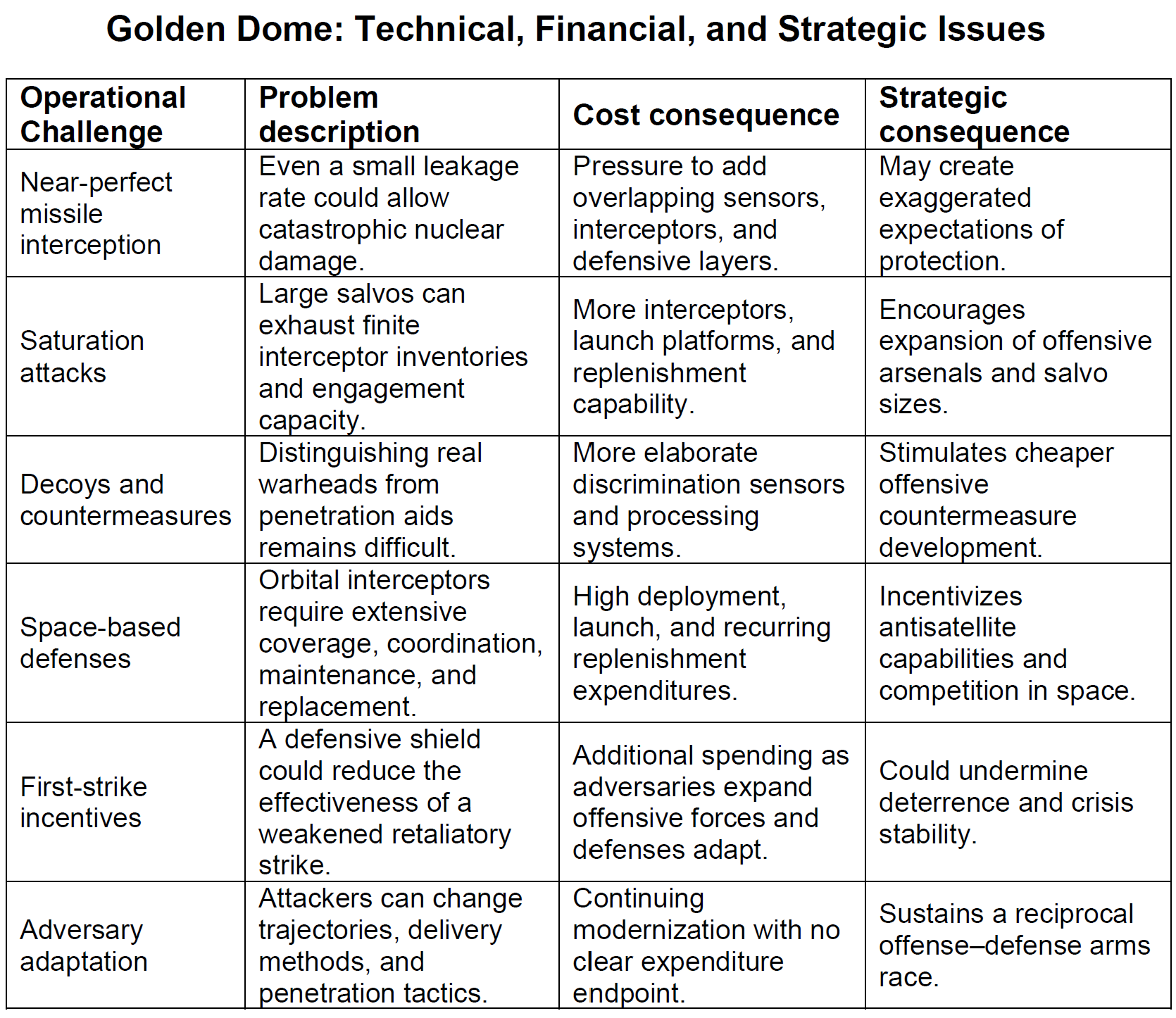
Strategic missile defense reflects prospective weapons fetishism, where institutional momentum grows around technological aspirations even before verified strategic effectiveness is established. The desire to achieve national invulnerability can lead to vast investments, regardless of how far short technical achievements fall in satisfying that goal.
The core error lies in confusing technological promise for proven strategic capability. A weapon need not possess a noteworthy history of success to become an object of passionate attachment; merely the expectation of future efficacy may suffice.
The Consequences of Weapons Fetishism
The repercussions of weapons fetishism extend beyond the acquisition of costly or less effective systems. The primary concern is how it distorts military priorities. When established weapons gain significance apart from their proven utility, the drive to maintain and enhance existing capabilities may overshadow the search for more effective ways to achieve strategic goals.
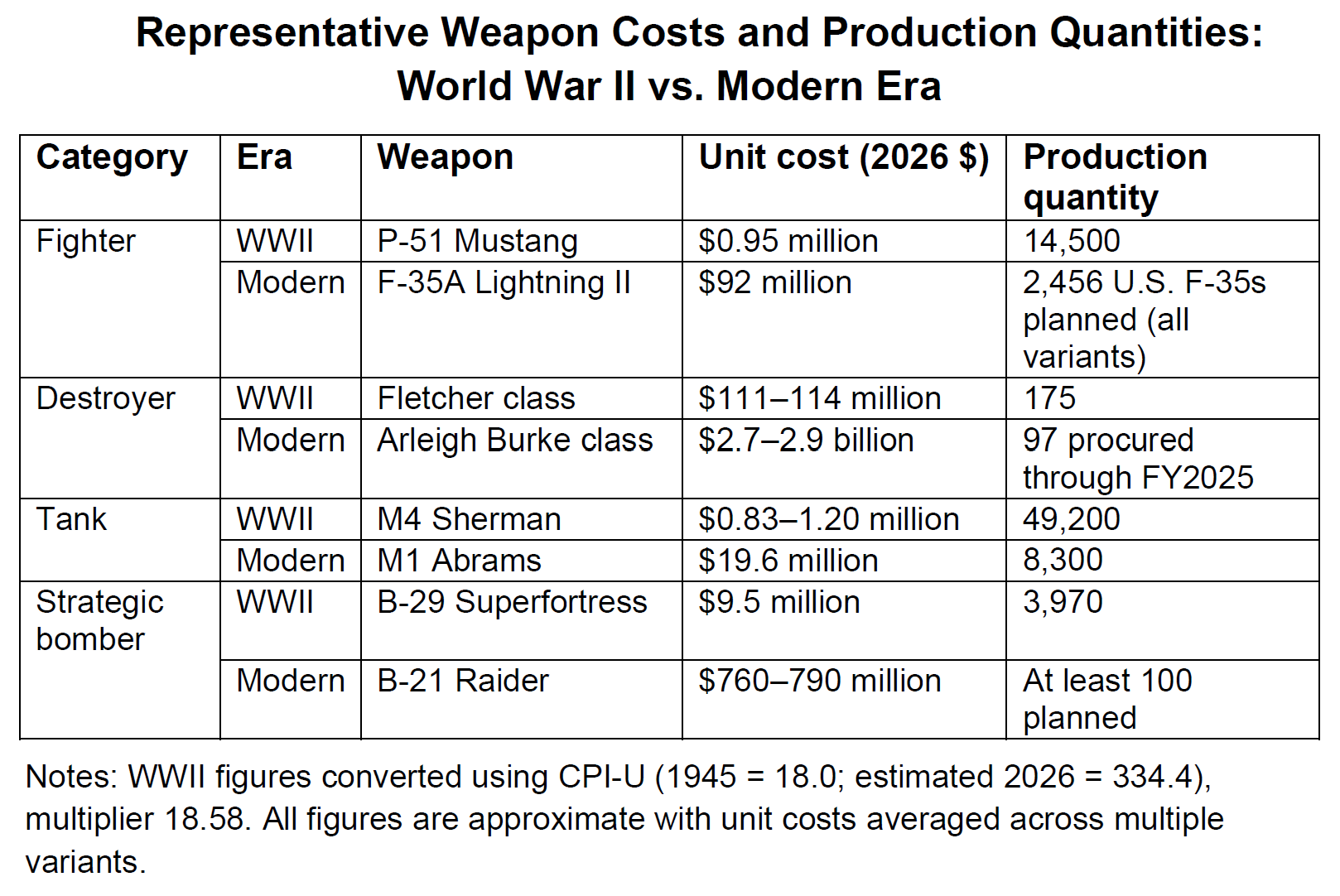
The immediate result is a misallocation of resources. Modern armament programs often require tremendous investments in research, production, personnel, infrastructure, and maintenance, extending over decades, even while shifting conditions may undermine their validity. For instance, the F-35 fighter program is projected to cost over $2 trillion in total acquisition and sustainment, according to the U.S. Government Accountability Office.
Similarly, the proposed Golden Dome defense system would necessitate extraordinary expenditures due to lofty interception standards and the requirement for extensive orbital components. Even achieving a 99 percent success rate could lead to catastrophic losses in a nuclear strike, resulting in pressure to invest more in additional defensive measures, sensors, and interceptors. In May 2026, the Congressional Budget Office estimated that a national missile defense architecture closely aligned with Golden Dome’s goals would cost roughly $1.2 trillion over 20 years. This model wasn’t designed for countering a major nuclear attack, and its projected expenses aren’t necessarily indicative of the actual Golden Dome proposal. Thus, striving for national invulnerability can foster a potentially limitless financial obligation, with no constraints on spending justified through the pursuit of an unattainable protective standard.
The opportunity costs of such commitments are likewise substantial. Resources funneled into established initiatives become unavailable for alternatives. Continued support for costly manned aircraft may hinder the advancement of unmanned systems. Investments in capital ships may restrict funds for distributed naval forces, while resources allocated to heavily armored vehicles can detract from electronic warfare or reconnaissance capabilities. The accurate comparison is not between an existing weapon and its absence, but between various methods required to achieve the same military objectives.
The surging costs of advanced weaponry introduce another critical strategic issue: balancing technological sophistication against force size. As individual systems become more intricate and costly, procurement budgets can only sustain fewer units, diminishing numerical strength, geographic coverage, and attrition tolerance. The contrast with World War II is stark; although modern fighters, tanks, and warships deliver capabilities far superior to previous generations, their higher expenses restrain the scale of production and replacement. Individual weapon performance improvements may not offset the downsizing in numbers, particularly during prolonged conflicts that necessitate reinforcements. The following table exemplifies the dramatic rise in weapon costs and the disparities in production capacity.
Fetishism can also skew military organization structures. Frameworks centered on established platforms often produce requirements that uphold their key roles. Emerging technologies tend to be integrated as enhancements rather than evaluated as potential replacements. This leads to highly sophisticated forces organized according to increasingly outdated conceptions of warfare.
Such distortions become especially perilous when reputations encourage exaggerated beliefs about military efficacy. A force that appears formidable in terms of firepower, technological capability, or cumulative expenditures may be ill-suited for real combat scenarios. The gap between expected and actual performance can yield operational failures, strategic miscalculations, and calls for escalation.
The nuclear age amplifies these risks. Historically, unfavorable battlefield experiences forced militaries to abandon outdated beliefs and pivot to more effective weaponry. Although these adjustments could come at a dire human cost, defeated societies often have the chance to learn from their mistakes. Yet, confrontation between nuclear-armed states leaves no such assurance. Misjudgments about military capabilities or the feasibility of claiming decisive advantages could trigger escalatory dynamics that would eclipse potential benefits of any military engagement.
Therefore, weapons fetishism is more than an expensive manifestation of institutional conservatism. It has the potential to undermine national security by misdirecting resources, inhibiting adaptation, and fostering unwarranted confidence in military capabilities. A nation might amass increasingly sophisticated and costly arms while simultaneously becoming less capable of fulfilling its strategic objectives—and more vulnerable to the fallout from attempting to wield them.
Breaking the Weapons Fetish Cycle
To disrupt the cycle of weapons fetishism, it is insufficient simply to replace outdated systems with new technologies. Successful innovations may themselves become subjects of exaggerated prestige and institutional attachment. Unmanned aircraft, autonomous naval vessels, and artificial intelligence possess no inherent value beyond that of the weapons they may supersede. Their effectiveness must be substantiated through practical application, not merely accepted based on their technological novelty.
A foundational solution lies in prioritizing weapons development according to a framework of strategic goals, operational requirements, and comparative assessments of alternatives. Rather than starting from established weaponry and striving for enhancements, military strategists should consider what capabilities can best achieve a specific objective. The resolution may involve upgrading existing systems, adopting different technologies, reorganizing forces, or even forgoing missions that no longer justify their risks and expenses in terms of national security.
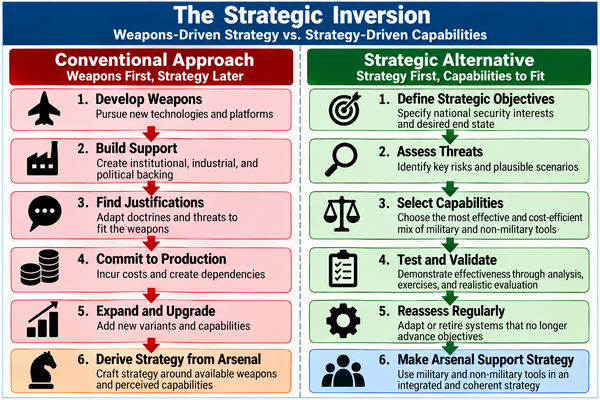
Such evaluations must encompass not only technical performance but also survivability, logistical demands, production capabilities, operating expenses, vulnerability to counteractions, and the likelihood of adversarial adaptation. Strategic utility necessitates a thorough consideration of implications for deterrence, escalation, and global security. Technical superiority alone is inadequate if the resulting military stance undermines the goals it is meant to achieve.
Continuous review is vital, given that weapons programs exist over extended timeframes in which the nature of warfare can transform significantly. Independent assessments, realistic operational testing, comparative analyses, and explicit evaluation of opportunity costs must accompany programs throughout their lifecycle. Evidence of declining relative utility should challenge entrenched commitments, rather than merely lead to another expensive round of modifications.
Institutional reform also must address the rewards that perpetuate existing weapons programs. Military organizations should be incentivized to identify superior alternatives and adapt to evolving conditions; preserving established capabilities shouldn’t be the only criterion for success. Terminating an outdated initiative should be recognized as a strategically valuable decision rather than an institutional failure. Fostering intellectual independence and the willingness to challenge conventional wisdom is as crucial to military effectiveness as technical expertise.
Though the historical cycle of weapons fetishism cannot be entirely eradicated, military institutions will inevitably rely on accumulated knowledge and judgments made amid uncertainty. The genuine benchmark of military progress, however, isn’t the perceived impressiveness of weapon systems but their proven effectiveness. Disengaging from the cycle demands the intellectual fortitude to set aside longstanding military instruments that no longer serve their primary purpose: safeguarding national defense.