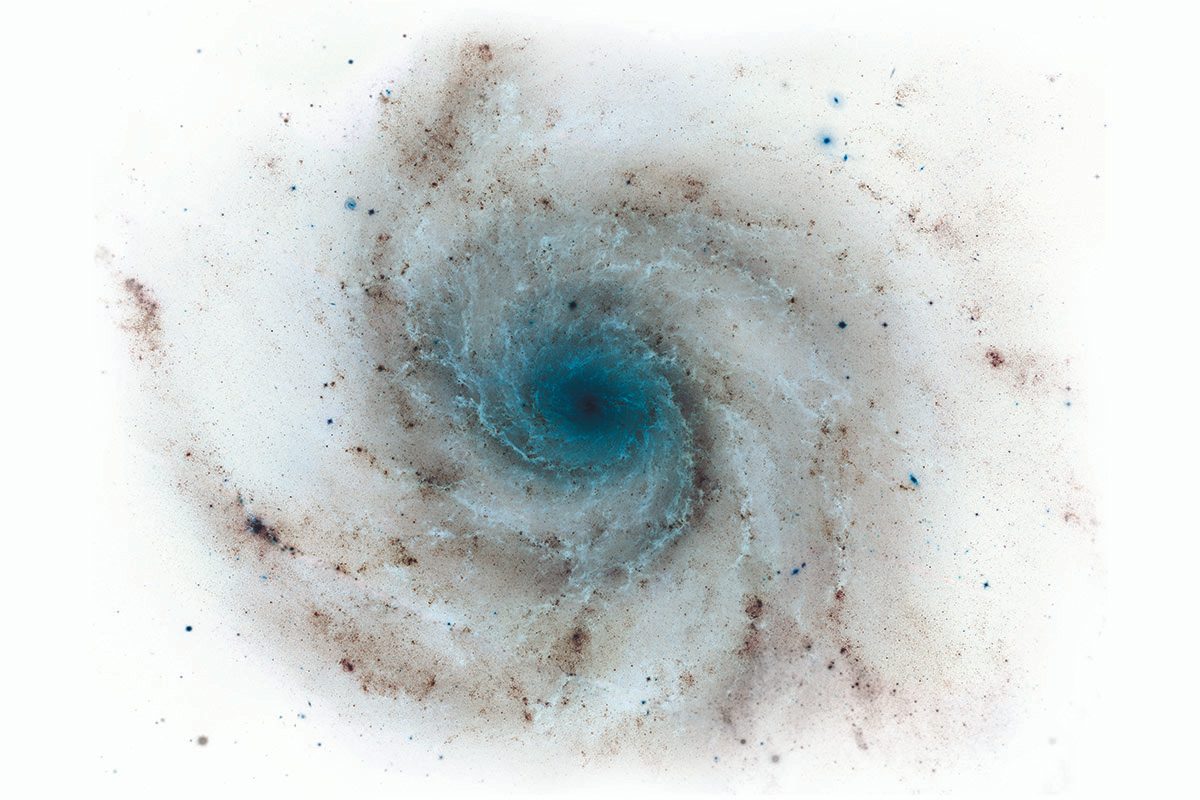
Antimatter might be escaping the Milky Way and annihilating in surrounding gas clouds, according to a recent study analyzing 20 years of gamma-ray observations. Published in Astronomy & Astrophysics, the research indicates that the Milky Way could generate two to three times more antimatter than previously believed.
The study utilized data from ESA’s INTEGRAL space telescope, which detected faint hotspots emitting 511 keV gamma rays—created when positrons, the antimatter equivalents of electrons, collide with matter. Most of this emission originates from the central regions of the Milky Way, but the sources of these positrons have remained unclear.
The researchers propose that some positrons could be produced in the Milky Way, then move outward and annihilate in interstellar space. Consequently, current estimates of the Galaxy’s antimatter production may be underestimated, as only positrons annihilating within the Galaxy’s bounds have been considered.
The signals from these hotspots are faint and remain unconfirmed, but future observations could clarify their existence. NASA’s upcoming Compton Spectrometer and Imager (COSI), set to launch in 2027, might provide more definitive insights. If confirmed, these hotspots could indicate that the Milky Way is more effective at producing antimatter than previously thought and may also include contributions from distant galaxies.



