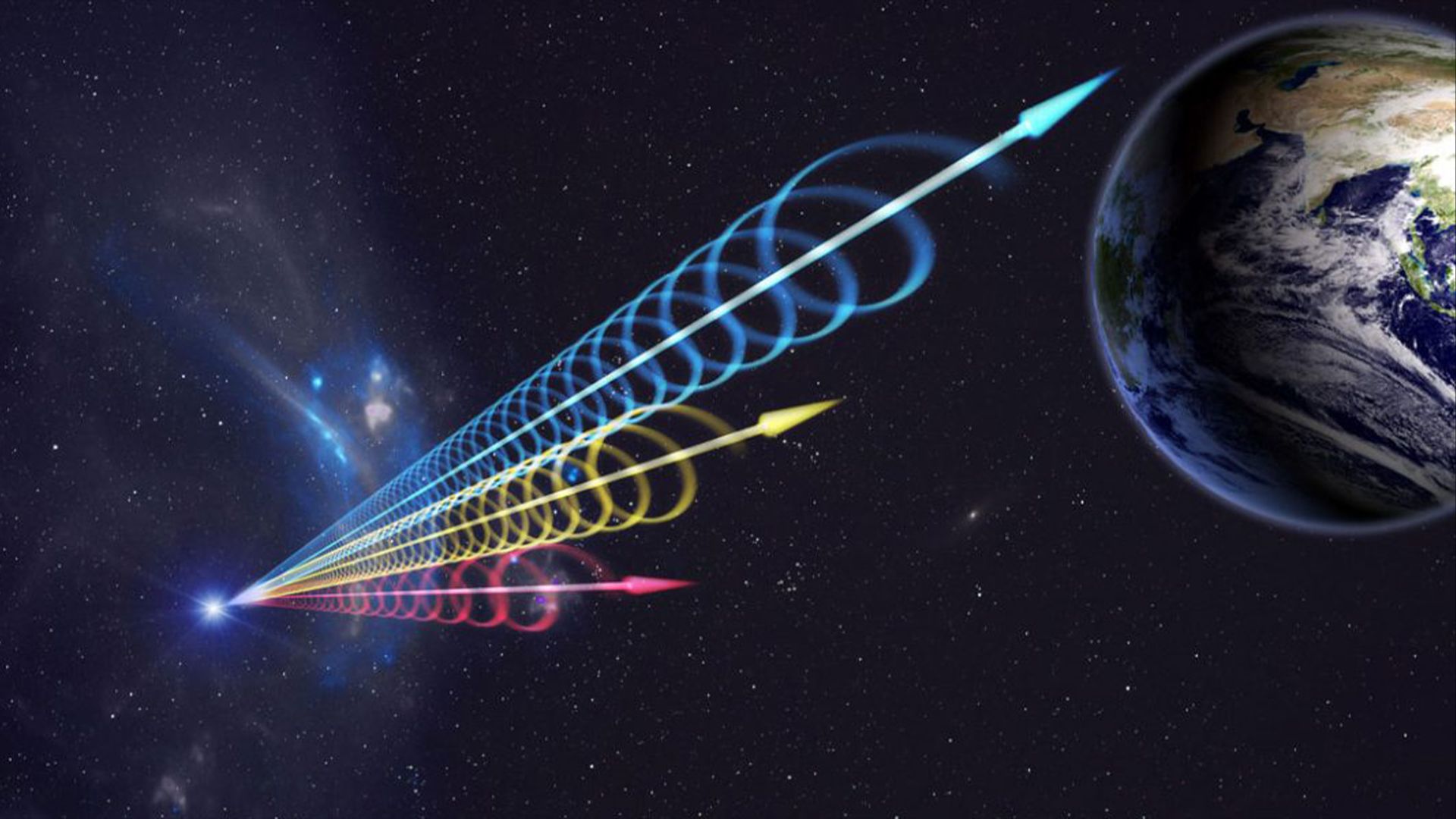
Astronomers have observed the most distant fast radio burst (FRB) known as FRB 20240304B, originating over 10 billion light-years away. Unlike previous FRBs, which last only milliseconds, this discovery was possible thanks to the collaboration between radio telescope arrays and the James Webb Space Telescope (JWST), which helped identify the event’s host galaxy.
The study shows that FRBs can arise early in the universe’s history, occurring when it was about 3 billion years old. JWST’s abilities were crucial, allowing researchers to locate a “metal-poor” galaxy with high star formation rates, suggesting a possible connection to magnetars—very dense, highly magnetic stellar remnants.
The FRB was initially detected by MeerKAT, a radio telescope in South Africa, revealing its exact location. Follow-up observations with JWST provided a clearer view of the host galaxy, helping scientists gain insights into the environments that give rise to these mysterious bursts.
This monumental finding opens new pathways in the understanding of FRBs and their origins, with further studies planned to explore more radio signals with JWST.


